

Ollama
Ollama is a local inference engine and tooling platform for running multimodal and text models on-device, focused on model portability, reliability, and developer-focused workflows for vision, language, and multimodal reasoning.
Ollama is ai software teams evaluate for image & design. Use this page to review pricing, integration signals, and the best alternatives before you commit.
Profile facts come from the vendor source. AiMatch labels unknown pricing or API details instead of estimating them.
Review official source →Used in These Packs
Quick Overview
Best for: Image & Design
What it does
AI software for decision-makers comparing workflow fit and alternatives.
Best fit
Image & Design
Pricing snapshot
Contact for pricing
Next step
Compare Ollama with similar tools before you shortlist it.
Compare this tool before you shortlist it
Review alternatives, pricing posture, and workflow fit side by side.
Ollama is a local inference engine and developer-focused platform that makes multimodal models first-class citizens on user machines. The blog describes Ollama’s new engine that adds support for vision-capable multimodal models (examples: Meta Llama 4 Scout, Google Gemma 3, Qwen 2.5 VL, Mistral Small 3.1) and explains design goals such as model modularity, accuracy improvements, memory management, and hardware collaboration. The offering targets model creators, developers, and hardware partners who need reliable, portable local inference with improved support for modality-specific model features.
Ollama v0.7 introduces a new engine for first-class multimodal AI, enabling users to run leading vision models like Llama 4 and Gemma 3 locally with improved reliability, accuracy, and memory management. The desktop app allows easy interaction with open-source models on macOS and Windows through a private, simple interface.
Own this listing?
Claim this page for a one-time $29 to add pricing, features, screenshots, verified owner details, and a clearly labeled 30-day category position after the profile is live.
Claim this listing for $29Key Features
Multimodal model support
New engine explicitly supports vision multimodal models (examples named include Llama 4 Scout, Gemma 3, Qwen 2.5 VL, Mistral Small 3.1) and treats multimodal models as first-class citizens.
Model modularity and isolation
Each model is self-contained and can expose its own projection layer so model creators can implement and ship without patching shared multimodal orchestration logic.
Image processing and caching
Ollama caches processed images to speed follow-up prompts; images remain in cache while in use and are not immediately discarded for memory cleanup.
Memory estimation and KV-cache optimizations
Collaborations with hardware and OS partners enable better hardware metadata detection and memory estimation; KV cache optimizations improve memory efficiency and concurrency.
Attention and context tuning
Per-model configuration for attention types (sliding window, chunked attention, 2D rotary embeddings) to better match how models were trained and to enable longer context sizes and better performance.
Local CLI workflow
Command-line examples show running models locally (e.g., 'ollama run gemma3') and feeding images/files to the model for multimodal queries.
Pricing
Current pricing details are not available from the vendor source.
Use Cases
Multimodal understanding & reasoning
Run vision-capable models to analyze images or video frames, answer questions about visual content, and perform follow-up reasoning.
Document scanning and OCR
Use models such as Qwen 2.5 VL for character recognition and translating vertical text (example: Chinese spring couplets) to other languages.
Multi-image comparative queries
Input multiple images to ask about relationships across images (example CLI shows asking which animal appears in four images).
Local, private inference for developers and model creators
Run and test models locally with tuned attention and memory settings, enabling experimentation and integration without cloud dependencies.
Integrations
GGML / llama.cpp
Ollama has relied on the ggml-org/llama.cpp project for model support and references GGML as the tensor library that powers inference.
Hardware partners (NVIDIA, AMD, Qualcomm, Intel, Microsoft)
Collaborations with hardware manufacturers and an OS partner to detect hardware metadata, validate firmware, and optimize inference performance.
Model providers (Google DeepMind, Meta, Alibaba, Mistral, IBM)
Support for vision and multimodal models from major labs (examples listed on the page).
GitHub
Examples of model implementations and code are available on Ollama’s GitHub repository (referenced in the blog).
Benefits
Limitations
Frequently Asked Questions
No verified FAQs are available.
Getting Started
- 1 Download and install Ollama from the site (Download link shown on the page).
- 2 Install or select a supported model (examples shown: llama4:scout, gemma3, qwen2.5vl).
- 3 Run a model locally using the CLI (example: 'ollama run gemma3') and provide images or text inputs to interact with the model.
Support
docs
Documentation is available from the site (Docs link shown in the page header/footer).
GitHub
Repository and implementation examples available on Ollama’s GitHub (referenced in the blog).
Discord
Community support via Discord (link shown in site footer).
contact
Contact entry shown in site footer for reaching Ollama (Contact link on the site).
API
Compare Ollama with similar tools
See how it stacks up against alternatives
Related Tools
View all 379 →

Krea 3 Photo Editor & Text-to-Image Generator
Krea 3 on krea-3.net is an independently operated image creation and editing service. Users can upload photos and describe changes or generate new images from text, with reference images available to guide the result.
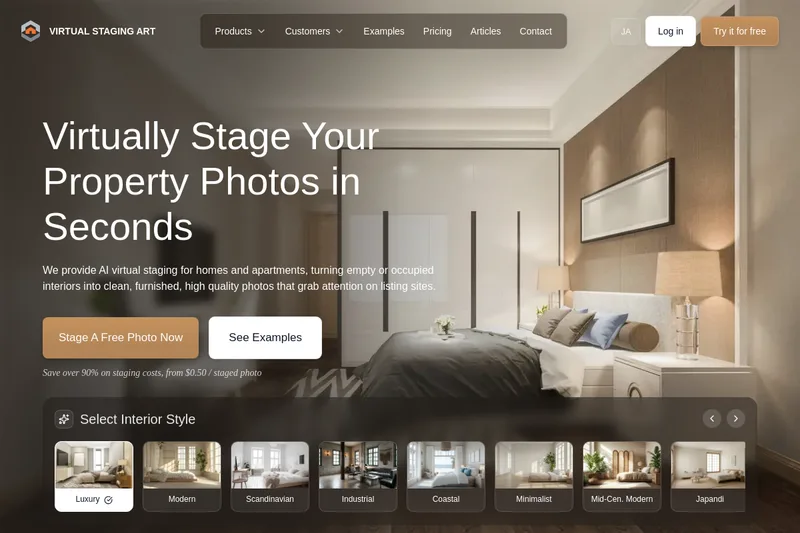
Virtualstaging
VirtualStaging.art provides AI-powered virtual staging and photo editing for real estate listings, converting empty or occupied interiors into furnished, listing-ready images in seconds — from $0.50 per staged photo.
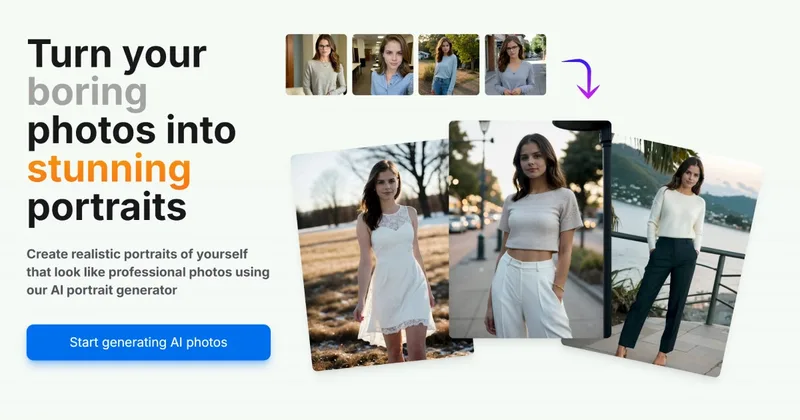
Aiportraitgen
AI Portrait Gen is an online AI portrait generator that creates realistic, high-quality portrait photos from a few user-supplied photos. It offers customizable locations, outfits and styles, pay-as-you-go credits (no subscription), and privacy protections for uploaded images.

Aiyearbook
AI Yearbook Generator is a web-based tool that uses AI to transform user photos into nostalgic yearbook-style portraits across multiple eras and themes, with free credits and purchasable credits for additional generations.

Image to Text Converter
Online Image to Text Converter (Imagetotext.io) is a freemium web tool that uses OCR (including Tesseract and Python libraries) to extract editable text from images, screenshots, handwritten notes, and scanned documents.
Premium Alternatives

Picture to Text
Picture to Text is an online OCR image-to-text converter that extracts editable text from images, screenshots, PDFs and handwritten notes using advanced OCR technology. It offers free and paid tiers with batch processing, multi-format support, and multi-language extraction.

Aux Machina
Aux Machina is an AI-powered image creation platform that generates custom, royalty-free visuals and offers upcoming AI-assisted image-editing tools, aimed at creators, marketers, and teams who need quick, high-quality images.

Hairstyleai
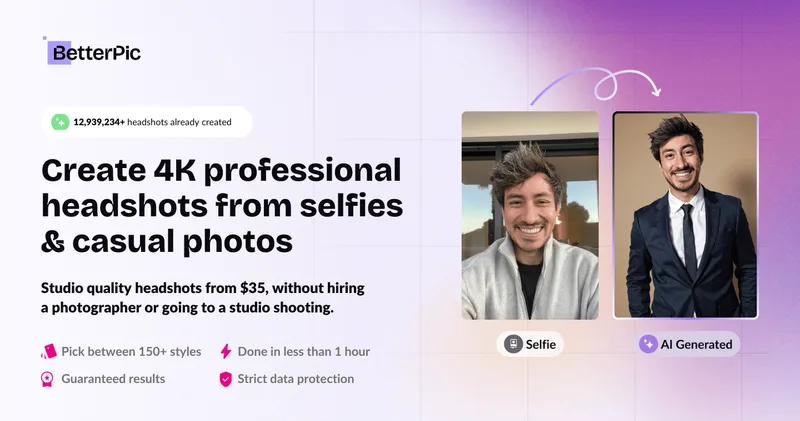
HairstyleAI is a virtual AI hairstyle try-on service (powered by HeadshotPro.com) that lets users preview new haircuts on their photos before committing to a real cut, offering dozens of generated looks and downloadable HD images.


Prompt Hunt
Prompt Hunt is a web platform for creating, browsing, and sharing AI-generated art using curated prompt templates and its in-house Chroma model, aimed at creatives, teams, and prompt engineers.

Ghibli Art Generator
Ghibli Art Generator is a web-based AI tool that transforms user photos into Studio Ghibli–inspired artwork using a proprietary deep-learning style generator, offering multiple film-style filters, batch processing, and downloadable high-resolution outputs.