

LM-Kit.NET
LM-Kit.NET is a local-first .NET SDK and runtime that provides seven capability pillars (agents, document intelligence, vision, RAG, text analysis, speech, text generation) and a model-agnostic adaptive inference foundation for running AI on-device with a single NuGet package and no required cloud calls.
LM-Kit.NET is chat software teams evaluate for chat. Use this page to review pricing, integration signals, and the best alternatives before you commit.
Profile facts come from the vendor source. AiMatch labels unknown pricing or API details instead of estimating them.
Review official source →Used in These Packs
Quick Overview
Best for: Chat
What it does
Chat software for decision-makers comparing workflow fit and alternatives.
Best fit
Chat
Pricing snapshot
Freemium from Free
Next step
Compare LM-Kit.NET with similar tools before you shortlist it.
Compare this tool before you shortlist it
Review alternatives, pricing posture, and workflow fit side by side.
LM-Kit.NET is a .NET-native local AI runtime and SDK that consolidates multiple AI capabilities into a single NuGet package. It ships seven pillars — AI Agents, Document Intelligence, Vision & Multimodal, RAG & Knowledge, Text Analysis, Speech & Audio, and Text Generation — all running on a shared local inference foundation designed for on-device, offline, and edge deployments. The product emphasizes predictable latency, data sovereignty, and a model-agnostic adaptive inference layer called Dynamic Sampling, enabling structured outputs, lower hallucinations, and CPU/GPU acceleration on host hardware.
LM-Kit.NET is a .NET SDK for LLMs, offering Generative AI capabilities for C# and VB.NET.
Own this listing?
Claim this page for a one-time $29 to add pricing, features, screenshots, verified owner details, and a clearly labeled 30-day category position after the profile is live.
Claim this listing for $29Key Features
AI Agents
Orchestration patterns, planning, memory, tools, supervisors, parallel and pipeline orchestrators, built-in tools and function-calling for building agent workflows and chatbots.
Document Intelligence
PDF text and table extraction, OCR, layout and structured field extraction, document chat/Q&A, document splitting and conversion, with on-device OCR that claims SOTA benchmark accuracy.
Vision & Multimodal
Vision-language models for image understanding, classification, labeling, VLM-driven OCR, image embeddings, multimodal chat (multiple images per turn) and preprocessing (background removal).
RAG & Knowledge
Built-in vector database, embeddings, hybrid retrieval, page-level citations, connectors for Qdrant and pgvector, rerankers, query expansion and pipelines for retrieval-augmented generation.
Text Analysis
Classification, NER, PII detection and redaction, sentiment and emotion analysis, keyword extraction, language detection and multimodal embeddings; structured extractors that emit typed C# objects.
Speech & Audio
On-device speech-to-text (Whisper-family models), real-time transcription, voice activity detection, real-time translation, streaming segments and hallucination suppression.
Text Generation & Conversation
Single-turn and multi-turn conversation primitives, prompt templates (three syntaxes), streaming tokens, rewriting, summarization, translation and grammar-constrained structured outputs.
Local Inference Foundation
Adaptive inference runtime (Dynamic Sampling), encrypted models, acceleration on CPU (AVX/AVX2), CUDA, Vulkan or Metal, multi-GPU and model catalog support for open-weight LLMs and VLMs.
Pricing
Community edition: free forever for builders, development, internal tools, and OSS; commercial license required when LM-Kit is part of a product you sell to customers.
Community (Freeforever)
Free- Full SDK access for development, evaluation, internal tools, OSS; runs on your own hardware
- Eligibility: any company or individual; Platforms: Windows, Linux, macOS
Professional (Custom)
Custom per project- Commercial redistribution rights for shipped products
- Dedicated technical support, unlimited developers and end users, roadmap input
Use Cases
On-premise and edge AI
Deploy models and inference locally for scenarios requiring privacy, compliance, low latency and offline availability (no cloud calls).
Embedded intelligence in .NET apps
Ship agents, RAG, document extraction, vision and speech features directly inside .NET applications using a single NuGet package and native acceleration.
Retrieval-augmented workflows
Build RAG pipelines with built-in vector DB, connectors to Qdrant/pgvector, and page-level citations for grounded Q&A over documents and knowledge bases.
Developer workflows and prototyping
Quickstart and runnable C# samples enable rapid prototyping of chat, agents, extraction, and transcription locally before shipping.
Integrations
Microsoft.Extensions.AI
Bridge that lets existing IChatClient, IEmbeddingGenerator and middleware-aware abstractions run with a local LM-Kit backend preserving streaming and function-calling.
Semantic Kernel
Connector to use LM-Kit as a Semantic Kernel backend for planners, skills and existing SK orchestration without rewriting code.
Qdrant and pgvector
Connectors and adapters to use external vector stores; built-in vector DB also available.
Hugging Face / Model Ecosystem
Supports open-weight models such as Gemma, Qwen, Llama, Phi-4, GLM, Whisper and embeddings from local model catalog.
Benefits
Limitations
Frequently Asked Questions
No verified FAQs are available.
Getting Started
- 1 Install the LM-Kit.NET NuGet package into your .NET project.
- 2 Load a model using LM.LoadFromModelID and choose the appropriate model from the catalog.
- 3 Run one of the quickstart examples (chat, agent, RAG, vision, speech) as shown in the Quickstart: 5 minutes guide and code samples.
Support
Docs
Documentation site, Quickstart, API Reference and code samples available from the LM-Kit docs/resources (link from lm-kit.com).
Community (GitHub)
Community support and repository hosting available on GitHub (LM-Kit on GitHub; community edition support noted on the page).
Commercial Support
Dedicated professional support available with a commercial license; contact sales via lm-kit.com for enterprise options.
API
API Reference and developer docs are available from the LM-Kit documentation site (Docs / API Reference linked on lm-kit.com).
Compare LM-Kit.NET with similar tools
See how it stacks up against alternatives
Related Tools
View all 81 →




Chat & Ask AI
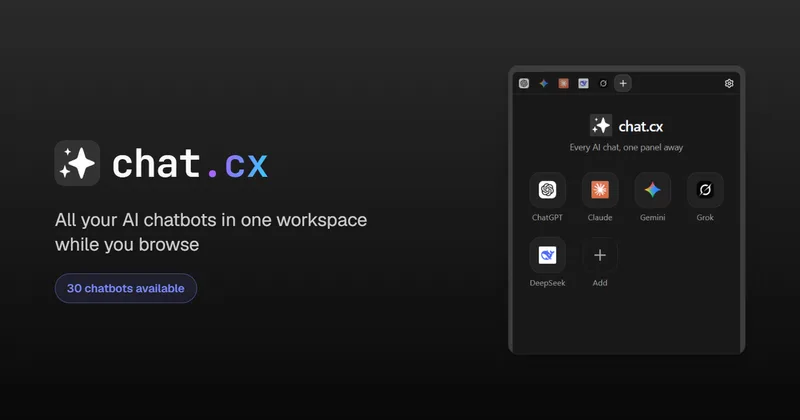
Chat & Ask AI is an advanced multi-model AI assistant and platform offering web search, document and link analysis, image generation, YouTube summarization, and chat features powered by a wide range of LLMs and AI technologies.
Premium Alternatives
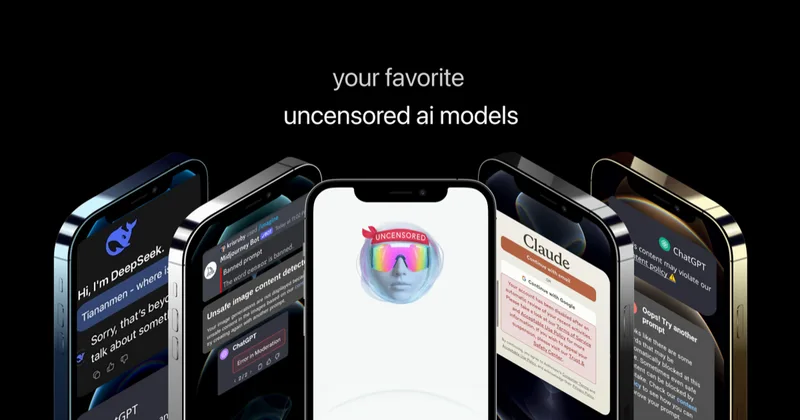
Uncensored
Uncensored AI is a chat and developer platform that provides access to a broad catalog of powerful, minimally filtered AI models for chat, voice, vision, code, and API access, with privacy features like auto-redaction and developer tooling.
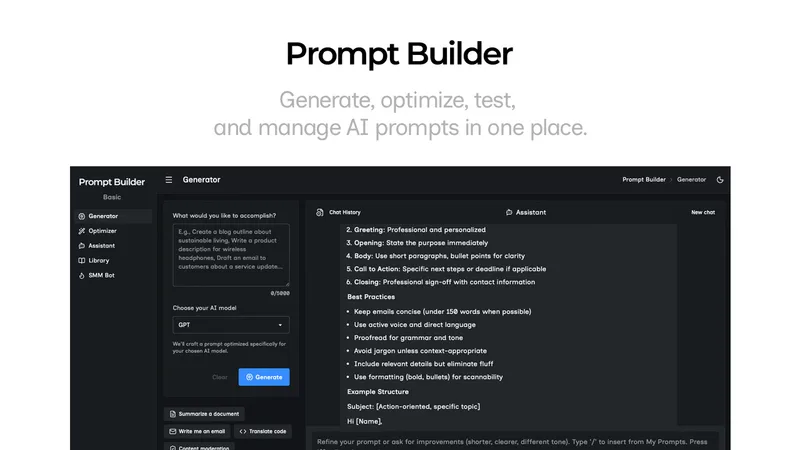
Promptbuilder
Prompt Builder is a web app that generates, optimizes, tests, and manages AI prompts tuned to specific models (ChatGPT, Gemini, Claude, Grok, etc.), with a prompt library, optimizer, built-in chat assistant, and versioning for prompt workflows.
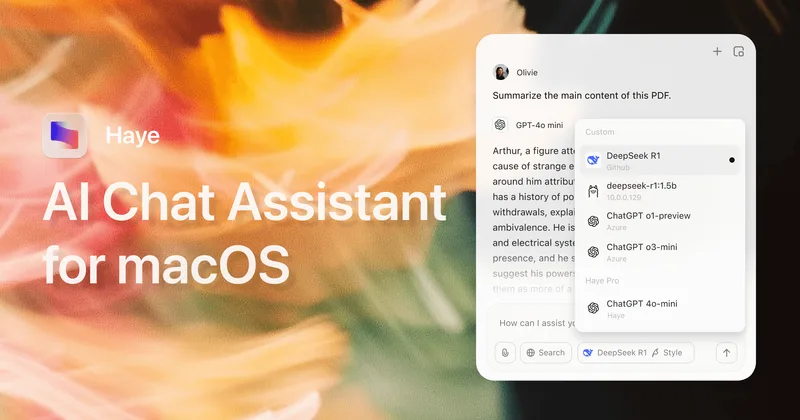

pandachat-ai
PandaChat runs supervised AI customer operations for complex Adria/DACH e‑commerce stacks: a managed team of specialists and supervisors that connects to your systems, handles multilingual 24/7 support across channels, and sends daily briefings with value reports.

screensnapai
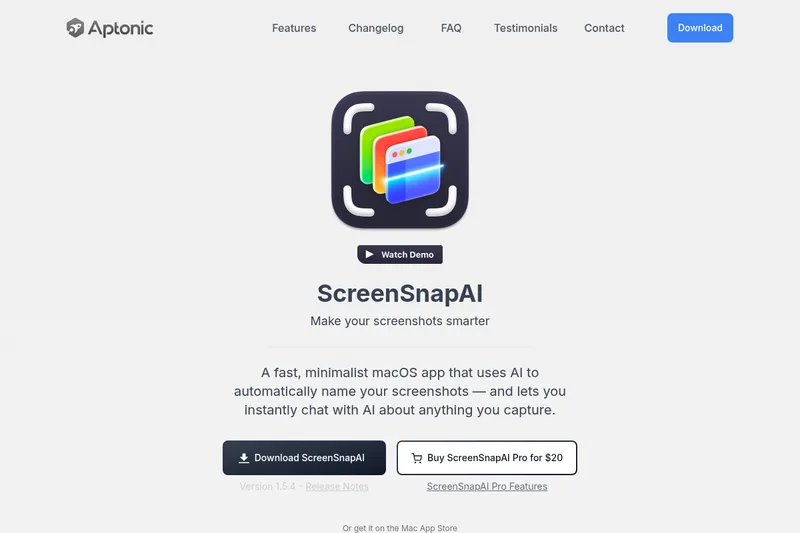
ScreenSnapAI is a native macOS app that automatically names and tags screenshots and lets users ask AI questions about selected areas of their screen. It supports Intel and Apple Silicon Macs running macOS 13 or later.