

ratio1
Ratio1 is a blockchain-powered, decentralized AI operating system and edge/cloud computing platform that enables rapid development and deployment of AI apps, a tokenized GPU compute marketplace, and node-based infrastructure via Node Deeds and the $R1 utility token.
ratio1 is developer tools software teams evaluate for developer tools. Use this page to review pricing, integration signals, and the best alternatives before you commit.
Profile facts come from the vendor source. AiMatch labels unknown pricing or API details instead of estimating them.
Review official source →Used in These Packs
Quick Overview
Best for: Developer Tools
What it does
Developer Tools software for decision-makers comparing workflow fit and alternatives.
Best fit
Developer Tools
Pricing snapshot
Paid from Anti-inflationary; price increases with demand (no fixed public price listed)
Next step
Compare ratio1 with similar tools before you shortlist it.
Compare this tool before you shortlist it
Review alternatives, pricing posture, and workflow fit side by side.
Ratio1 is presented as "The Ultimate AI OS Powered by Blockchain Technology": a decentralized, tokenized platform for running AI workloads at the edge and in cloud environments. It combines a neuro-symbolic autonomous processing framework (Ratio1 DNA), encrypted learning and inference capabilities (EDIL), and a low-code application development experience to accelerate AI app development and deployment. The platform is aimed at developers, node operators, cloud service providers, and organizations that need scalable, private, and incentivized GPU compute resources, supported by a utility token ($R1) and Node Deed licensing model.
Decentralized AI OS powered by blockchain for rapid AI app development and deployment.
Own this listing?
Claim this page for a one-time $29 to add pricing, features, screenshots, verified owner details, and a clearly labeled 30-day category position after the profile is live.
Claim this listing for $29Key Features
Decentralized Neuro-Symbolic Processing (Ratio1 DNA)
A decentralized neuro-symbolic autonomous processing framework described as the core initiative to democratize AI.
Low-Code App Development
Low-code application development tools intended to accelerate project launches for AI and non-AI projects alike.
Tokenized Economy ($R1 Utility Token)
$R1 is described as a utility token used for in-ecosystem transactions such as processing jobs, provisioning GPU resources, and acquiring licenses; explicitly stated as not a security.
Node Deed Licenses
Anti-inflationary Node Deed licensing model that aligns ownership with network commitment and whose price increases with demand.
Encrypted Decentralized Inference and Learning (EDIL)
Framework upgrades (ED v3 / EDIL) for homomorphic encrypted training and inference to support privacy-preserving ML workflows.
Developer SDK and Devnet/Testnet
Roadmap includes SDK v4 release and a devnet/testnet for automated agent-driven edge nodes.
Node Operator and Cloud Service Provider dApps
Dedicated dApps for node operators and cloud service providers to participate in the protocol and manage infrastructure.
Explorer and Liquidity Pool
Explorer launch and a planned liquidity pool on Uniswap are listed in the roadmap milestones.
Pricing
Node Deed Licenses
Anti-inflationary; price increases with demand (no fixed public price listed)- Grants the ability to link a license to a node and join the Ratio1 protocol
- Designed to promote stability and genuine economic growth as demand increases
$R1 Utility Token (usage-based payments)
Token used as medium of exchange for compute services; no fiat pricing published- Used to pay for GPU compute, processing jobs, provisioning resources, and acquiring licenses
- Specified as a pure utility token with no profit or voting rights
Use Cases
Distributed GPU Compute Marketplace
Consumers pay with $R1 to process jobs and provision GPU resources; providers earn $R1 for contributing hardware.
Rapid AI App Development and Deployment
Low-code tools, SDKs, and edge nodes enable quick development and rollout of AI-powered applications across edge and cloud.
Privacy-preserving ML (On‑Prem / Encrypted Workflows)
EDIL and 'Sovereign AI' messaging indicate use for keeping models and data on-prem and performing homomorphic encrypted training/inference.
Node Operation and Network Participation
Individuals and organizations can operate nodes by acquiring Node Deeds and participating in an incentivized decentralized network.
Integrations
Uniswap (liquidity pool)
Roadmap entry lists a planned liquidity pool on Uniswap.
Node & dApp Ecosystem
Node Operator dApp and Cloud Service Provider dApp enable integration points for infrastructure operators to join the protocol.
Benefits
Limitations
Frequently Asked Questions
No verified FAQs are available.
Getting Started
- 1 Visit the Ratio1 website to read the introductory materials ("Start your journey with a 3-minuteRead").
- 2 Review the FAQ, pitch deck, media kit and blog for product details and guidance.
- 3 Join community channels such as Discord and subscribe to the newsletter for announcements and support.
- 4 Use the SDK/devnet (when available) to test and develop integrations; consider acquiring a Node Deed to operate a node or participate as a provider.
Support
Docs / Blog
Documentation and articles available via the site blog and roadmap pages.
Newsletter
Subscribe to the newsletter to receive announcements, updates, and offers (email opt-out available).
Community (Discord / Telegram / Social)
Community channels listed include Discord, Telegram, X, LinkedIn, and YouTube; the site invites contacting via Discord for questions.
Media Kit / Pitch Deck
Pitch decks and media kit are provided as useful resources for partners and evaluators.
API
Compare ratio1 with similar tools
See how it stacks up against alternatives
Related Tools
View all 141 →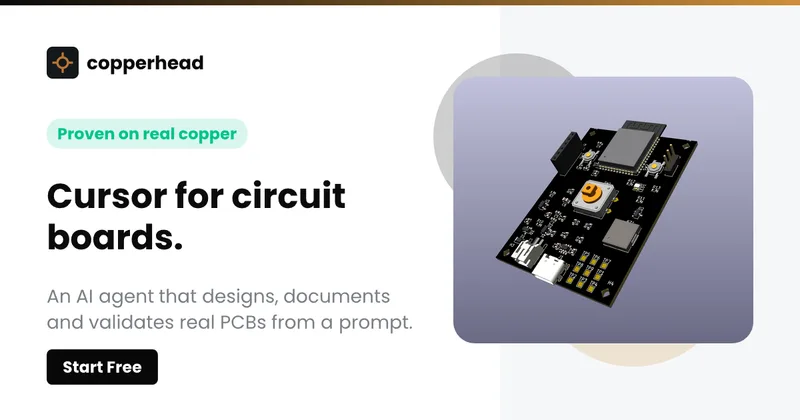
Copperhead
Copperhead is an open-source AI engineering platform and CLI that helps hardware teams design, verify, and ship printed circuit boards by editing KiCad files, running KiCad checks (ERC/DRC), and producing gerbers, firmware, and documentation in a gated, auditable pipeline.

Docs.dev Your Own Hosted Docs Platform in Minutes
Docs.dev is a deployable documentation template that runs as a Cloudflare Worker in your account, using your GitHub repo as the source of truth and agent-powered drafting (e.g., Claude Code or Codex) to generate reviewable docs branches that your team publishes via commit.

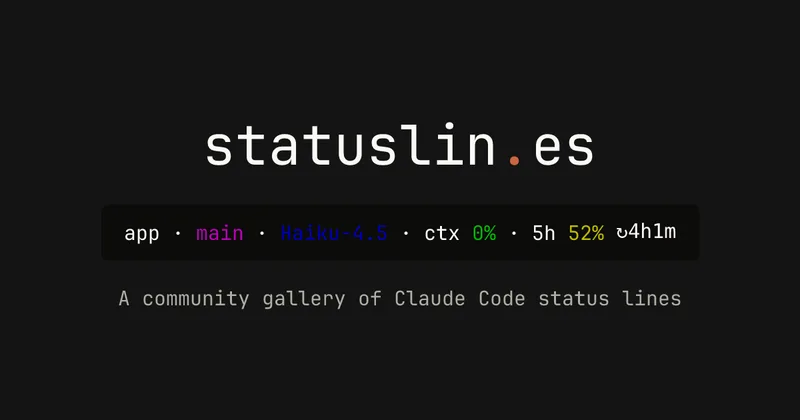
statuslin.es
statuslin.es is a community gallery of Claude Code status lines—copyable, previewed scripts and themes for terminal/status-bar displays that show Claude model stats (tokens, cost, limits), git info, and other runtime metrics.

Bullet · Fast, by design.
Bullet is a fast coding agent and developer tool that routes, searches, and executes code-focused tasks with a tight loop to minimize latency — offered as a macOS download and currently available in private beta.

Budget-Friendly Alternatives
Copperhead
Copperhead is an open-source AI engineering platform and CLI that helps hardware teams design, verify, and ship printed circuit boards by editing KiCad files, running KiCad checks (ERC/DRC), and producing gerbers, firmware, and documentation in a gated, auditable pipeline.
Docs.dev Your Own Hosted Docs Platform in Minutes
Docs.dev is a deployable documentation template that runs as a Cloudflare Worker in your account, using your GitHub repo as the source of truth and agent-powered drafting (e.g., Claude Code or Codex) to generate reviewable docs branches that your team publishes via commit.
Bullet · Fast, by design.
Bullet is a fast coding agent and developer tool that routes, searches, and executes code-focused tasks with a tight loop to minimize latency — offered as a macOS download and currently available in private beta.


Sign in with your ChatGPT account for free AI
Sign in with ChatGPT lets developers add ChatGPT account authentication to web apps so users can access OpenAI AI capabilities (works across free and paid ChatGPT accounts). It provides React components and helper methods to obtain encrypted, locally stored credentials and call the AI SDK from the signed-in account.

Spore
Spore is a distributed AI platform that lets you run open-weight models on your own macOS, Windows, or Linux hardware, access them remotely via end-to-end encrypted connections, earn credits by serving requests, and tap a distributed network for larger models with an OpenAI-compatible API.