
Knowl
Knowl is a local-first, open-source persistent memory system for AI coding agents that records provenance, evidence, reasoning and supersession for every fact so agent answers stay current and auditable.
Knowl is developer tools software teams evaluate for software & gaming. Use this page to review pricing, integration signals, and the best alternatives before you commit.
Profile facts come from the vendor source. AiMatch labels unknown pricing or API details instead of estimating them.
Review official source →Used in These Packs
Quick Overview
Best for: Software & Gaming
What it does
Developer Tools software for decision-makers comparing workflow fit and alternatives.
Best fit
Software & Gaming
Pricing snapshot
Freemium from Free
Next step
Compare Knowl with similar tools before you shortlist it.
Compare this tool before you shortlist it
Review alternatives, pricing posture, and workflow fit side by side.
Knowl is a local-first, open-source persistent memory layer built for AI coding agents. It stores facts with attached reasoning, evidence and provenance and records supersession relationships so retired facts remain queryable while the current fact is returned by default. Knowl runs in your repository (your code, embeddings and session history are not uploaded) and operates as an MCP server so agent clients can read and write memory while preserving auditability.
Knowl is designed for teams and developer workflows: reading memory is free, publishing lifts a fact into a shared workspace and is the paid action. The product emphasizes freshness, traceability and a review trail — every fact records what it replaced and what replaced it, making history a first-class feature rather than a simple changelog.
Knowl is an MCP memory server for Claude Code, Cursor and Codex. What your agents work out survives the session, and a change retires what it replaced — so the answer they read back is the current one.
Own this listing?
Claim this page for a one-time $29 to add pricing, features, screenshots, verified owner details, and a clearly labeled 30-day category position after the profile is live.
Claim this listing for $29Key Features
Provenance, reasoning & evidence on every fact
Every fact carries its reasoning, its evidence and its provenance — observed, stated by a person, or inferred — so claims are checkable by design.
Supersession & immutable history
Facts record what they replaced and what replaced them. Superseded knowledge is never deleted — the old claim remains readable and queryable.
Local-first, repository-based storage
Knowl runs in your repository; code, embeddings and session history remain on your machine by default. Publishing is an explicit action to share into a workspace.
MCP server & adapter ecosystem
Knowl runs as an MCP server so any client that speaks MCP can integrate. Multiple adapters and one-command initializers are provided for popular agent clients.
CLI installer and developer tooling
A CLI package is provided (npm install -g), requires Node 20 or newer, and exposes commands to initialize and configure adapters.
Hosted publishing (Knowl Cloud) and access controls
A hosted memory layer (Knowl Cloud) lifts published facts into shared workspaces that only workspace members can read.
Secret scanning on publish
Every write is secret-scanned on the server on the way in; refused writes name what tripped the scan without echoing the value back.
Pricing
Accounts are free and the first workspace is free; reading/querying memory is free at every tier because agents read a local replica.
Free
Free- Accounts are free
- First workspace is free
- Reading queries is free (agents read a local replica)
Paid (publishing)
Pay when your team outgrows the Free tier- Publish facts into shared workspaces (paid action)
- Workspace membership controls for shared knowledge
Use Cases
Persistent agent memory for coding agents
Keep agent-discovered facts (for example API rate limits or configuration values) recorded with evidence and provenance so agents do not rely on stale notes.
Team-shared workspace for evolving knowledge
Publish facts into a shared workspace so teammates read the current answer while historical claims remain queryable for audit and review.
Audit trails and review of decisions
Facts include who approved them and review-queue information, enabling traceability of who decided something and when.
Reduce failures from stale memory
By recording supersession and keeping retired answers available, Knowl reduces incidents where agents continue to surface outdated facts.
Integrations
Claude Code
Adapter (knowI init claude) — MCP + hooks integration for Claude Code.
Codex CLI
Adapter (knowl init codex) — MCP + hooks integration for Codex CLI.
Cursor
Adapter (knowl init cursor) — MCP + hooks integration for Cursor.
GitHub Copilot
Adapter (knowl init copilot) — MCP + hooks integration for GitHub Copilot.
OpenHands
Adapter (knowl init openhands) — MCP + hooks integration.
Antigravity
Adapter (knowl init antigravity) — MCP + hooks integration.
Windsurf
Adapter (knowl init windsurf) — MCP + gate integration.
Cline
Adapter (knowl init cline) — MCP + plugin integration.
Zed, JetBrains, Neovim, KIKiro
ACP integrations (knowl acp) for editor clients.
Claude Desktop, OpenCode and other MCP clients
Adapters and init commands for desktop and CLI clients; anything that speaks MCP works without a bespoke adapter.
Benefits
Limitations
Frequently Asked Questions
What is Knowl Cloud?
Does my code get uploaded?
What happens when a stored fact stops being true?
How is this different from a wiki, or from a vector database?
Which clients does it work with?
Who can see what my agents publish?
What stops a secret being published?
How do I get started?
Getting Started
- 1 Step 1: Install the CLI (example shown: npm install -g @dat999zx/knowl) with Node 20 or newer.
- 2 Step 2: Initialize an adapter for your agent client (e.g., knowl init claude, knowl init cursor, knowl init copilot) or run an ACP integration for editors.
- 3 Step 3: Connect a repository, sign the CLI in, let a week of work accumulate, and optionally publish facts to a shared workspace.
Support
docs
Read the docs link is available on the site for developer documentation and adapter instructions.
discord
Community Discord is listed on the site for discussion and help.
bug report
Report a bug link is provided on the site.
contact
Support / Contact links are available on the product site for direct inquiries.
API
Compare Knowl with similar tools
See how it stacks up against alternatives
Related Tools
View all 141 →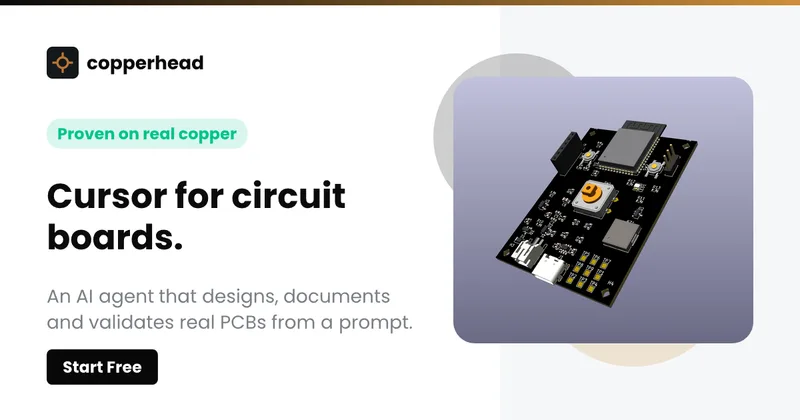
Copperhead
Copperhead is an open-source AI engineering platform and CLI that helps hardware teams design, verify, and ship printed circuit boards by editing KiCad files, running KiCad checks (ERC/DRC), and producing gerbers, firmware, and documentation in a gated, auditable pipeline.


Docs.dev Your Own Hosted Docs Platform in Minutes
Docs.dev is a deployable documentation template that runs as a Cloudflare Worker in your account, using your GitHub repo as the source of truth and agent-powered drafting (e.g., Claude Code or Codex) to generate reviewable docs branches that your team publishes via commit.

Bullet · Fast, by design.
Bullet is a fast coding agent and developer tool that routes, searches, and executes code-focused tasks with a tight loop to minimize latency — offered as a macOS download and currently available in private beta.
statuslin.es
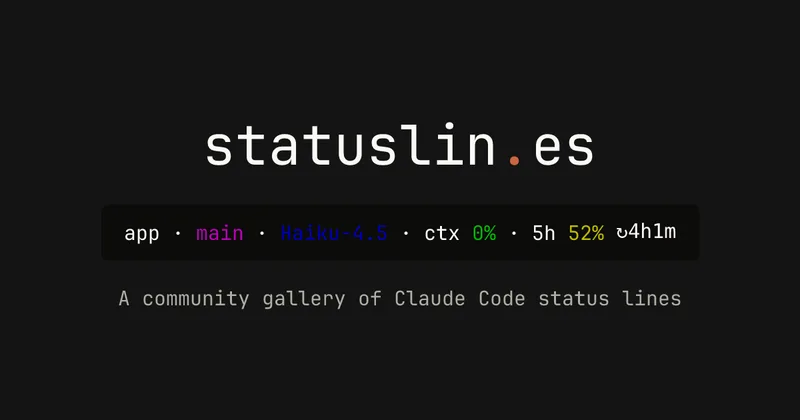
statuslin.es is a community gallery of Claude Code status lines—copyable, previewed scripts and themes for terminal/status-bar displays that show Claude model stats (tokens, cost, limits), git info, and other runtime metrics.


Premium Alternatives
%22%2F%3E%20%3Ctext%20x%3D%2250%25%22%20y%3D%2250%25%22%20dominant-baseline%3D%22central%22%20text-anchor%3D%22middle%22%20font-family%3D%22system-ui%2C-apple-system%2Csans-serif%22%20font-weight%3D%22700%22%20font-size%3D%2250%22%20fill%3D%22white%22%3EO%3C%2Ftext%3E%20%3C%2Fsvg%3E)
OTP Inspired actor supervisor based full stack templates
ShipStacks provides production-grade, OTP-inspired full-stack SaaS templates that include supervisors/actor patterns, auth, payments, uploads, AI chat and agent playbooks, and Docker-ready deployment in multiple languages and frameworks.
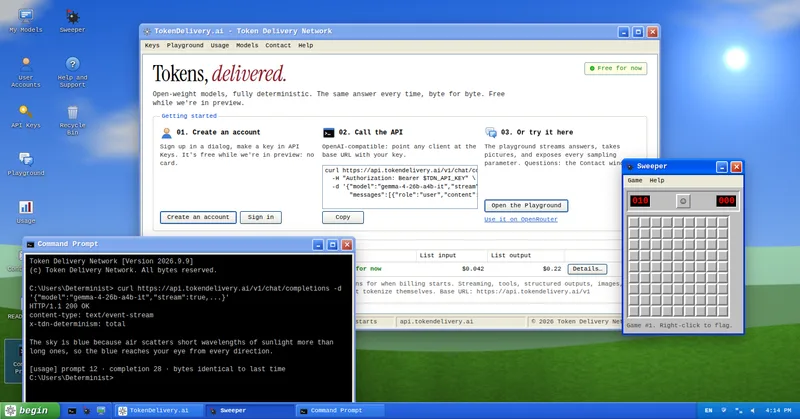
TokenDelivery.ai
TokenDelivery.ai (Token Delivery Network) is an OpenAI-compatible model API and playground that offers reproducible, deterministic model outputs, streaming responses, multimodal inputs (images and short videos), and exposed sampling parameters. It is free during preview and provides API keys, a playground, and a documented base URL for developers.

Servers for AI, not another AWS
RAW offers dedicated GPU and CPU servers specifically built for AI workloads — provision real metal with root access and CUDA via a single API. It emphasizes low cost (claims up to 100× cheaper than AWS), $0 egress, fast provisioning, and enterprise features for inference, training, agents, and vector databases.

runpod
Runpod is an AI Developer Cloud that provides on-demand GPU infrastructure—Pods, Serverless endpoints, and multi-node Clusters—enabling teams to experiment, train, fine-tune, deploy, and scale AI workloads across 31 global regions with support for 30+ GPU SKUs.

Finetunefast
FinetuneFast provides finetuning boilerplates, inference templates, and deployment tooling to accelerate building and shipping ML models (text-to-image, LLMs, RAG, TTS) — aimed at developers, indie makers and businesses who want production-ready examples and fast time-to-deploy.