

ThoughtDAG
ThoughtDAG is an open-source, desktop-first application that makes LLM context visible, editable, and reproducible by representing context as an editable directed acyclic graph (wires = context) and letting users preview and control exactly what the model receives.
ThoughtDAG is research software teams evaluate for education & research. Use this page to review pricing, integration signals, and the best alternatives before you commit.
Profile facts come from the vendor source. AiMatch labels unknown pricing or API details instead of estimating them.
Review official source →Quick Overview
Best for: Education & Research
What it does
Research software for decision-makers comparing workflow fit and alternatives.
Best fit
Education & Research
Pricing snapshot
Contact for pricing
Next step
Compare ThoughtDAG with similar tools before you shortlist it.
Compare this tool before you shortlist it
Review alternatives, pricing posture, and workflow fit side by side.
ThoughtDAG is a desktop-first, open-source application that treats the graph of nodes and wires as the canonical LLM context: instead of hidden chat-history selection, the graph (incoming edges and ordered ancestors) determines and reveals exactly what is sent to the model. It supports selecting passages and source-linked nodes with provenance attached, previewing the message sequence and token counts sent to a model, and editing the graph (branching, pruning, merging) so users can include or exclude specific context before generation. The product is released under the MIT license, is local-first, and is compatible with Ollama and OpenAI-style model endpoints; installers for macOS (Apple Silicon and Intel), Windows x64, and Linux x64 are provided, and releases are hosted on GitHub.
ThoughtDAG is an open-source, local-first canvas where graph edges define the context sent to an LLM. Branch, prune, merge, and inspect what the model sees.
Own this listing?
Claim this page for a one-time $29 to add pricing, features, screenshots, verified owner details, and a clearly labeled 30-day category position after the profile is live.
Claim this listing for $29Key Features
Graph-as-Context
The graph (wires) is the context: ThoughtDAG walks incoming edges, orders relevant ancestors, and builds the message sequence sent to the selected model so context selection is visible and explicit.
Source-linked nodes & provenance
Passages and sources can be turned into source-linked nodes with provenance attached so users can cite and inspect original material that enters context.
Preview model input and token counts
Inspect what the model will receive before generation, including previewing source nodes, order, and token count ("Preview what the model will receive").
Editable context (branch, prune, merge)
Edit the context graph to branch into alternative lines of reasoning, prune detours so they are excluded from the next request, and merge selected evidence and reasoning paths back together.
Deterministic / reproducible context edits
Deletions and edge edits visibly change which ancestors are included; the interface shows context diffs (token reductions) and updated answers after regeneration.
Desktop app with local engine option
A standalone desktop application is available with a bundled local engine ("Take it to the desktop... local engine bundled").
Open-source, MIT licensed
ThoughtDAG is open source under the MIT license and its releases and history are available on GitHub.
Model endpoint compatibility
Compatible with Ollama and OpenAI-compatible endpoints for model connectivity.
Multi-platform installers
Downloadable installers for macOS (Apple Silicon and Intel), Windows x64, and Linux x64 (.dmg, installer, .AppImage) with install notes provided.
Pricing
Open source under the MIT license (no paid pricing mentioned on the page).
Use Cases
Research workflows
Compare research paths, attach source passages, and produce reproducible summaries while excluding unrelated detours from the model context.
Evidence-based Q&A and summarization
Clip passages from source documents into nodes, keep provenance attached, and ask targeted questions that only include selected evidence.
Iterative exploration and branching
Explore alternative hypotheses or interpretations via branches without overwriting the path that led to the current node; prune or merge branches as needed.
Local-first workflows and self-hosted model use
Run the desktop app with a bundled local engine or connect to local/self-hosted endpoints (Ollama) and OpenAI-compatible endpoints for model access.
Integrations
Ollama endpoints
Compatible with Ollama model endpoints for local/self-hosted model access.
OpenAI-compatible endpoints
Works with OpenAI-compatible endpoints to send the constructed message sequence to a selected model.
GitHub Releases
All versions and history are published on GitHub Releases (download and version history).
Benefits
Limitations
Frequently Asked Questions
No verified FAQs are available.
Getting Started
- 1 Visit the ThoughtDAG project page or GitHub to read the product story and view releases.
- 2 Download the installer for your OS (macOS .dmg for Apple Silicon/Intel, Windows x64 installer, or Linux .AppImage) from the page or GitHub Releases.
- 3 Install the app (macOS builds are signed and notarized; on Windows use SmartScreen "More info" → "Run anyway" if prompted), then open the app and connect to your preferred model endpoint (Ollama or OpenAI-compatible endpoint) or use the bundled local engine.
Support
docs
Product page and release notes on the ThoughtDAG website.
GitHub (issues/releases)
Releases and project history live on GitHub; use the repository for code, issues, and releases ("View ThoughtDAG on GitHub").
install notes
Installer-specific guidance provided on the product page (macOS notarization and Windows SmartScreen instructions).
API
Compare ThoughtDAG with similar tools
See how it stacks up against alternatives
Related Tools
View all 135 →
LLM Attention Visualization
A browser-based interactive visualization that shows how transformer LLMs allocate attention to past tokens during generation by aggregating attention weights and value magnitudes across heads and layers.
PilotCite
PilotCite is a SaaS platform that helps brands monitor and improve their visibility in AI-generated answers (ChatGPT, Perplexity, Google AI, Gemini, Claude, Copilot, Grok) by tracking citations, auditing site citability, benchmarking competitors, and generating source-backed content.

Knowledge graph skill for Claude/Kimi Code
SysEdge is an ontological knowledge graph and CLI for multi-agent Claude Code and Kimi Code teams that models requirements, tests, and architecture standards to surface specification, test, and standards gaps before code ships and to reduce agent orientation tokens.
Redactle LLM Leaderboard
A public benchmark dashboard that evaluates how well large language models (LLMs) solve Redactle puzzles by running standardized evaluations and publishing ranked results, costs, and performance metrics.
HieraticBench
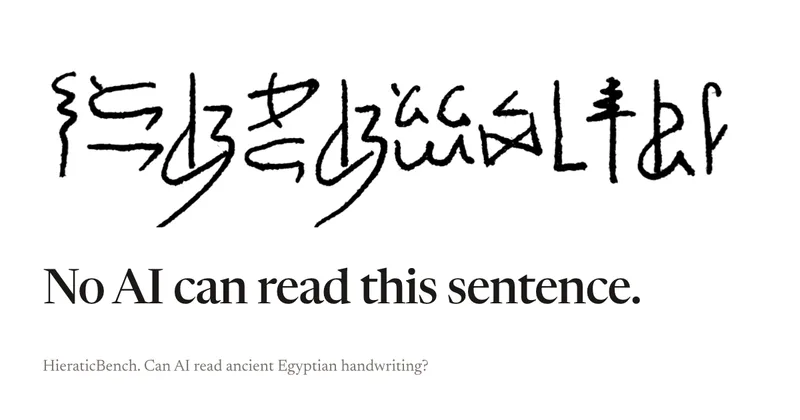
HieraticBench is an open benchmark for testing whether AI models can identify and read hieratic, the cursive handwriting of ancient Egypt. It includes a public leaderboard, evaluation harness, and dataset of documents and individual signs.

CiteRank
CiteRank is a weekly SaaS monitoring tool that re-asks buyer questions of major AI answer engines (ChatGPT, Perplexity, Google AI Overviews, Gemini and Claude) to record whether they cite your site, name your brand, or leave you absent, and delivers board-style reports and competitor/source lists.
Premium Alternatives
CiteRank
CiteRank is a weekly SaaS monitoring tool that re-asks buyer questions of major AI answer engines (ChatGPT, Perplexity, Google AI Overviews, Gemini and Claude) to record whether they cite your site, name your brand, or leave you absent, and delivers board-style reports and competitor/source lists.

SermonAI
SermonAI is a web-based sermon preparation platform for pastors, combining AI-assisted research and writing with planning, sermon organization, preaching tools, and content repurposing. Its AI research can be tailored to a pastor’s denomination, Bible translation, and trusted voices.


grantboost
Grantboost is an AI grant discovery and proposal-writing platform for nonprofits, agencies, universities, and other mission-driven organizations. It matches funding opportunities to an organization’s programs and helps draft proposals using its past content and brand voice.