
Use-case Hub
AI Tools for Education and Research
Tools for learning design, knowledge extraction, research workflows, and study productivity.

ThoughtDAG
ThoughtDAG is an open-source, desktop-first application that makes LLM context visible, editable, and reproducible by representing context as an editable directed acyclic graph (wires = context) and letting users preview and control exactly what the model receives.

Academa Studio
Academa Studio is an AI-native web editor for authoring Manim (mathematical animation) content, providing an integrated Python runtime, renderer preview, and AI-assisted chat prompts to generate and refine animations.

QuantSignals FST
QuantSignals FST is a supervised AI trading agent that turns QS Research signals into account-aware, risk-governed brokerage execution with order preview, approval, monitored execution, and a reviewable session record.

Language Model Builder
Language Model Builder is a free macOS app and interactive textbook that teaches how language models are built and lets you train small GPT-style models locally on Apple Silicon Macs.


Agent Memory Leaderboard
Agent Memory Leaderboard is an open public benchmark and evaluation platform for comparing agent memory systems (textual and coding) under a unified Add/Search evaluation flow, offering public leaderboards, an API contract, and tooling for academic and commercial submissions.

Research on LLM Disagreement on Factual Claims
A 2026 open-access preprint reporting an empirical study that measures disagreement among five frontier large language models (LLMs) when adjudicating 1,000 real-world fact-checking claims; includes dataset, harness, and raw results.
ParkourNote
ParkourNote is a cloud research workspace for collecting, reading, and discussing papers and other materials alongside notes and writing. It combines transcription, translation, AI-assisted questions, and integrations with Claude, ChatGPT, and Codex.

slidesgpt
SlidesGPT is an AI-powered presentation generator that converts text, PDFs, or prompts into professional slide decks and exports them to PowerPoint, Google Slides, or PDF. It targets students, educators, consultants, and corporate users and advertises fast, branded slide creation.

stockaivisor
Stockaivisor is an AI-driven financial analytics platform that applies generative AI, predictive analytics, and automated portfolio management to analyze over 20,000 stocks and portfolios and provide actionable investment intelligence.

tech2transfer
Tech2Transfer is an AI-powered platform that analyzes scientific papers to assess technology readiness, IP strength, and market potential, helping researchers, universities, investors, and industry partners accelerate technology transfer and commercialization.
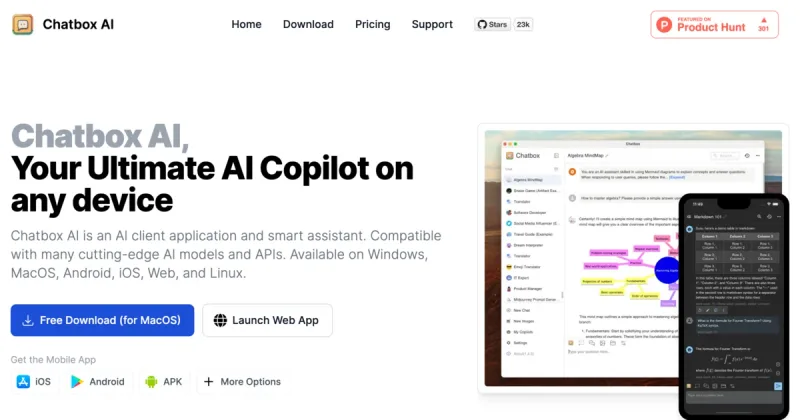
chatbox
Chatbox AI is a privacy-focused multi-model AI app that lets users chat with leading models (GPT, Claude, Gemini, Grok, DeepSeek and more), search the web in real time, build local knowledge bases from files, and run agentic Work Mode workflows on desktop, mobile, and web.


alpharesearch
AlphaResearch is an AI-powered research platform for investors that extracts insights from unstructured text (filings, transcripts, press releases) and combines them with institutional-grade fundamentals, estimates and analytics for stock research and financial modeling.

Humantic AI
Humantic AI is a buyer-intelligence platform for revenue and GTM teams that combines account intelligence, people intelligence, visitor identification and activation tools (Agent Miia, Agent Pi, Vidar, Kairos, HumanMail) to help sales teams research accounts, personalize outreach, and activate insights inside existing workflows.
Semantic Scholar
Semantic Scholar is a free, AI-powered research tool from the Allen Institute for AI (Ai2) for discovering and reading scientific literature, offering search across hundreds of millions of papers, an API for developers, and an augmented reader (Semantic Reader) in beta.

chaingpt
ChainGPT is a Web3-focused AI platform that provides a suite of AI-powered tools for blockchain and crypto use cases — including a Web3 AI chatbot, smart-contract generator & auditor, AI NFT generator, trading assistant, security extension, an AIVM for on-chain LLM execution, and API/SDK access for developers and businesses.

verbalate
Verbalate is an AI-powered audiovisual translation platform that translates and dubs audio and video content, offering AI voice cloning, optional lip-sync, subtitles, and enterprise API and human-in-the-loop verification to localize content in 230+ languages and 800+ language pairs.

CommanderGPT
CommanderGPT is an AI command interface for running slash commands and reusable workflows across multiple AI models. It supports individual and team use with command libraries, context memory, shared playbooks, and integrations.
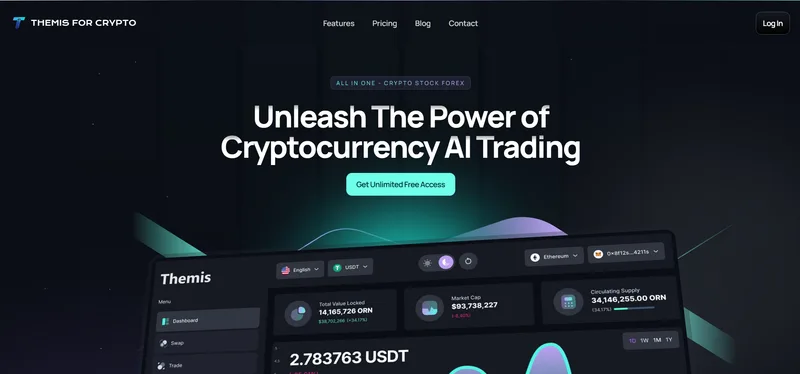
Themis For Crypto
Themis For Crypto is an AI-assisted trading platform for researching crypto, stocks, and forex, backtesting strategies, and creating automated trading bots. It offers a WhatsApp AI assistant, with paid plans adding trading bots and other capabilities.

aftercare
Aftercare is an AI-powered survey platform and set of APIs that generate intelligent follow-up questions, assess open-ended response quality, and automatically code and categorize survey responses to surface deeper insights for research teams and survey professionals.

omnisearch
Omnisearch is a multimodal AI-powered search platform that instantly indexes and searches video, audio, images and text to surface faces, logos, scenes and spoken or written words across large media collections with real-time indexing and enterprise deployment options.


FAQ
What matters most for education teams?
Citation quality, explainability, and policy-safe outputs are more important than raw speed.
How should we validate research outputs?
Use a verify-first process: source check, fact check, and consistency check before publishing.