
CiteRank
CiteRank is a weekly SaaS monitoring tool that re-asks buyer questions of major AI answer engines (ChatGPT, Perplexity, Google AI Overviews, Gemini and Claude) to record whether they cite your site, name your brand, or leave you absent, and delivers board-style reports and competitor/source lists.
CiteRank is research software teams evaluate for research. Use this page to review pricing, integration signals, and the best alternatives before you commit.
Profile facts come from the vendor source. AiMatch labels unknown pricing or API details instead of estimating them.
Review official source →Quick Overview
Best for: Research
What it does
Research software for decision-makers comparing workflow fit and alternatives.
Best fit
Research
Pricing snapshot
Paid from $5 / month
Next step
Compare CiteRank with similar tools before you shortlist it.
Compare this tool before you shortlist it
Review alternatives, pricing posture, and workflow fit side by side.
CiteRank is a visibility-monitoring service for the new class of AI answer engines. It re-asks configured buyer questions to multiple AI engines on a weekly cadence and records whether each engine linked a page on your domain (cited), typed your brand without linking (named), or left the question to somebody else (absent). The product presents results as a board (one row per question, one column per engine) and supplements that board with weekly lists of the competitor domains and the third-party pages the engines read instead of yours. Reports are delivered by email and the dashboard is accessed by a single emailed link (no password). The tool is aimed at product and marketing teams who want an operational work queue (pages to appear on) rather than a vanity visibility metric.
One row per buyer question, one column per engine. From $5/mo.
Own this listing?
Claim this page for a one-time $29 to add pricing, features, screenshots, verified owner details, and a clearly labeled 30-day category position after the profile is live.
Claim this listing for $29Key Features
Weekly multi-engine probes
Re-asks each configured buyer question of the covered engines once every seven days and records cite/named/absent/not asked states.
Board view (one row per question, one column per engine)
A matrix that shows a straight answer in every cell for the questions and engines covered by your plan.
Competitor share-of-voice and cited-source lists
A weekly list of competitor domains engines cited and the third-party pages behind answers to drive remediation work.
Emailed dashboard link & weekly reports
Reports are mailed on a Monday and the only credential is a dashboard link emailed on purchase; no password is created.
Shared scheduled browser pool
Probes run on a shared, scheduled browser pool (design choice that underpins weekly scheduling rather than on-demand runs).
Plan-based coverage
Plans control number of brands/products, questions, and which engines are probed (e.g., Solo covers three engines; Founder and Studio cover five).
Privacy-minded payment handling
Card details are handled via Stripe Checkout so payment card data never reaches the site.
Pricing
One free check: check one question free (single-question free probe available).
Solo
$5 / month- 1 product/brand
- 10 questions
- Columns: ChatGPT, Perplexity, Google AI Overviews (three engines)
Founder
$12 / month- 3 products/brands
- 25 questions
- Columns: ChatGPT, Perplexity, Google AI Overviews, Gemini, Claude (five engines)
- Cited-source list
Studio
$19 / month- 6 products/brands
- 50 questions
- Columns: ChatGPT, Perplexity, Google AI Overviews, Gemini, Claude (five engines)
- Cited-source list
Use Cases
Monitor AI visibility across engines
Track whether major answer engines cite your site or mention your brand for target buyer queries and watch trends weekly.
Prioritise content and outreach work
Use the cited-source and competitor domain lists as a hands-on work queue to get your pages onto the third-party pages engines read.
Competitive share-of-voice analysis
See which competitor domains answer your buyer questions across AI engines to identify where to focus SEO/PR efforts.
Product marketing performance monitoring
Founders and product teams can watch whether the engines surface their product for core buyer questions and measure change over time.
Integrations
ChatGPT, Perplexity, Google AI Overviews, Gemini, Claude
The answer engines CiteRank probes weekly to record citation and naming behavior.
Stripe
Payment processing: card details entered on Stripe Checkout and never reach the site.
Supabase
Serves the product's own index database.
Vercel
Hosting and edge delivery; request logs are recorded there.
Resend
Delivers the one email the subscribe form sends (and other transactional emails).
PostHog
Product analytics with IP-truncated data.
Benefits
Limitations
Frequently Asked Questions
What does $5 buy?
I ship more than one product. Is that more than one subscription?
Why weekly and not on demand?
What is the difference between cited, named and absent?
Will this get me into ChatGPT?
What happens when an engine cannot be reached?
I lost the dashboard link. How do I get back in?
How do I cancel?
Getting Started
- 1 Step 1: Choose and purchase a plan (Solo $5, Founder $12, Studio $19) via the site.
- 2 Step 2: Receive the dashboard link emailed to the address you subscribed with (this link is your credential).
- 3 Step 3: Review or edit the suggested questions (the product reads your site and proposes three questions) and let weekly probes run; read weekly emailed reports.
Support
Primary contact and cancellation address: [email protected]
docs
On-site Guides, How-to and reference pages (site includes 'Guides', 'How to rank', example reports and reference material).
API
Referenced endpoints include https://citerank.thecompound.tech/api/stats and https://citerank.thecompound.tech/api/site-info (used by the product to read site questions and stored reads).
Compare CiteRank with similar tools
See how it stacks up against alternatives
Related Tools
View all 136 →
ThoughtDAG
ThoughtDAG is an open-source, desktop-first application that makes LLM context visible, editable, and reproducible by representing context as an editable directed acyclic graph (wires = context) and letting users preview and control exactly what the model receives.

LLM Attention Visualization
A browser-based interactive visualization that shows how transformer LLMs allocate attention to past tokens during generation by aggregating attention weights and value magnitudes across heads and layers.
PilotCite
PilotCite is a SaaS platform that helps brands monitor and improve their visibility in AI-generated answers (ChatGPT, Perplexity, Google AI, Gemini, Claude, Copilot, Grok) by tracking citations, auditing site citability, benchmarking competitors, and generating source-backed content.
HieraticBench
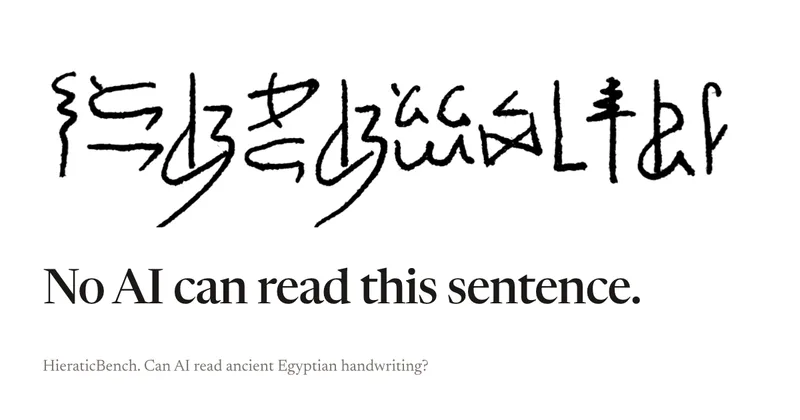
HieraticBench is an open benchmark for testing whether AI models can identify and read hieratic, the cursive handwriting of ancient Egypt. It includes a public leaderboard, evaluation harness, and dataset of documents and individual signs.

Knowledge graph skill for Claude/Kimi Code
SysEdge is an ontological knowledge graph and CLI for multi-agent Claude Code and Kimi Code teams that models requirements, tests, and architecture standards to surface specification, test, and standards gaps before code ships and to reduce agent orientation tokens.
Redactle LLM Leaderboard
A public benchmark dashboard that evaluates how well large language models (LLMs) solve Redactle puzzles by running standardized evaluations and publishing ranked results, costs, and performance metrics.
Budget-Friendly Alternatives
PilotCite
PilotCite is a SaaS platform that helps brands monitor and improve their visibility in AI-generated answers (ChatGPT, Perplexity, Google AI, Gemini, Claude, Copilot, Grok) by tracking citations, auditing site citability, benchmarking competitors, and generating source-backed content.
Knowledge graph skill for Claude/Kimi Code
SysEdge is an ontological knowledge graph and CLI for multi-agent Claude Code and Kimi Code teams that models requirements, tests, and architecture standards to surface specification, test, and standards gaps before code ships and to reduce agent orientation tokens.

Embench
Embench is a browser-based retrieval lab that lets you index a corpus and compare retrieval stacks (semantic, BM25 keyword, grep, hybrid, and reranked) side-by-side with inline evaluation metrics (precision, recall, MRR). It provides embedded open-source models and a stable JSON REST contract for runs.

Research on LLM Disagreement on Factual Claims
A 2026 open-access preprint reporting an empirical study that measures disagreement among five frontier large language models (LLMs) when adjudicating 1,000 real-world fact-checking claims; includes dataset, harness, and raw results.
Dimeadozen
DimeADozen.ai is an AI-driven startup idea validation service that generates research-backed, source-linked reports to help founders decide whether to build a business. It offers a free 2-minute idea score and paid one-time reports (from $9 to a $129 Entrepreneur report) with citations and cohort math.