

Agent-shell
agent-shell is a native Emacs mode for interacting with AI agents powered by ACP (Agent Client Protocol), providing shell-, viewport-, and chat-style interaction modes, prompt queuing, Markdown rendering and a variety of Emacs-centric integrations for interactive agent workflows.
Agent-shell is ai agents software teams evaluate for ai agents. Use this page to review pricing, integration signals, and the best alternatives before you commit.
Profile facts come from the vendor source. AiMatch labels unknown pricing or API details instead of estimating them.
Review official source →Quick Overview
Best for: AI Agents
What it does
AI Agents software for decision-makers comparing workflow fit and alternatives.
Best fit
AI Agents
Pricing snapshot
Contact for pricing
Next step
Compare Agent-shell with similar tools before you shortlist it.
Compare this tool before you shortlist it
Review alternatives, pricing posture, and workflow fit side by side.
agent-shell is a native Emacs mode that provides an interactive interface for AI agents powered by the Agent Client Protocol (ACP). It offers multiple interaction styles — a shell-like comint experience, an optional viewport mode, and a newer chat mode that blends shell behavior with chat-like labeling. The project targets Emacs users and developers who want to run, customize, and integrate AI agents inside their Emacs workflows. The release notes describe user-facing commands, customization variables, performance improvements, and contributions from the community; the project is actively maintained with frequent commits, merged pull requests, and issue tracking.
Another month, another agent-shell update. If you missed the last one, have a look at the 0.63 update. While this post showcases the latest highlights...
Own this listing?
Claim this page for a one-time $29 to add pricing, features, screenshots, verified owner details, and a clearly labeled 30-day category position after the profile is live.
Claim this listing for $29Key Features
Multiple interaction modes
Provides a shell-like comint mode, a viewport mode (agent-shell-prefer-viewport-interaction), and a chat mode that fuses comint with chat-style labeling (agent-shell-chat-mode). Chat mode is enabled by default but can be toggled.
Prompt queueing
Queue prompts while an agent is busy and view, resume, or remove pending prompts via dedicated commands (agent-shell-prompt-queue, agent-shell-prompt-queue-resume, agent-shell-prompt-queue-remove).
Prompt composition buffer
M-x agent-shell-prompt-compose opens a dedicated buffer to craft prompts from any buffer; C-c C-c sends and returns you to the previous buffer and C-u C-c C-c submits and opens a new queued prompt.
Faster startup typing
Shell prompts are now offered as soon as possible so users can start typing before full shell initialization completes.
Improved Markdown rendering
Better treatment of Markdown lists (normalized padding, indentation and bullets) and Markdown table rendering with auto-wrapping to fit Emacs windows.
TAB navigation and actionable hints
TAB navigation can move to actionable sections (Markdown source blocks, links, images) with hints echoed on landing and mouse-over, and RET performs context-appropriate actions.
Image sizing and resizing
Supports agent-annotated Pandoc-style image attributes for per-image scaling, a preferred default via agent-shell-markdown-image-max-width, auto-resize on window changes, and manual rescale of images in-buffer or at point.
Configurable file opening behavior
Opening local files (links, images, or @file mentions) routes through agent-shell-file-display-action, a standard display-buffer action that can be customized (default reuses or takes over current window).
xref integration
Following a local file link pushes the origin onto xref's marker stack so xref-go-back (M-,) returns to the original location in agent-shell.
Foldable UI fragments and keybindings
Foldable fragments use agent-shell-ui-fragment-map and agent-shell-ui-toggle-fragment; users can rebind the toggle (e.g., to TAB) to suit their workflow.
Styling and faces
Provides customizable faces such as agent-shell-thought-body to style agent thoughts differently.
Streaming and performance improvements
Streaming performance optimizations and profiling-based improvements to make streamed output more efficient.
Programmatic hooks & dynamic configs
Supports dynamic agent config makers (agent-shell-agent-configs can be a function) and broadcasts agent-message-chunk events via agent-shell-subscribe-to for external integrations.
Remote agent / TRAMP support
Fixes and improvements such as executable-find working correctly on remote hosts to smooth TRAMP-driven remote agents.
Third-party ecosystem
Third-party packages can extend functionality (example: agent-shell-hq for managing multiple sessions).
Pricing
Current pricing details are not available from the vendor source.
Use Cases
Interact with AI agents inside Emacs
Use shell, viewport or chat modes to run and converse with AI agents directly in Emacs buffers for coding assistance, information retrieval, or scripted agent workflows.
Compose and queue prompts
Craft prompts from any buffer using agent-shell-prompt-compose, queue prompts while agents are busy, and manage the pending queue with resume/remove commands.
Integrate streamed agent output with external tooling
Subscribe to agent-message-chunk events (agent-shell-subscribe-to) to observe streamed output and build integrations or external consumers.
Work with remote agents
Run agents on remote hosts via TRAMP-aware behavior and executable-find fixes to support remote agent workflows.
Extend and script agent-shell in Emacs Lisp
Customize agent configurations dynamically via functions, rebind fragment toggle keys, and use provided public functions and hooks to script advanced behaviors.
Integrations
agent-shell-subscribe-to / agent-message-chunk
Broadcasts streamed agent output events for external integrations to observe and consume agent message chunks.
agent-shell-hq (third-party)
A third-party package mentioned as an interface for managing multiple agent-shell sessions.
TRAMP / remote host support
Executable-find fixes and behavior improvements to support running agents on remote hosts via TRAMP.
xref
Integration with xref so following local file links pushes origin onto xref's marker stack for easy navigation back.
Benefits
Limitations
Frequently Asked Questions
No verified FAQs are available.
Getting Started
- 1 Enable or open agent-shell in Emacs and use the provided interaction modes (chat mode can be toggled with M-x agent-shell-chat-mode).
- 2 Compose prompts from any buffer with M-x agent-shell-prompt-compose and send with C-c C-c (use C-u C-c C-c to submit and craft another queued prompt).
- 3 Manage queued prompts using M-x agent-shell-prompt-queue, M-x agent-shell-prompt-queue-resume, and M-x agent-shell-prompt-queue-remove, and customize behavior via setq variables described in the release notes.
Support
Sponsorship
The author requests sponsorships to support ongoing development and sustainability (mentioned in the post).
Contributions / GitHub
The project accepts pull requests and issues (the update lists merged PRs and closed issues and invites contributions).
Documentation / Release notes
Release notes and documentation are provided on the project site (the current page documents the 0.73 updates and features).
API
Compare Agent-shell with similar tools
See how it stacks up against alternatives
Related Tools
View all 651 →
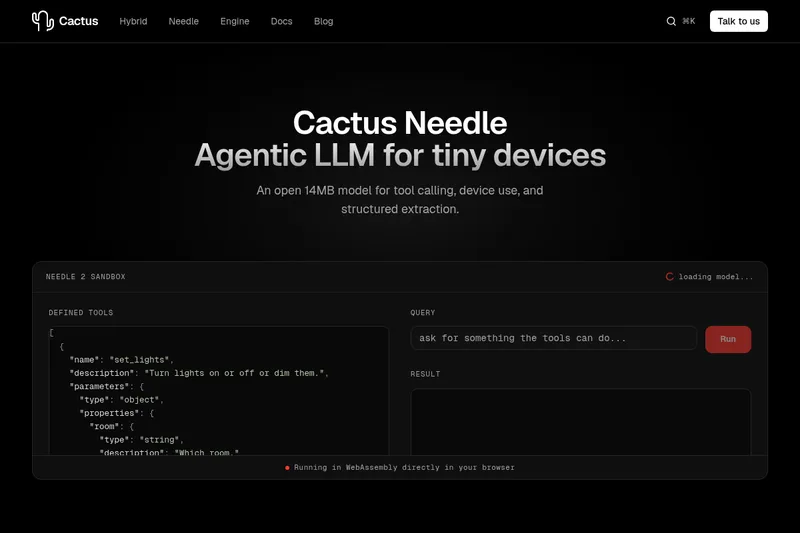
Needle2
Needle 2 is an open, production-ready 45M-parameter agentic LLM from Cactus designed for tool calling, device control, and structured extraction on extremely small devices; the shipped CQ2-bit binary is ~14 MB and runs in ~28 MB of RAM across Cortex-M, microcontrollers, phones, Raspberry Pi and WebAssembly.
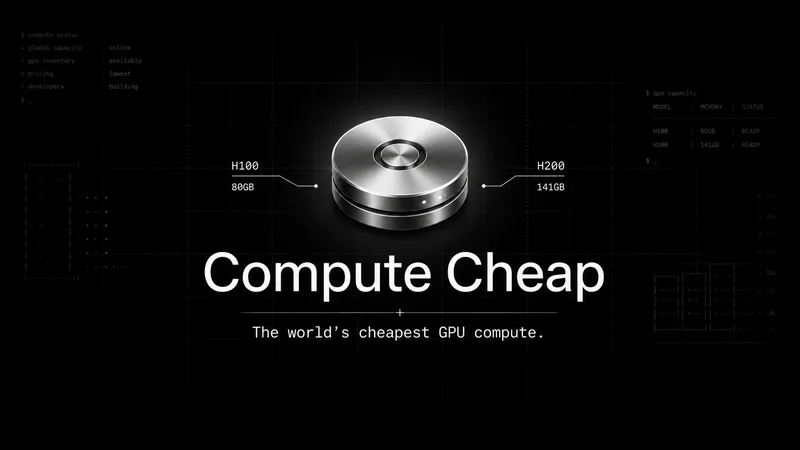
The cheapest GPU cloud
Compute Cheap provides low-cost GPU compute for training and inference, offering H100 and H200 SXM GPUs as interruptible or reserved capacity with published per-GPU-hour pricing and a simple request/reserve/run workflow.


Oodle.ai
Oodle Agent Observability provides agent/LLM observability at scale with S3-backed columnar storage, fast search (<1s P99), out-of-the-box AI-powered insights, and flat ingestion-based pricing designed to retain 100% of traces affordably for debugging and optimizing production agents.


Premium Alternatives
Abliterated LLM provider for cyber tasks
Refuseless hosts GLM 5.3 Abliterated models through an OpenAI-compatible API for cybersecurity and coding work. The page states that prompts are not retained and shows integrations with OpenCode and Pi.
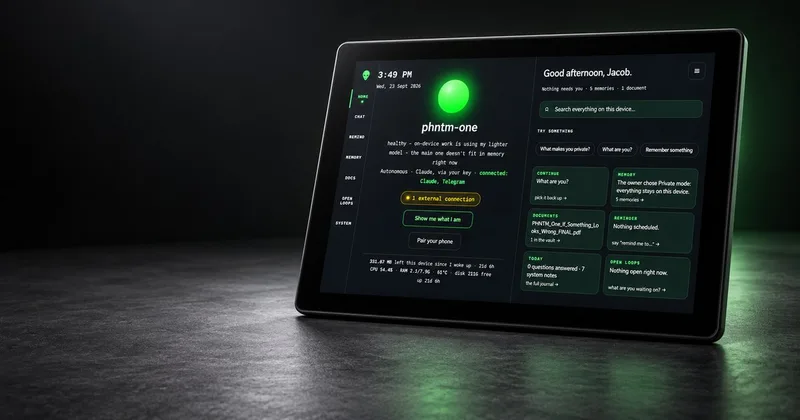
PHNTM ONE
PHNTM One is a private, local-first AI appliance: a hand-built desktop device (Raspberry Pi 5, 8 GB, 10.1″ touchscreen) that runs an on-device model (Gemma 3 4B) to provide a voice-capable assistant, memories, document reading, timers, Home Assistant integration and offline knowledge — sold as a one-time $549 purchase with no subscription and zero telemetry by default.
AletheionAGI
AletheionAGI provides a grounded-memory layer for AI systems that enforces evidence-bound delivery, namespace isolation, and policy authorization so AI readers cannot produce unsupported claims. It's targeted at production-facing use cases like customer support, commerce agents and internal copilots.


ClaudeThings
ClaudeThings provides a packaged, continuously-updating set of 89 specialized agents, 103 pre-built skills, and 181 slash commands that act as an AI engineering and marketing team for Claude Code — delivered as a private GitHub repo and installed with a single npx command. It adapts to any stack via a CLAUDE.md project manifest and is sold as a one-time purchase with lifetime updates.

Miro
Miro is a collaborative visual workspace and AI platform that integrates intelligent agents (Sidekicks), visual multi-step workflows (Flows), and connectors to bring team context and external data into a shared canvas to accelerate planning, design, and decision-making across organizations.

Keybe AI (Keybe INC)
Keybe AI (Keybe INC) is an AI-powered sales suite that provides deployable 'AI salesperson' assistants and a Smart Chat sales platform (CDP, funnels, outbound, catalogs, metrics and flows) for businesses to automate customer service and increase conversions.