
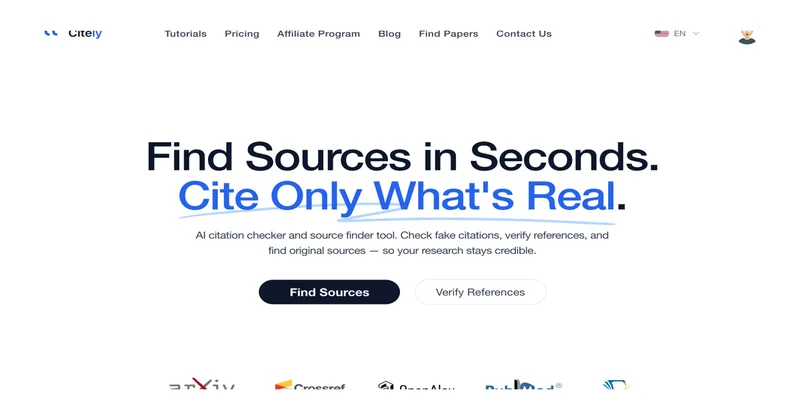
Citely AI
Citely is an AI citation checker and source-finding tool for researchers. It verifies references, flags potentially fabricated or mismatched citations, and finds academic sources with citation metadata.
Citely AI is research software teams evaluate for education & research. Use this page to review pricing, integration signals, and the best alternatives before you commit.
Profile facts come from the vendor source. AiMatch labels unknown pricing or API details instead of estimating them.
Review official source →Used in These Packs
Quick Overview
Best for: Education & Research
What it does
Research software for decision-makers comparing workflow fit and alternatives.
Best fit
Education & Research
Pricing snapshot
Paid from $9 one-time
Next step
Compare Citely AI with similar tools before you shortlist it.
Compare this tool before you shortlist it
Review alternatives, pricing posture, and workflow fit side by side.
Citely is an online research tool for finding academic sources and checking citations. Its Source Finder accepts a claim or paragraph and returns academic sources with verified metadata; its citation and reference checkers review references for authenticity and flag fake, mismatched, or unverifiable entries.
The page presents Citely for students, academics, research teams, librarians, and journal editors. It also describes checking AI-generated references and finding citations in APA and MLA, with additional citation export formats available on paid plans.
Verify citations and find academic sources with AI Citely AI is a AI Citation Checker Tool featured on Dang.ai. Learn more about Citely AI's AI tool.
Own this listing?
Claim this page for a one-time $29 to add pricing, features, screenshots, verified owner details, and a clearly labeled 30-day category position after the profile is live.
Claim this listing for $29Key Features
AI Source Finder
Paste a claim or paragraph to find academic sources with verified metadata. The page says it connects with CrossRef, PubMed, arXiv, Google Scholar, and OpenAlex for source validation.
Citation and reference checking
Submit citations or a reference list to check authenticity and flag fake, mismatched, or unverifiable references.
AI-generated citation checking
Checks references attributed to tools such as ChatGPT, Claude, and Gemini, and describes detection of fabricated DOIs, chimera citations, and temporal drift.
Citation discovery and export
Citation Finder returns ready-to-cite references in APA and MLA. Paid plans include citation export in APA, MLA, and Chicago.
Pricing
Trial
$9 one-time- 15 credits
- Find Source: up to 300 characters
- Verify References: up to 2,000 characters
- Basic verification
Monthly
$19/month, billed monthly; cancel anytime- 150 credits per month
- Find Source: up to 300 characters
- Verify References: up to 4,000 characters
- Advanced source verification
Yearly
$14/month, billed yearly; cancel anytime- 1,500 credits per year
- Find Source: up to 300 characters
- Verify References: up to 4,000 characters
- Advanced source verification
Believer
$347 one-time; access for 3 years- 5,000 credits for 3 years
- Find Source: up to 300 characters
- Verify References: up to 4,000 characters
- Advanced AI analysis
Use Cases
Verify references in research papers
Check citations and reference lists for fake, mismatched, or unverifiable entries before submitting or sharing research.
Find sources for a claim
Paste a claim or paragraph to locate academic sources and verified metadata for research.
Review AI-generated references
Check references generated by ChatGPT, Claude, or Gemini for signs of fabricated or otherwise questionable citations.
Check citations during peer review
Journal editors and research teams can use citation verification to identify submissions with questionable references, as described on the page.
Integrations
CrossRef
Listed as an academic database used for source validation and checking references.
PubMed
Listed as an academic database used for source validation and checking references.
arXiv
Listed as an academic database used for source validation and checking references.
Google Scholar
Listed among the academic databases connected to the source-finding and validation tools.
OpenAlex
Listed as a database used to verify AI-generated references.
Reference managers
The page includes a user testimonial describing integration with existing reference managers; it does not name specific products.
Benefits
Limitations
Frequently Asked Questions
No verified FAQs are available.
Getting Started
- 1 Create an account using the page’s Sign Up option.
- 2 For source discovery, paste a claim or paragraph into Source Finder; for reference checking, submit text or a reference list to the relevant checker.
- 3 Review the sources or flagged references returned by the tool.
Support
Email support
Included with the Trial and Monthly plans.
Priority support
Included with the Yearly plan.
Dedicated support
Included with the Believer plan.
Guides and tutorials
The page links to tutorials, a blog, citation tools, and guides, including a guide on checking whether a citation is real.
API
Compare Citely AI with similar tools
See how it stacks up against alternatives
Related Tools
View all 143 →
ThoughtDAG
ThoughtDAG is an open-source, desktop-first application that makes LLM context visible, editable, and reproducible by representing context as an editable directed acyclic graph (wires = context) and letting users preview and control exactly what the model receives.

LLM Attention Visualization
A browser-based interactive visualization that shows how transformer LLMs allocate attention to past tokens during generation by aggregating attention weights and value magnitudes across heads and layers.

PilotCite
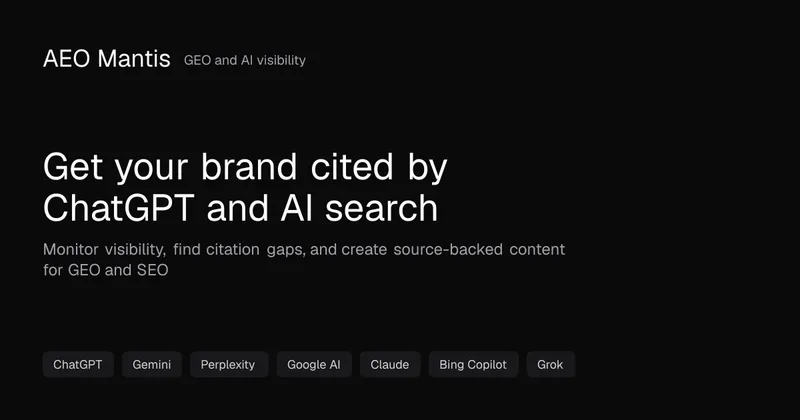
PilotCite is a SaaS platform that helps brands monitor and improve their visibility in AI-generated answers (ChatGPT, Perplexity, Google AI, Gemini, Claude, Copilot, Grok) by tracking citations, auditing site citability, benchmarking competitors, and generating source-backed content.

Knowledge graph skill for Claude/Kimi Code
SysEdge is an ontological knowledge graph and CLI for multi-agent Claude Code and Kimi Code teams that models requirements, tests, and architecture standards to surface specification, test, and standards gaps before code ships and to reduce agent orientation tokens.
Redactle LLM Leaderboard
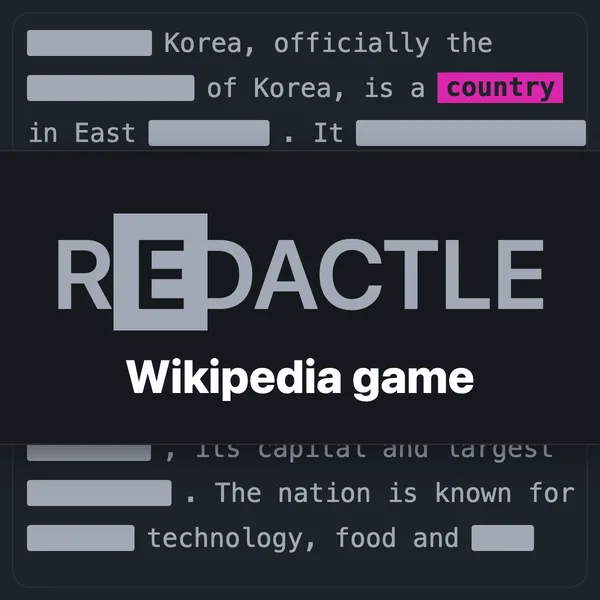
A public benchmark dashboard that evaluates how well large language models (LLMs) solve Redactle puzzles by running standardized evaluations and publishing ranked results, costs, and performance metrics.
HieraticBench
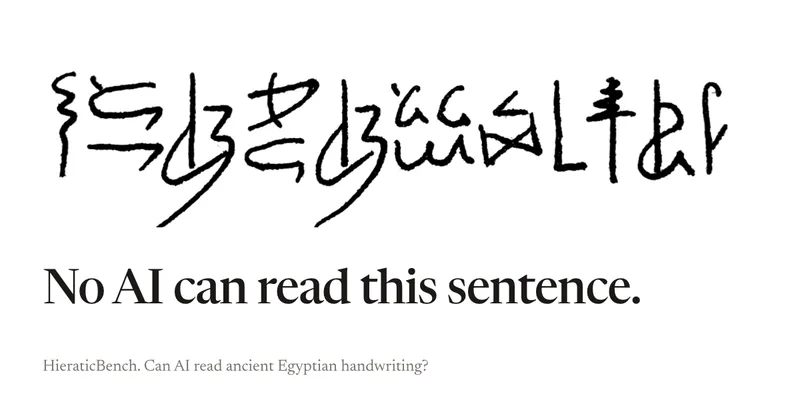
HieraticBench is an open benchmark for testing whether AI models can identify and read hieratic, the cursive handwriting of ancient Egypt. It includes a public leaderboard, evaluation harness, and dataset of documents and individual signs.
Budget-Friendly Alternatives
PilotCite
PilotCite is a SaaS platform that helps brands monitor and improve their visibility in AI-generated answers (ChatGPT, Perplexity, Google AI, Gemini, Claude, Copilot, Grok) by tracking citations, auditing site citability, benchmarking competitors, and generating source-backed content.
Knowledge graph skill for Claude/Kimi Code
SysEdge is an ontological knowledge graph and CLI for multi-agent Claude Code and Kimi Code teams that models requirements, tests, and architecture standards to surface specification, test, and standards gaps before code ships and to reduce agent orientation tokens.


Research on LLM Disagreement on Factual Claims
A 2026 open-access preprint reporting an empirical study that measures disagreement among five frontier large language models (LLMs) when adjudicating 1,000 real-world fact-checking claims; includes dataset, harness, and raw results.

Embench
Embench is a browser-based retrieval lab that lets you index a corpus and compare retrieval stacks (semantic, BM25 keyword, grep, hybrid, and reranked) side-by-side with inline evaluation metrics (precision, recall, MRR). It provides embedded open-source models and a stable JSON REST contract for runs.