
Codex Remote
Codex Remote is an open-source macOS app and toolchain that provisions remote machines on cloud providers and installs AI runtimes (Claude, Codex) and agent tooling, letting you run agents and developer workflows on rented boxes while keeping credentials local.
Codex Remote is ai tools software teams evaluate for developer tools. Use this page to review pricing, integration signals, and the best alternatives before you commit.
Profile facts come from the vendor source. AiMatch labels unknown pricing or API details instead of estimating them.
Review official source →Used in These Packs
Quick Overview
Best for: Developer Tools
What it does
AI Tools software for decision-makers comparing workflow fit and alternatives.
Best fit
Developer Tools
Pricing snapshot
Pricing available on request
Next step
Compare Codex Remote with similar tools before you shortlist it.
Compare this tool before you shortlist it
Review alternatives, pricing posture, and workflow fit side by side.
Codex Remote is an open-source macOS application and operator tooling that automates creating cloud machines, bootstrapping them over SSH, installing the Codex CLI and Claude Code, and registering agents so remote AI runtimes and developer tools appear in your local workflows. It supports multiple cloud providers (Hetzner, AWS, DigitalOcean, Linode, Vultr, Scaleway) and uses an externally hosted registry (codexremote.io/registry.json) so new providers can be added without a release. The project is intended for developers and teams who want reproducible, agent-run remote machines for AI workloads while keeping credentials on the user’s Mac and paying the cloud provider directly.
Put Codex or Claude Code on your own cloud machine Discussion | Link
Own this listing?
Claim this page for a one-time $29 to add pricing, features, screenshots, verified owner details, and a clearly labeled 30-day category position after the profile is live.
Claim this listing for $29Key Features
One-click machine creation
Creates a server on supported clouds via OpenTofu modules, bootstraps over SSH, and applies a per-cloud module so one machine is made with your key and its own state file.
Installs AI runtimes and tooling
Installs the Codex CLI at /usr/local/bin/codex, Claude Code under its own account, and your MCP servers so models and agents run on the remote host.
Agent management with granular permissions
Agents can read machines, create and configure machines, run commands, sync projects, or destroy machines; each capability requires explicit permission and destructive actions need extra confirmation.
SSH configuration and app-server pairing
Registers each host with a Host codex-remote-<name> block in your SSH config so the app can start codex app-server over SSH and connect to the host.
Portable project sync
codex-remote push clones or copies project files and sends untracked configuration separately so gitignored .env or portable MCP servers travel with the machine.
Token and credential handling
Cloud tokens are stored in the macOS login keychain and never written to a file or OpenTofu state according to the site.
Provider registry and extensibility
Providers are defined in a JSON registry fetched at runtime (codexremote.io/registry.json); you can point the app at your own registry under Settings → Providers to use custom modules.
Systemd unit management
Everything installed shares a common prefix so systemctl status 'codex-remote-*' shows services and a stop/start can restore the whole setup.
Cross-platform cloud support
Supports multiple public clouds (listed on the site) and allows adding providers via registry entries without waiting for app releases.
Pricing
Open-source (MIT) software with no service fees from Codex Remote; you bring and pay your own cloud account directly.
Use Cases
Deploy AI runtimes on rented machines
Quickly create a cloud VM with Codex or Claude Code installed so you can run models or agents on dedicated hardware without manual bootstrap steps.
Agent-driven machine lifecycle
Allow an agent to inspect, create, configure, and manage machines for CI, automated experiments, or team workflows with controlled permission levels.
Custom provider or homelab modules
Point the app at a custom registry or open a pull request to add providers, enabling internal clouds, homelabs, or forks with organization-specific packages and volumes.
Portable development environments
Push projects and accompanying untracked configuration to remote machines so workspaces travel with the machine and run consistently.
Integrations
OpenTofu
Uses OpenTofu HCL modules to apply provider-specific infrastructure when creating machines; the registry entries include HCL for machine creation.
Cloud providers (Hetzner, AWS, DigitalOcean, Linode, Vultr, Scaleway)
Creates VMs on these providers using provider-specific modules and credentials you supply.
Claude / Claude Code
Installs and runs Claude Code under its own account so Claude can dial out and appear in your account.
SSH / systemd
Bootstraps machines over SSH, writes Host codex-remote-<name> entries to SSH config, and installs systemd units for each agent/service.
Local registry.json
Fetches a JSON provider catalogue at runtime (codexremote.io/registry.json) and allows pointing Settings → Providers to a custom registry URL.
Benefits
Limitations
Frequently Asked Questions
No verified FAQs are available.
Getting Started
- 1 Install the app: brew install --cask pandelisz/tap/codex-remote, or download the latest release, unzip and drag to Applications.
- 2 Add a cloud token for a supported provider (Hetzner, AWS, DigitalOcean, Linode, Vultr, Scaleway) — tokens go to your login keychain.
- 3 Press New machine in the app or hand the job to an agent to create and configure a machine; the app bootstraps it over SSH and registers it.
Support
Documentation
Operator’s Guide and docs available on codexremote.io (documentation and CONTRIBUTING.md referenced).
GitHub Releases
Releases and source code available via the project's GitHub (Releases link on the site).
Issues
File issues on the project's GitHub Issues page (link provided on the site).
API
Compare Codex Remote with similar tools
See how it stacks up against alternatives
Related Tools
View all 133 →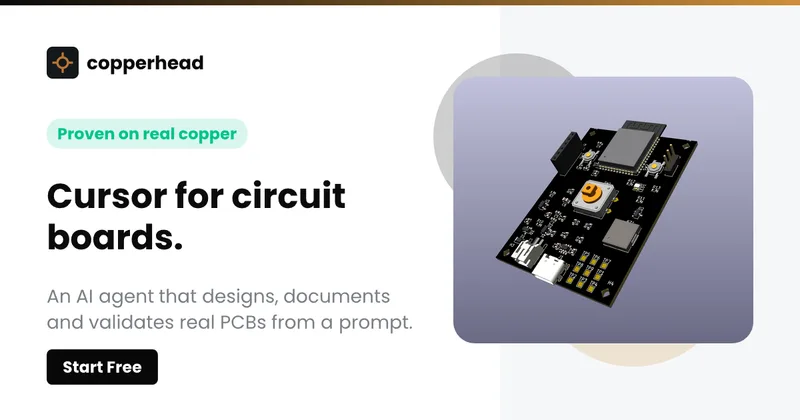
Copperhead
Copperhead is an open-source AI engineering platform and CLI that helps hardware teams design, verify, and ship printed circuit boards by editing KiCad files, running KiCad checks (ERC/DRC), and producing gerbers, firmware, and documentation in a gated, auditable pipeline.

Docs.dev Your Own Hosted Docs Platform in Minutes
Docs.dev is a deployable documentation template that runs as a Cloudflare Worker in your account, using your GitHub repo as the source of truth and agent-powered drafting (e.g., Claude Code or Codex) to generate reviewable docs branches that your team publishes via commit.


Bullet · Fast, by design.
Bullet is a fast coding agent and developer tool that routes, searches, and executes code-focused tasks with a tight loop to minimize latency — offered as a macOS download and currently available in private beta.
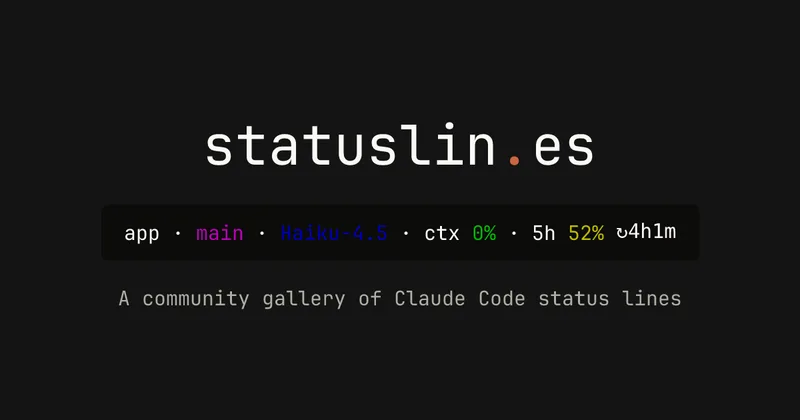
statuslin.es
statuslin.es is a community gallery of Claude Code status lines—copyable, previewed scripts and themes for terminal/status-bar displays that show Claude model stats (tokens, cost, limits), git info, and other runtime metrics.

Premium Alternatives
%22%2F%3E%20%3Ctext%20x%3D%2250%25%22%20y%3D%2250%25%22%20dominant-baseline%3D%22central%22%20text-anchor%3D%22middle%22%20font-family%3D%22system-ui%2C-apple-system%2Csans-serif%22%20font-weight%3D%22700%22%20font-size%3D%2250%22%20fill%3D%22white%22%3EO%3C%2Ftext%3E%20%3C%2Fsvg%3E)
OTP Inspired actor supervisor based full stack templates
ShipStacks provides production-grade, OTP-inspired full-stack SaaS templates that include supervisors/actor patterns, auth, payments, uploads, AI chat and agent playbooks, and Docker-ready deployment in multiple languages and frameworks.
TokenDelivery.ai
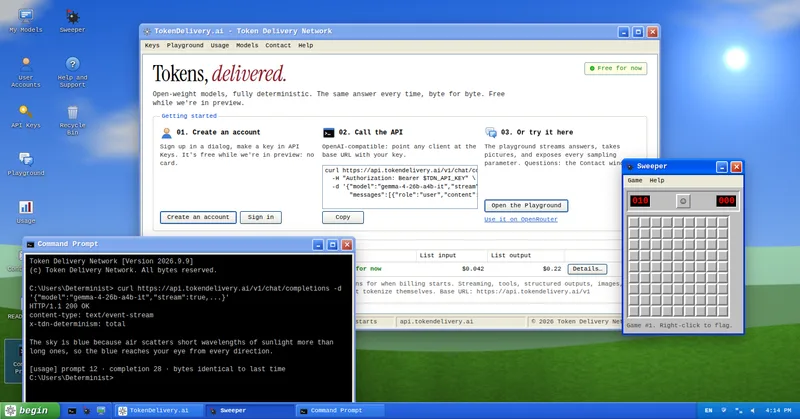
TokenDelivery.ai (Token Delivery Network) is an OpenAI-compatible model API and playground that offers reproducible, deterministic model outputs, streaming responses, multimodal inputs (images and short videos), and exposed sampling parameters. It is free during preview and provides API keys, a playground, and a documented base URL for developers.

Servers for AI, not another AWS
RAW offers dedicated GPU and CPU servers specifically built for AI workloads — provision real metal with root access and CUDA via a single API. It emphasizes low cost (claims up to 100× cheaper than AWS), $0 egress, fast provisioning, and enterprise features for inference, training, agents, and vector databases.

builderkit
BuilderKit is a modular Next.js AI boilerplate and starter kit that provides deployable TypeScript code, pre-built AI apps, UI components, auth, payments, and integrations to accelerate building and shipping AI SaaS products.

ratio1
Ratio1 is a blockchain-powered, decentralized AI operating system and edge/cloud computing platform that enables rapid development and deployment of AI apps, a tokenized GPU compute marketplace, and node-based infrastructure via Node Deeds and the $R1 utility token.

runpod
Runpod is an AI Developer Cloud that provides on-demand GPU infrastructure—Pods, Serverless endpoints, and multi-node Clusters—enabling teams to experiment, train, fine-tune, deploy, and scale AI workloads across 31 global regions with support for 30+ GPU SKUs.