
dust
Dust is an enterprise-focused platform for building, sharing, and running AI agents that connect company knowledge, tools, and teams to automate real workflows with human oversight and governance.
dust is ai agents software teams evaluate for business operations. Use this page to review pricing, integration signals, and the best alternatives before you commit.
Profile facts come from the vendor source. AiMatch labels unknown pricing or API details instead of estimating them.
Review official source →Quick Overview
Best for: Business Operations
What it does
AI Agents software for decision-makers comparing workflow fit and alternatives.
Best fit
Business Operations
Pricing snapshot
Contact for pricing from Try for free (self-serve trial available)
Next step
Compare dust with similar tools before you shortlist it.
Compare this tool before you shortlist it
Review alternatives, pricing posture, and workflow fit side by side.
Dust connects company knowledge, tools, and teams so organizations can create, share, and run AI agents across real workflows. The platform aggregates context from Slack, CRM, docs, and other systems so agents can answer with the full picture and take action, enabling human-agent collaboration (what the company calls 'multiplayer AI'). Dust targets teams and enterprises, offering connectors, model flexibility, governance controls, and deployment options suitable for production use across functions such as engineering, support, sales, marketing, and data teams.
AI assistant for teams, providing secure access to LLMs and company knowledge.
Own this listing?
Claim this page for a one-time $29 to add pricing, features, screenshots, verified owner details, and a clearly labeled 30-day category position after the profile is live.
Claim this listing for $29Key Features
Agents with company context
Connect Dust to 70+ connectors (including Slack, Notion, Google Drive, GitHub, Salesforce, and Zendesk) so agents have the necessary context from company systems to act.
Multiplayer AI workflows
Bring people and agents into the same workflow to coordinate complex cross-functional work using shared context, reusable skills, connected tools, and human review.
Model flexibility
Build agents using 20+ frontier and open-source models from providers such as OpenAI, Anthropic, Google, and Mistral; choose the model that fits each workflow.
AI-native governance and security
Dual-layer permission model, SCIM-synced groups, admin overrides, zero privilege escalation, audit logs, analytics, and controls for data access, tools, systems, and agents.
Pricing
Try for free (self-serve trial available as advertised on the site).
Free / Try for free
Try for free (self-serve trial available)- Access to the platform to evaluate agents
- Connectors and basic agent building (subject to trial limits)
Enterprise
Contact sales for pricing- Dedicated single-tenant deployment
- Custom data residency and retention policies
- Shared workspace credits, volume pricing, dedicated customer success, and priority SLA support
Use Cases
Customer support operations
Ticket triage and routing, context-aware draft responses, knowledge synthesis from resolved tickets, and escalation detection to spot at-risk accounts.
Sales operations
Account research briefs, lead qualification and routing, proposal drafting from past wins, and CRM hygiene such as auto-logging calls and emails.
Marketing & content operations
Campaign brief generation grounded in brand assets, content localization and adaptation across markets, performance analysis, and social drafting.
Engineering & devops
AI-powered code debugging, automated code reviews, incident response runbooks, and continuous documentation generation from code changes.
Data & analytics
Self-service analytics (plain-English queries), pipeline monitoring and anomaly alerting, metrics standardization, and report drafting from queries.
Integrations
Slack
Use Slack context and messages as part of agent workflows and notifications.
Notion
Ingest Notion docs to provide knowledge context for agents.
Google Drive
Connect Google Drive documents to surface context for agent responses and actions.
GitHub
Surface relevant code, issues, and historical context inside engineering workflows and agents.
Salesforce
Use CRM records to inform sales-oriented agents (account research, proposal drafting).
Zendesk
Integrate ticketing data for support workflows such as triage, routing, and response generation.
Benefits
Limitations
No verified limitations are available.
Frequently Asked Questions
No verified FAQs are available.
Getting Started
- 1 Connect your data sources and tools (use the platform's connectors such as Slack, Notion, Google Drive, GitHub, Salesforce, Zendesk).
- 2 Build agents by composing context, skills, and selecting models (choose from supported models and open-source options).
- 3 Invite teammates, set permissions and governance controls (SSO/SCIM, permission layers), then monitor activity with audit logs and analytics.
Support
Docs
Platform Documentation and Developer resources referenced in site navigation.
Contact sales
Contact sales / Request a demo or use 'Try for free' links for onboarding and enterprise pricing discussions.
Community
Slack community listed in the site navigation for user engagement and support.
Trust Center
Trust Center and security datasheets referenced for security, compliance, and privacy information.
API
Compare dust with similar tools
See how it stacks up against alternatives
Related Tools
View all 671 →
Needle2
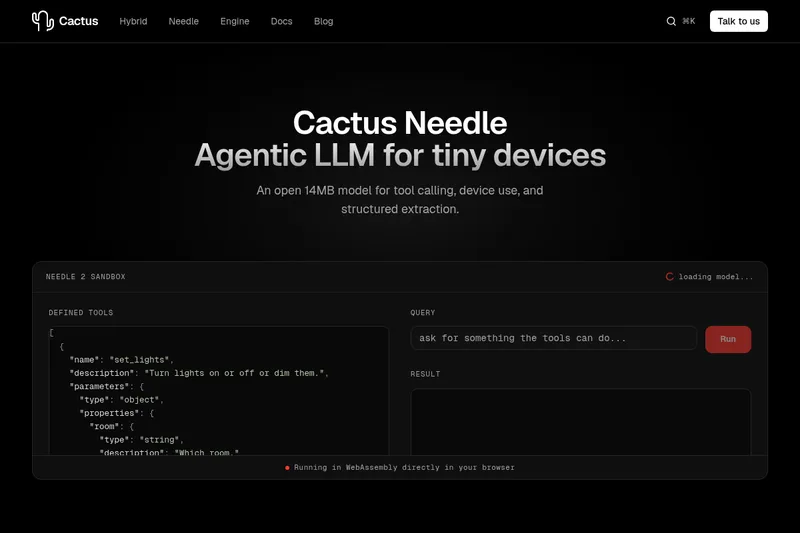
Needle 2 is an open, production-ready 45M-parameter agentic LLM from Cactus designed for tool calling, device control, and structured extraction on extremely small devices; the shipped CQ2-bit binary is ~14 MB and runs in ~28 MB of RAM across Cortex-M, microcontrollers, phones, Raspberry Pi and WebAssembly.
The cheapest GPU cloud
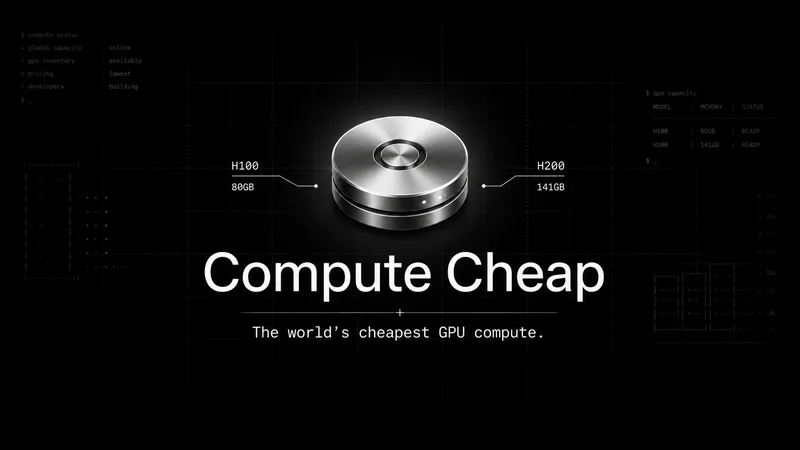
Compute Cheap provides low-cost GPU compute for training and inference, offering H100 and H200 SXM GPUs as interruptible or reserved capacity with published per-GPU-hour pricing and a simple request/reserve/run workflow.
Oodle.ai
Oodle Agent Observability provides agent/LLM observability at scale with S3-backed columnar storage, fast search (<1s P99), out-of-the-box AI-powered insights, and flat ingestion-based pricing designed to retain 100% of traces affordably for debugging and optimizing production agents.


Premium Alternatives
Abliterated LLM provider for cyber tasks
Refuseless hosts GLM 5.3 Abliterated models through an OpenAI-compatible API for cybersecurity and coding work. The page states that prompts are not retained and shows integrations with OpenCode and Pi.
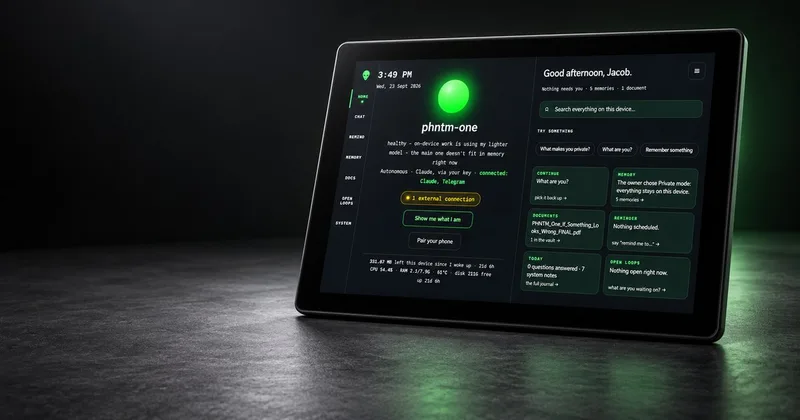
PHNTM ONE
PHNTM One is a private, local-first AI appliance: a hand-built desktop device (Raspberry Pi 5, 8 GB, 10.1″ touchscreen) that runs an on-device model (Gemma 3 4B) to provide a voice-capable assistant, memories, document reading, timers, Home Assistant integration and offline knowledge — sold as a one-time $549 purchase with no subscription and zero telemetry by default.
AletheionAGI
AletheionAGI provides a grounded-memory layer for AI systems that enforces evidence-bound delivery, namespace isolation, and policy authorization so AI readers cannot produce unsupported claims. It's targeted at production-facing use cases like customer support, commerce agents and internal copilots.

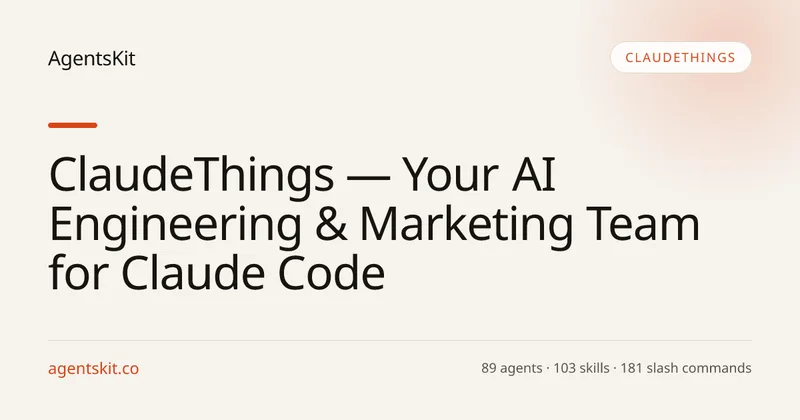
ClaudeThings
ClaudeThings provides a packaged, continuously-updating set of 89 specialized agents, 103 pre-built skills, and 181 slash commands that act as an AI engineering and marketing team for Claude Code — delivered as a private GitHub repo and installed with a single npx command. It adapts to any stack via a CLAUDE.md project manifest and is sold as a one-time purchase with lifetime updates.

Sitemanagerai
Site Manager AI is a web + iOS app that provides UK construction site managers and foremen instant, regulation-aware answers, on-site photo hazard analysis, and fast drafting of risk assessments, method statements and site reports.