

jurniti
jurniti is a secure managed agent platform that runs always-on AI agents inside dedicated Firecracker microVMs (KVM-backed) with BYOK (bring-your-own-key), fleet orchestration, observability, and optional sidecars for Memory and Communication. It targets developers and teams who need isolated, production-grade agent hosting.
jurniti is ai tools software teams evaluate for content & marketing. Use this page to review pricing, integration signals, and the best alternatives before you commit.
Profile facts come from the vendor source. AiMatch labels unknown pricing or API details instead of estimating them.
Review official source →Quick Overview
Best for: Content & Marketing
What it does
AI Tools software for decision-makers comparing workflow fit and alternatives.
Best fit
Content & Marketing
Pricing snapshot
Paid from Annual: $41/mo (billed $490 once a year) or Monthly: $49/mo
Next step
Compare jurniti with similar tools before you shortlist it.
Compare this tool before you shortlist it
Review alternatives, pricing posture, and workflow fit side by side.
jurniti is a managed platform for running AI agents in dedicated Firecracker microVMs (KVM-backed) so each agent gets hardware-enforced isolation, persistent storage, and model keys that live only inside the tenant VM. It provides a single CLI and web dashboard to provision and manage agents, deploy fleets (swarm runtime), and attach optional self-hosted sidecars for Memory, Observability, and Communication. The platform targets engineers, teams, and agencies who need production-grade, always-on agents with BYOK, observability, and data residency.
Always-on AI agents in Firecracker microVMs Discussion | Link
Own this listing?
Claim this page for a one-time $29 to add pricing, features, screenshots, verified owner details, and a clearly labeled 30-day category position after the profile is live.
Claim this listing for $29Key Features
Firecracker microVM per tenant
Each agent runs inside its own Firecracker microVM with a KVM hardware boundary (the same primitive AWS Lambda uses) for hardware-enforced isolation and fast boot (example: 124ms).
Bring Your Own Key (BYOK)
Model keys (OpenRouter, OpenAI, Anthropic, Nous Portal, etc.) live only inside the tenant VM; jurniti does not proxy or mark up model spend.
Harness catalog
Support for ~30 open-source agent runtimes (Hermes, Claude Code, Codex, OpenClaw, and many more), each installed in its own isolated VM and selectable per agent.
Fleet / Swarm runtime
Run large cohorts of isolated workers (e.g., boot 50 microVMs with jurniti up --count) and dispatch the same brief to many agents, collecting each agent's output locally.
Persistent Memory
Optional Memory sidecars (Obsidian, gbrain, mem0) provide long-term knowledge storage in a dedicated microVM that you grant to agents over MCP; memory stays on your tenant.
Observability sidecars
Self-hosted observability engines (Latitude or Langfuse) run in their own microVMs to keep sessions, tool-call traces and telemetry on your tenant (OTEL ingest supported).
Communication sidecars
Self-hosted messaging and multi-agent terminal runtimes (Buzz, Herdr) that keep messaging history and terminals on your tenant.
CLI and Dashboard
One binary CLI drives provisioning, billing, VMs, templates and doubles as an MCP server; a web dashboard provides VM/subdomain management and sidecar attachment.
Spot and on-demand hourly modes
Metered per-second on-hour billing (On-Demand $0.05/hr, Spot $0.025/hr) alongside flat monthly always-on plans.
Templates and forks
Public templates and private workflows let you fork working agent configurations into a microVM of your own (new subscription per fork).
Pricing
Pro (example)
Annual: $41/mo (billed $490 once a year) or Monthly: $49/mo- 2 vCPU · 6 GiB RAM · 50 GiB SSD · 200 Mbit/s burst
- Custom subdomain, persistent volume, and headroom for medium agents
On-Demand (hourly metered)
$0.05/hour (metered per second while running · 60s minimum)- Pay per second while VM runs at Starter sizing (1 vCPU · 2 GiB RAM)
- Good for short runs without a monthly commitment
Spot (cheaper hourly)
$0.025/hour (spot rate)- Lower cost for bursty, part-time agents; may queue if warm capacity isn't available
Use Cases
SEO rank testing and content variants
Fan a ranking brief across many isolated workers to generate and validate title/meta variants, then collect results into ./out for selection and shipping.
Market research & outreach
Use coding and agent harnesses (Claude Code, Codex) combined with templates (e.g., Clay Outbound Engine) to find prospects, draft outreach, and prepare reports while keeping keys and data private.
Always-on autonomous agents
Run long-running autonomous agents (Hermes, Headlong, Exo) that retain state via persistent Memory microVMs and operate without your laptop open.
Fleet testing & batch jobs
Run large batches of isolated agents for scaling experiments, scraping, or parallel processing with spot pricing to reduce cost.
Observability and compliance
Attach self-hosted observability sidecars (Latitude, Langfuse) to maintain traces and datasets in your tenant for auditability and data residency.
Integrations
Model providers (BYOK)
Supports OpenRouter, OpenAI, Anthropic, Nous Portal and other model keys that you paste into the VM (keys stay inside the tenant).
Observability engines
Latitude (agent-native traces, OTEL ingest) and Langfuse (open-source default) run as self-hosted sidecars for session and tool-call tracing.
Communication relays
Buzz (Open Buzz / Connect desktop) and Herdr run as self-hosted communication sidecars for multi-agent messaging and terminal UIs.
Benefits
Limitations
Frequently Asked Questions
Why a microVM instead of a Docker container?
What does BYOK actually mean here?
What does the 30-day guarantee cover?
Where do my VMs run?
Can I run multiple agents (Hermes + OpenClaw + Pi)?
Can I really run a fleet of agents at once?
Getting Started
- 1 Install the CLI: curl -fsSL https://jurniti.com/install.sh | sh.
- 2 Authenticate your machine: jurniti login and add a payment method: jurniti billing add-card.
- 3 Provision and boot an agent VM: jurniti up --harness <harness> (or use the dashboard to provision).
- 4 Add your model key or sign in on the VM: jurniti auth <vm> (paste your OpenRouter/OpenAI/Anthropic key inside the VM).
- 5 Optional: attach Memory, Observability, or Communication sidecars from the dashboard after sign-in.
Support
docs
Official documentation and setup guides available via the site ('Read the docs' link).
docs/blog
Blog and setup guides (Hermes Agent setup guide, Claude Code setup guide, etc.) on jurniti.com for examples and best practices.
billing/checkout
Stripe-backed checkout with magic-link sign-in and auto-provisioning after payment; refunds processed within one business day for first-plan cancellations.
API
Compare jurniti with similar tools
See how it stacks up against alternatives
Related Tools
View all 651 →
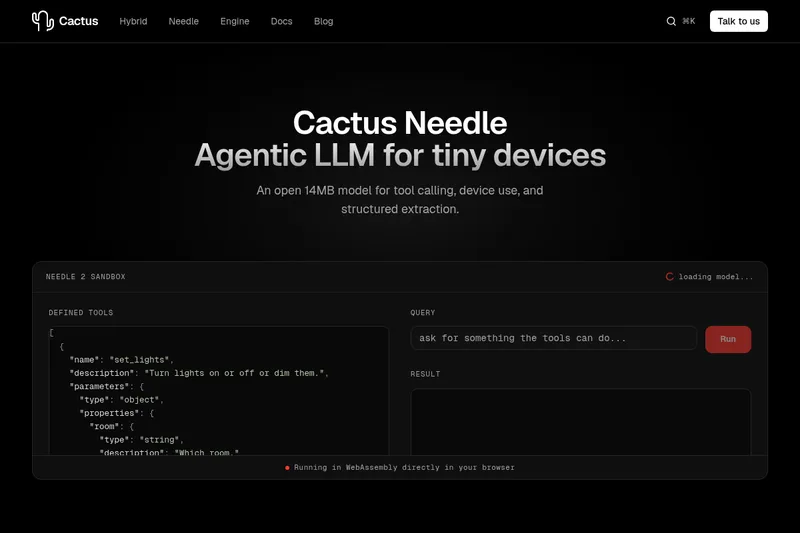
Needle2
Needle 2 is an open, production-ready 45M-parameter agentic LLM from Cactus designed for tool calling, device control, and structured extraction on extremely small devices; the shipped CQ2-bit binary is ~14 MB and runs in ~28 MB of RAM across Cortex-M, microcontrollers, phones, Raspberry Pi and WebAssembly.
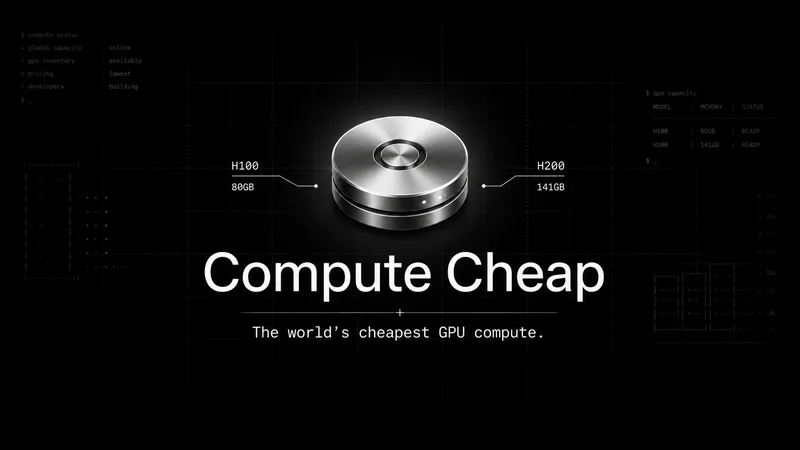
The cheapest GPU cloud
Compute Cheap provides low-cost GPU compute for training and inference, offering H100 and H200 SXM GPUs as interruptible or reserved capacity with published per-GPU-hour pricing and a simple request/reserve/run workflow.

Oodle.ai
Oodle Agent Observability provides agent/LLM observability at scale with S3-backed columnar storage, fast search (<1s P99), out-of-the-box AI-powered insights, and flat ingestion-based pricing designed to retain 100% of traces affordably for debugging and optimizing production agents.


Budget-Friendly Alternatives
The cheapest GPU cloud
Compute Cheap provides low-cost GPU compute for training and inference, offering H100 and H200 SXM GPUs as interruptible or reserved capacity with published per-GPU-hour pricing and a simple request/reserve/run workflow.
Oodle.ai
Oodle Agent Observability provides agent/LLM observability at scale with S3-backed columnar storage, fast search (<1s P99), out-of-the-box AI-powered insights, and flat ingestion-based pricing designed to retain 100% of traces affordably for debugging and optimizing production agents.
%22%2F%3E%20%3Ctext%20x%3D%2250%25%22%20y%3D%2250%25%22%20dominant-baseline%3D%22central%22%20text-anchor%3D%22middle%22%20font-family%3D%22system-ui%2C-apple-system%2Csans-serif%22%20font-weight%3D%22700%22%20font-size%3D%2250%22%20fill%3D%22white%22%3EL%3C%2Ftext%3E%20%3C%2Fsvg%3E)
Personal Context MCP
Lanes Link (Personal Context MCP) is a private, self‑hostable middleware control plane that connects your accounts, memories and skills to every AI agent you use via a single endpoint and configurable Access Profiles.