

Make Sense of Any GitHub PR
MakeSense (powered by LiveReview) gives a concise, easy-to-understand explanation of any public GitHub pull request, classifies issues by severity across security/maintainability/performance/correctness, and includes a short quiz to check understanding — ready in under 30 seconds.
Make Sense of Any GitHub PR is developer tools software teams evaluate for developer tools. Use this page to review pricing, integration signals, and the best alternatives before you commit.
Profile facts come from the vendor source. AiMatch labels unknown pricing or API details instead of estimating them.
Review official source →Used in These Packs
Quick Overview
Best for: Developer Tools
What it does
Developer Tools software for decision-makers comparing workflow fit and alternatives.
Best fit
Developer Tools
Pricing snapshot
Contact for pricing
Next step
Compare Make Sense of Any GitHub PR with similar tools before you shortlist it.
Compare this tool before you shortlist it
Review alternatives, pricing posture, and workflow fit side by side.
MakeSense (powered by LiveReview) is a web tool that generates a concise, presentation-style explanation of what a GitHub pull request does. It analyzes public GitHub PRs to classify issues by severity and provide "full cognitive coverage" across areas such as security, maintainability, performance, and correctness. The product is aimed at developers, maintainers, and reviewers who want a fast, high-level understanding of changes and potential risks; it can produce results in under 30 seconds and works without login for public repositories.
Make Sense of Any GitHub PR — instant, permanently-linkable AI code reviews with full Cognitive Coverage of every change: what it does, and every issue classified by severity. Powered by LiveReview.
Own this listing?
Claim this page for a one-time $29 to add pricing, features, screenshots, verified owner details, and a clearly labeled 30-day category position after the profile is live.
Claim this listing for $29Key Features
Concise PR explanation
Produces an easy-to-understand deck-style summary that explains what a PR does.
Issue classification by severity
Every issue found in the PR is classified by severity to help prioritize review work.
Full cognitive coverage
Analyzes multiple dimensions including security, maintainability, performance, correctness, and more.
Built-in comprehension quiz
Includes a 5-question quiz to check the reviewer’s understanding of the change.
Fast results
Generates the PR summary and analysis in under 30 seconds for public repositories.
Multiple launch methods
Supports pasting a PR URL, prepending 'makesense' to a GitHub PR URL, or using a bookmarklet for one-click reviews.
Pricing
Current pricing details are not available from the vendor source.
Use Cases
Rapid PR comprehension
Quickly understand the purpose and impact of a pull request without reading every file change.
Triage and prioritization
Use severity classifications to prioritize which PRs or issues need immediate attention.
Security and quality checks
Surface potential security, performance, and correctness concerns as part of review workflows.
Reviewer education
Use the built-in 5-question quiz to confirm understanding or to onboard reviewers to a change.
Integrations
GitHub (public repositories)
Works directly with public GitHub pull request URLs; supports launching from PR pages via URL modification or bookmarklet.
Benefits
Limitations
Frequently Asked Questions
No verified FAQs are available.
Getting Started
- 1 Step 1: Open the MakeSense site (https://makesensegithub.com/).
- 2 Step 2: Paste a public GitHub PR URL into the input field (no login required).
- 3 Step 3: Or prepend 'makesense' to any GitHub PR URL or use the provided bookmarklet to open the review instantly.
Support
No verified support channels are available.
API
Compare Make Sense of Any GitHub PR with similar tools
See how it stacks up against alternatives
Related Tools
View all 136 →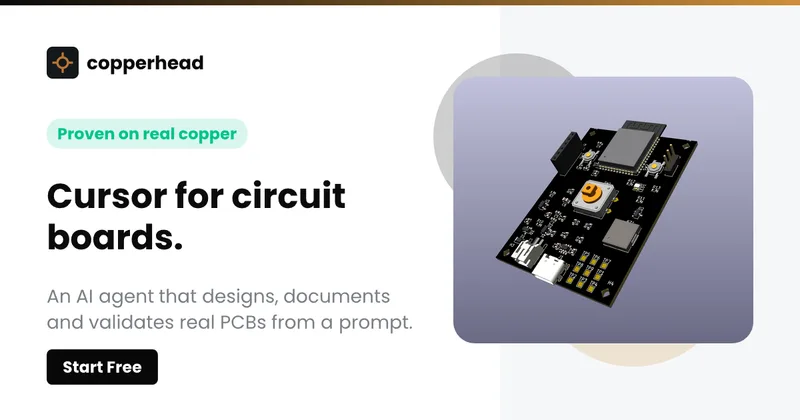
Copperhead
Copperhead is an open-source AI engineering platform and CLI that helps hardware teams design, verify, and ship printed circuit boards by editing KiCad files, running KiCad checks (ERC/DRC), and producing gerbers, firmware, and documentation in a gated, auditable pipeline.


Docs.dev Your Own Hosted Docs Platform in Minutes
Docs.dev is a deployable documentation template that runs as a Cloudflare Worker in your account, using your GitHub repo as the source of truth and agent-powered drafting (e.g., Claude Code or Codex) to generate reviewable docs branches that your team publishes via commit.

Bullet · Fast, by design.
Bullet is a fast coding agent and developer tool that routes, searches, and executes code-focused tasks with a tight loop to minimize latency — offered as a macOS download and currently available in private beta.
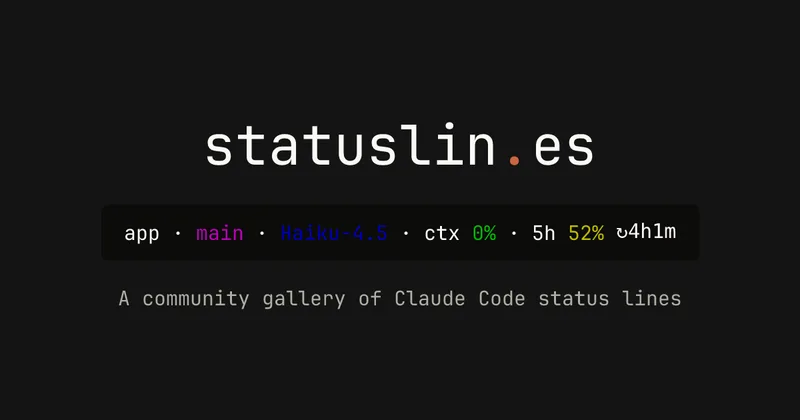
statuslin.es
statuslin.es is a community gallery of Claude Code status lines—copyable, previewed scripts and themes for terminal/status-bar displays that show Claude model stats (tokens, cost, limits), git info, and other runtime metrics.


Premium Alternatives
%22%2F%3E%20%3Ctext%20x%3D%2250%25%22%20y%3D%2250%25%22%20dominant-baseline%3D%22central%22%20text-anchor%3D%22middle%22%20font-family%3D%22system-ui%2C-apple-system%2Csans-serif%22%20font-weight%3D%22700%22%20font-size%3D%2250%22%20fill%3D%22white%22%3EO%3C%2Ftext%3E%20%3C%2Fsvg%3E)
OTP Inspired actor supervisor based full stack templates
ShipStacks provides production-grade, OTP-inspired full-stack SaaS templates that include supervisors/actor patterns, auth, payments, uploads, AI chat and agent playbooks, and Docker-ready deployment in multiple languages and frameworks.
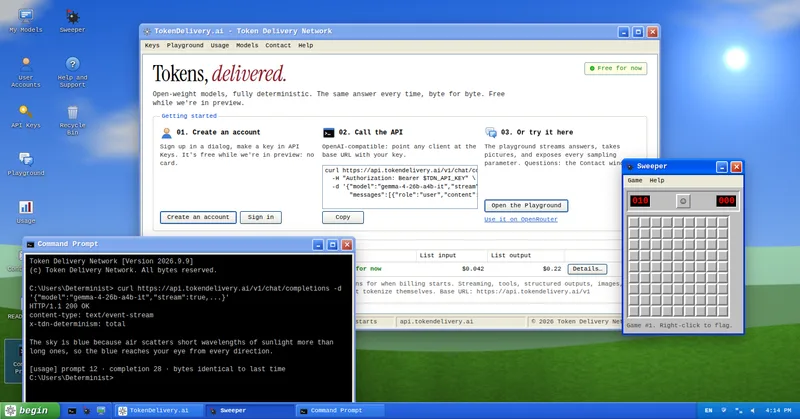
TokenDelivery.ai
TokenDelivery.ai (Token Delivery Network) is an OpenAI-compatible model API and playground that offers reproducible, deterministic model outputs, streaming responses, multimodal inputs (images and short videos), and exposed sampling parameters. It is free during preview and provides API keys, a playground, and a documented base URL for developers.

Servers for AI, not another AWS
RAW offers dedicated GPU and CPU servers specifically built for AI workloads — provision real metal with root access and CUDA via a single API. It emphasizes low cost (claims up to 100× cheaper than AWS), $0 egress, fast provisioning, and enterprise features for inference, training, agents, and vector databases.
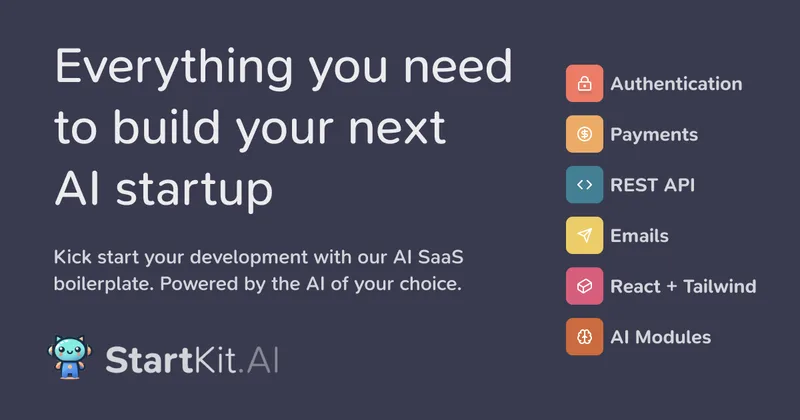
StartKit.AI
StartKit.AI is a purchasable, production-focused Node.js boilerplate that provides a complete SaaS app and pre-built AI modules to help developers ship AI startups quickly, including demos for chat, PDF, images, RAG, authentication, payments, and integrations with AI providers.

ratio1
Ratio1 is a blockchain-powered, decentralized AI operating system and edge/cloud computing platform that enables rapid development and deployment of AI apps, a tokenized GPU compute marketplace, and node-based infrastructure via Node Deeds and the $R1 utility token.