
TinyFish
TinyFish provides a unified platform and APIs (Search, Fetch, Browser, and Web Agent) that let AI models interact with the live web — returning structured, rendered, and authenticated web data for production-grade agents and automation workflows.
TinyFish is ai tools software teams evaluate for ai agents. Use this page to review pricing, integration signals, and the best alternatives before you commit.
Profile facts come from the vendor source. AiMatch labels unknown pricing or API details instead of estimating them.
Review official source →Quick Overview
Best for: AI Agents
What it does
AI Tools software for decision-makers comparing workflow fit and alternatives.
Best fit
AI Agents
Pricing snapshot
Free from Variable — search and fetch are included at 0 credits; agents and browser sessions consume credits (examples and volume pricing are shown on the site).
Next step
Compare TinyFish with similar tools before you shortlist it.
Compare this tool before you shortlist it
Review alternatives, pricing posture, and workflow fit side by side.
TinyFish is a platform and API suite that gives AI models live access to the web via four integrated products: Search (real, browser-rendered web search returning structured JSON), Fetch (renders pages in a real browser and returns clean markdown/JSON/HTML), Browser (cloud browser sessions with stealth and persistent state), and Web Agent (multi-step, authenticated automation that navigates, fills forms, and extracts structured results). The product is aimed at teams and enterprises that need production-grade, up-to-date web data and automated workflows for tasks like monitoring, quoting, market intelligence, and QA.
TinyFish emphasizes a single API key and unified credit pool so users don’t stitch multiple vendors together. It targets workflows that require dynamic rendering, authenticated access, anti-bot handling, and reliable structured outputs for downstream models and pipelines.
The web operating layer for AI agents Discussion | Link
Own this listing?
Claim this page for a one-time $29 to add pricing, features, screenshots, verified owner details, and a clearly labeled 30-day category position after the profile is live.
Claim this listing for $29Key Features
Search API
Real browser-rendered search that returns fresh results and structured JSON from dynamic pages and fast-changing sources (not cached).
Fetch API
Renders any URL in a real browser and returns clean, token-efficient output as markdown, JSON, or HTML for downstream models and pipelines.
Web Agent
Multi-step web automation that can navigate pages, fill forms, authenticate, and extract structured results. Publicly benchmarked (Mind2Web) for high agent accuracy.
Browser API
Cloud browser sessions with stealth engine-level patches, persistent state, sub-250ms cold starts, and the ability to bypass bot protections and login walls.
Unified API Key & Credit Pool
One API key, one credit pool, and one platform that decides which product to use — removing the need to coordinate multiple SDKs, auth flows, and billing dashboards.
Stealth & Anti-bot Techniques
C++ patches compiled into the Chromium binary (not JS injection) to improve anti-bot pass rates across services like Akamai and Cloudflare.
Authentication & Vault Integration
Vault integration allows agents to log into portals and navigate authenticated dashboards without exposing credentials to the LLM.
MCP-native & SDK Support
MCP-native integrations and SDKs (examples include Python SDK and MCP configuration snippets) so TinyFish works with MCP-compatible clients and model servers.
Pricing
500 free credits to start; web search and page fetching are free (0 credits).
Credit-based billing
Variable — search and fetch are included at 0 credits; agents and browser sessions consume credits (examples and volume pricing are shown on the site).- Search and Fetch: 0 credits (free)
- Agent steps and browsing consume credits (example: 1 credit = 1 agent step or 4 minutes browsing)
- Single credit pool across products
Use Cases
Real-time monitoring and alerts
Use Search and Fetch for breaking news, pricing shifts, earnings monitoring, and fresh market data that require live web access.
Insurance quoting automation
Deploy agents to log into carrier portals, fill forms, extract quotes, and flag premium changes — demonstrated with a Q2 renewals report example.
Competitive price monitoring
Monitor dynamic product catalogs, scrape and structure price sheets from multiple vendors, and detect price changes at scale.
Social listening & market intelligence
Gather crowd-sourced sentiment and public web signals to fill intelligence gaps for revenue analytics or market research.
Autonomous QA testing
Use browser sessions and agents to build autonomous QA flows that interact reliably with dynamic sites and dashboards.
Restricted/gated data extraction
Access authenticated vendor portals and gated content using browser sessions and Vault-based credential handling.
Integrations
MCP & Model Clients
MCP-native — works with Claude, Cursor, and any MCP-compatible client via MCP configuration.
Model Registry / MCP Servers
Examples and registry entries for OpenClaw, ChatGPT, Grok, Claude, Vercel, Cursor (MCP Registry referenced).
SDKs & Plugins
Python SDK and community plugins (example: Dify plugin) and SDK examples in the Cookbook.
Vault
Vault integration to manage credentials for authenticated site access without exposing secrets to LLMs.
Benefits
Limitations
No verified limitations are available.
Frequently Asked Questions
How is this different from other tools?
Why would I use this instead of my LLM's built-in web search?
What does 'stealth' mean?
How accurate is the Agent?
Can agents authenticate into websites?
Getting Started
- 1 Get an API key — click Get your API key / Start free with Search and Fetch.
- 2 Read the docs and API reference to see Search, Fetch, Browser, and Agent endpoints and examples.
- 3 Use the provided SDKs or MCP configuration to integrate TinyFish into your agent or model stack.
- 4 Start with the free credits (500 free credits) and run Search/Fetch (0 credits) or run agents/browser sessions which consume credits.
Support
docs
Documentation, API reference, guides, and Cookbook examples accessible from the site (View docs link).
blog
Product updates and insights available via the Blog and Pulse pages.
contact
Contact Us link on the site for sales and enterprise inquiries.
API
Compare TinyFish with similar tools
See how it stacks up against alternatives
Related Tools
View all 672 →
Needle2
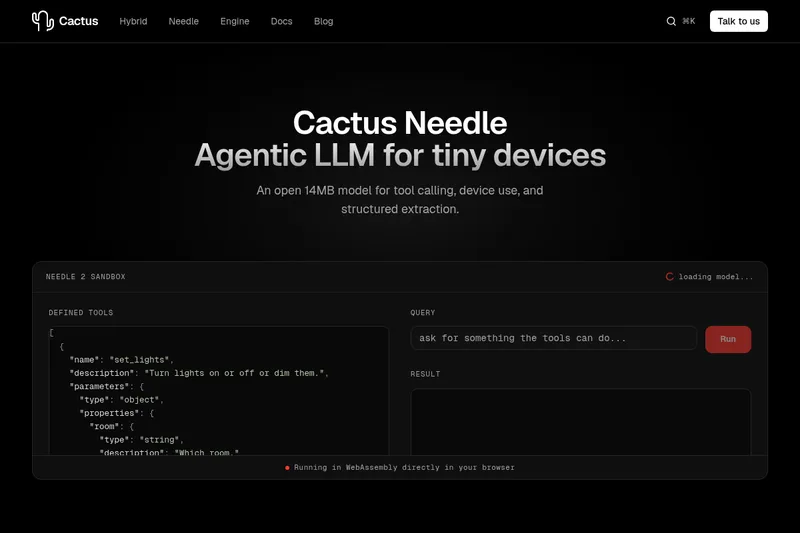
Needle 2 is an open, production-ready 45M-parameter agentic LLM from Cactus designed for tool calling, device control, and structured extraction on extremely small devices; the shipped CQ2-bit binary is ~14 MB and runs in ~28 MB of RAM across Cortex-M, microcontrollers, phones, Raspberry Pi and WebAssembly.

The cheapest GPU cloud
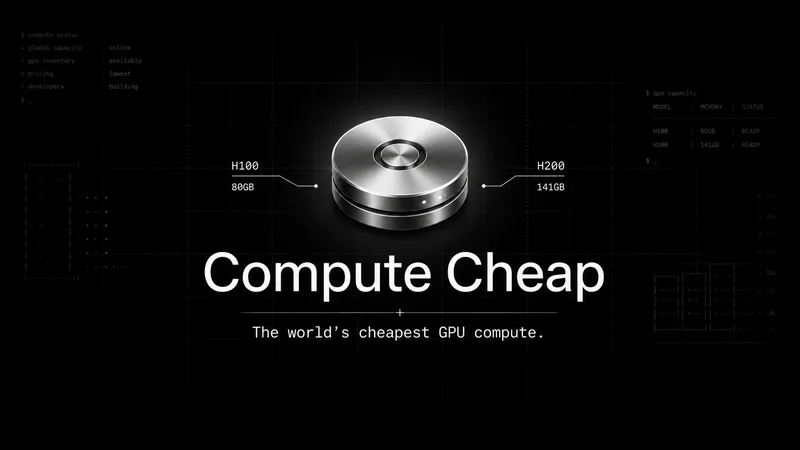
Compute Cheap provides low-cost GPU compute for training and inference, offering H100 and H200 SXM GPUs as interruptible or reserved capacity with published per-GPU-hour pricing and a simple request/reserve/run workflow.
Oodle.ai
Oodle Agent Observability provides agent/LLM observability at scale with S3-backed columnar storage, fast search (<1s P99), out-of-the-box AI-powered insights, and flat ingestion-based pricing designed to retain 100% of traces affordably for debugging and optimizing production agents.


Premium Alternatives
Abliterated LLM provider for cyber tasks
Refuseless hosts GLM 5.3 Abliterated models through an OpenAI-compatible API for cybersecurity and coding work. The page states that prompts are not retained and shows integrations with OpenCode and Pi.
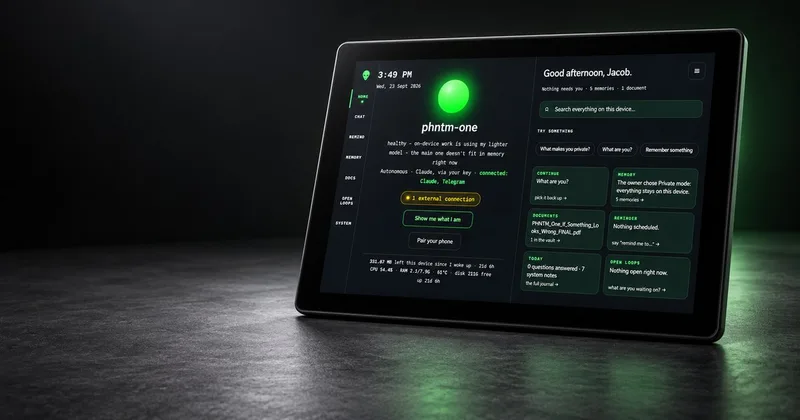
PHNTM ONE
PHNTM One is a private, local-first AI appliance: a hand-built desktop device (Raspberry Pi 5, 8 GB, 10.1″ touchscreen) that runs an on-device model (Gemma 3 4B) to provide a voice-capable assistant, memories, document reading, timers, Home Assistant integration and offline knowledge — sold as a one-time $549 purchase with no subscription and zero telemetry by default.

AletheionAGI
AletheionAGI provides a grounded-memory layer for AI systems that enforces evidence-bound delivery, namespace isolation, and policy authorization so AI readers cannot produce unsupported claims. It's targeted at production-facing use cases like customer support, commerce agents and internal copilots.

ClaudeThings
ClaudeThings provides a packaged, continuously-updating set of 89 specialized agents, 103 pre-built skills, and 181 slash commands that act as an AI engineering and marketing team for Claude Code — delivered as a private GitHub repo and installed with a single npx command. It adapts to any stack via a CLAUDE.md project manifest and is sold as a one-time purchase with lifetime updates.

qomplement
qomplement is an Agentic AI-driven ERP built for supply chain and operations teams that automates tasks across procurement, inventory, freight, finance, and planning to reduce manual work and scale operations without adding headcount.