

Vestige
Vestige is a Visual Studio Code extension that makes large, LLM-generated code changes reviewable by building local call-graphs and file-dependency graphs, surfacing blast-radius analysis, guided review cards, and LLM-generated summaries/explanations.
Vestige is developer tools software teams evaluate for developer tools. Use this page to review pricing, integration signals, and the best alternatives before you commit.
Profile facts come from the vendor source. AiMatch labels unknown pricing or API details instead of estimating them.
Review official source →Used in These Packs
Quick Overview
Best for: Developer Tools
What it does
Developer Tools software for decision-makers comparing workflow fit and alternatives.
Best fit
Developer Tools
Pricing snapshot
Free from Free
Next step
Compare Vestige with similar tools before you shortlist it.
Compare this tool before you shortlist it
Review alternatives, pricing posture, and workflow fit side by side.
Vestige is a VS Code extension that helps developers review large or AI-generated code changes by building local call graphs and file-dependency graphs and presenting an ordered, feature-level review workflow. It parses a repository locally (using bundled parsers) to compute blast radius deterministically from the static call/dependency graph and surfaces Repo Graph and Feature View visualizations in the VS Code activity bar. For review of external or bulk edits, Vestige opens a Splash Zone containing ordered review cards with inline/split diffs, LLM-generated one-line summaries, Explain actions, and accept/revert controls. The extension is intended for developers and code reviewers working inside Visual Studio Code who need deterministic, local impact analysis and assisted summaries/explanations for large changes.
Extension for Visual Studio Code - Feature-level code visualization for LLM-assisted review: call graphs and file dependency graphs, inside VS Code.
Own this listing?
Claim this page for a one-time $29 to add pricing, features, screenshots, verified owner details, and a clearly labeled 30-day category position after the profile is live.
Claim this listing for $29Key Features
Local call-graph and file-dependency graph
Vestige scans and parses the opened folder locally to build a call graph and a file-dependency graph; impact analysis (blast radius) is computed from these graphs and runs 100% locally.
Repo Graph and Feature View
Two graph tabs (Repo Graph for function calls and Feature View for feature clusters) accessible via the Vestige icon or commands; click nodes to jump to related code.
Splash Zone review workflow
When external changes are detected, Vestige offers a Splash Zone that breaks a change into ordered review cards with a blast radius, inline/split diffs, one-line LLM summaries, Explain action, and accept/revert controls.
LLM-generated summaries and explanations
The extension uses an LLM (backend) to generate one-line change-review summaries and snippet explanations; these features send selected snippets or changed-code snippets to the backend.
Bundled parsers (tree-sitter WASM)
Parsers for supported languages ship with the extension (tree-sitter compiled to WebAssembly), so no additional installs are required.
Change detection and notifications
Vestige notifies when something changes outside the user's typing (AI agent, git pull, bulk edit) and can open the Splash Zone automatically via a setting (vestige.splashZone.autoOpen).
Cached analyses
Analyses are cached so reopening a graph or review does not re-run work that's already been done.
Language support (initial)
First-launch support for TypeScript/JavaScript, Python, Go, and Java; other file types treated as plain dependency-graph nodes.
Pricing
The extension is listed as free on the Visual Studio Marketplace.
Free
Free- VS Code extension available on the Visual Studio Marketplace
- Local graph and blast-radius analysis
- Access to Repo Graph and Feature View
Use Cases
Reviewing large or AI-generated diffs
Provide a focused, ordered review of bulk or LLM-produced changes so developers can understand what changed and decide whether to accept or revert.
Impact analysis before pushing changes
Compute blast radius deterministically from the static call/dependency graph to identify what a change can reach or potentially break.
Guided code-reading for complex edits
Surface entry points and a guided reading order for a change via graph nodes and review cards to help reviewers know where to start and what to inspect.
Integrations
OpenAI (via Vestige backend)
The Vestige backend (hosted on AWS) calls OpenAI to generate text for Explain Selection and change-review summaries.
AWS (hosting)
Vestige backend is hosted on AWS for features that generate LLM text.
Tree-sitter (bundled parsers)
The extension ships parsers compiled to WebAssembly (tree-sitter) for local parsing of supported languages.
Benefits
Limitations
Frequently Asked Questions
No verified FAQs are available.
Getting Started
- 1 Step 1: Install the Vestige extension from the Visual Studio Marketplace into VS Code.
- 2 Step 2: Open a folder (single-root workspace) containing supported languages (TypeScript/JavaScript, Python, Go, or Java).
- 3 Step 3: Run the command Vestige: Getting Started for the five-step walkthrough (map your project, read the graphs, review a change, judge the blast radius, explain & decide).
Support
docs
In-extension walkthrough via Vestige: Getting Started command and the Visual Studio Marketplace listing provides overview and version history.
contact
Contact via the extension's Visual Studio Marketplace page (Contact us link in footer).
API
Compare Vestige with similar tools
See how it stacks up against alternatives
Related Tools
View all 147 →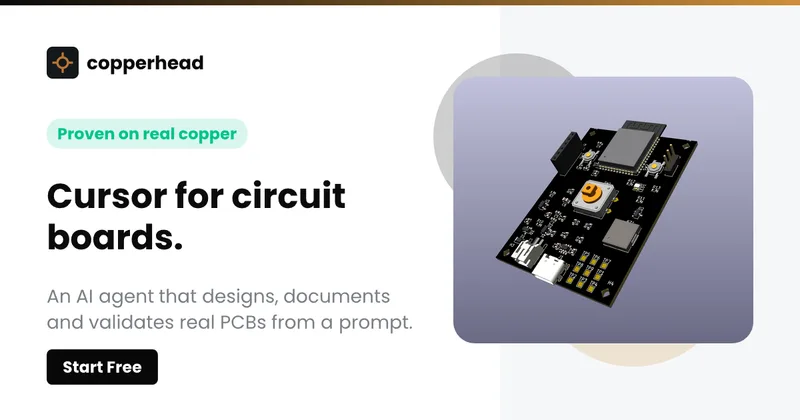
Copperhead
Copperhead is an open-source AI engineering platform and CLI that helps hardware teams design, verify, and ship printed circuit boards by editing KiCad files, running KiCad checks (ERC/DRC), and producing gerbers, firmware, and documentation in a gated, auditable pipeline.


Docs.dev Your Own Hosted Docs Platform in Minutes
Docs.dev is a deployable documentation template that runs as a Cloudflare Worker in your account, using your GitHub repo as the source of truth and agent-powered drafting (e.g., Claude Code or Codex) to generate reviewable docs branches that your team publishes via commit.

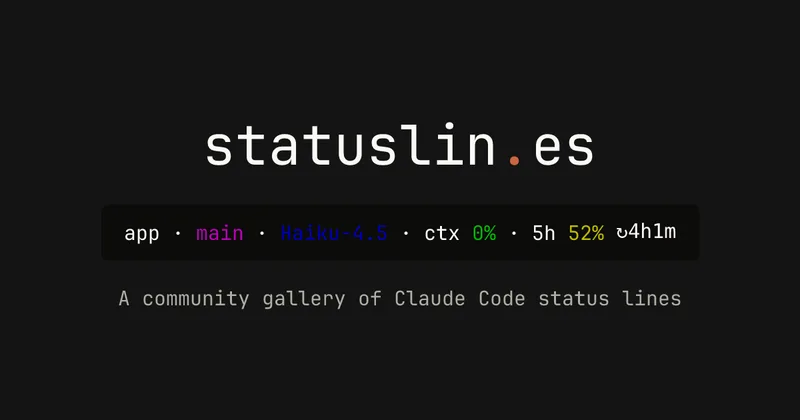
statuslin.es
statuslin.es is a community gallery of Claude Code status lines—copyable, previewed scripts and themes for terminal/status-bar displays that show Claude model stats (tokens, cost, limits), git info, and other runtime metrics.

Bullet · Fast, by design.
Bullet is a fast coding agent and developer tool that routes, searches, and executes code-focused tasks with a tight loop to minimize latency — offered as a macOS download and currently available in private beta.

Premium Alternatives
%22%2F%3E%20%3Ctext%20x%3D%2250%25%22%20y%3D%2250%25%22%20dominant-baseline%3D%22central%22%20text-anchor%3D%22middle%22%20font-family%3D%22system-ui%2C-apple-system%2Csans-serif%22%20font-weight%3D%22700%22%20font-size%3D%2250%22%20fill%3D%22white%22%3EO%3C%2Ftext%3E%20%3C%2Fsvg%3E)
OTP Inspired actor supervisor based full stack templates
ShipStacks provides production-grade, OTP-inspired full-stack SaaS templates that include supervisors/actor patterns, auth, payments, uploads, AI chat and agent playbooks, and Docker-ready deployment in multiple languages and frameworks.
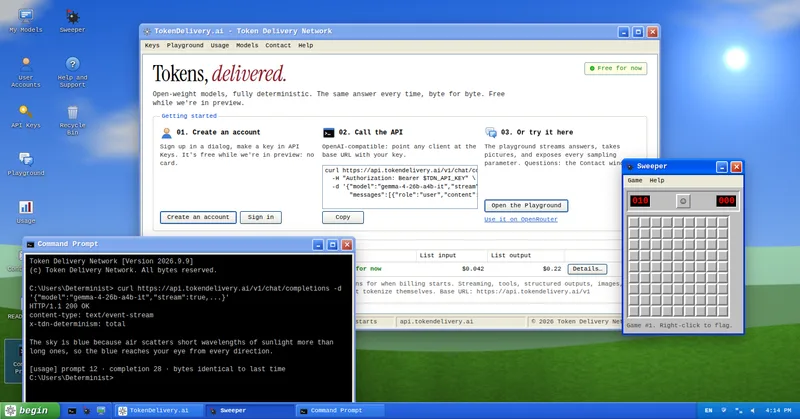
TokenDelivery.ai
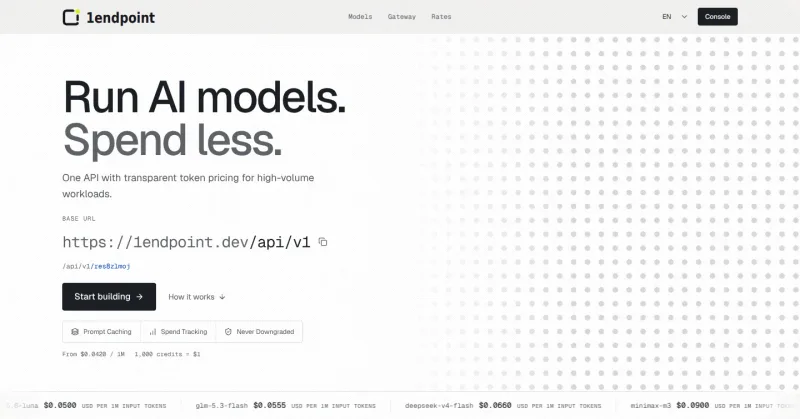
TokenDelivery.ai (Token Delivery Network) is an OpenAI-compatible model API and playground that offers reproducible, deterministic model outputs, streaming responses, multimodal inputs (images and short videos), and exposed sampling parameters. It is free during preview and provides API keys, a playground, and a documented base URL for developers.

Servers for AI, not another AWS
RAW offers dedicated GPU and CPU servers specifically built for AI workloads — provision real metal with root access and CUDA via a single API. It emphasizes low cost (claims up to 100× cheaper than AWS), $0 egress, fast provisioning, and enterprise features for inference, training, agents, and vector databases.
StartKit.AI
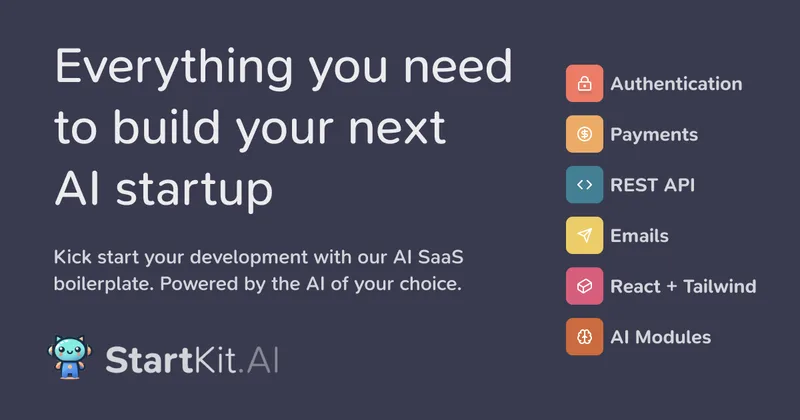
StartKit.AI is a purchasable, production-focused Node.js boilerplate that provides a complete SaaS app and pre-built AI modules to help developers ship AI startups quickly, including demos for chat, PDF, images, RAG, authentication, payments, and integrations with AI providers.
wrapfast
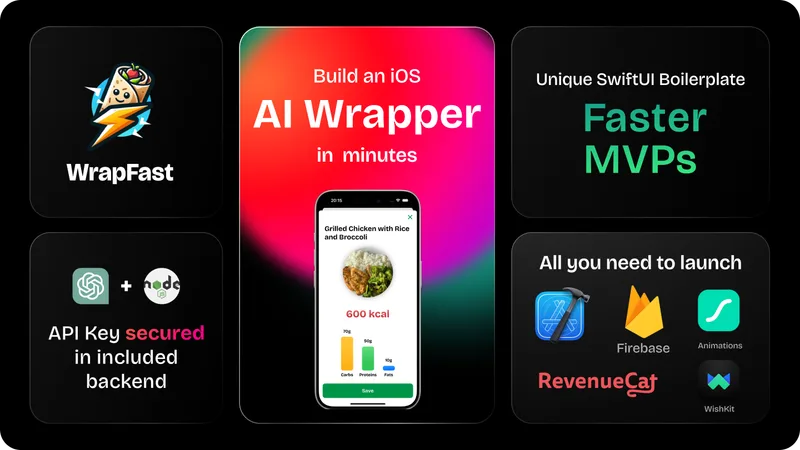
WrapFast is a SwiftUI boilerplate and starter kit for building iOS apps and AI wrappers quickly. It includes an Xcode SwiftUI project, a Node.js Express backend to secure AI API keys, AI integrations (OpenAI & Anthropic), monetization flows, cloud database support, documentation, and a Discord community aimed at indie makers and solo founders.

ratio1
Ratio1 is a blockchain-powered, decentralized AI operating system and edge/cloud computing platform that enables rapid development and deployment of AI apps, a tokenized GPU compute marketplace, and node-based infrastructure via Node Deeds and the $R1 utility token.