

Warp
Warp is an open, agentic development platform that automates and orchestrates software development via "factories"—fleets of coding agents—alongside a modern terminal and agent CLI, APIs, and SDKs for enterprise-grade, self-improving developer automation.
Warp is ai agents software teams evaluate for ai agents. Use this page to review pricing, integration signals, and the best alternatives before you commit.
Profile facts come from the vendor source. AiMatch labels unknown pricing or API details instead of estimating them.
Review official source →Used in These Packs
Quick Overview
Best for: AI Agents
What it does
AI Agents software for decision-makers comparing workflow fit and alternatives.
Best fit
AI Agents
Pricing snapshot
Pricing available from Usage-based pricing, billed per agent run
Next step
Compare Warp with similar tools before you shortlist it.
Compare this tool before you shortlist it
Review alternatives, pricing posture, and workflow fit side by side.
Warp is an open platform for automating development that coordinates fleets of coding agents (called factories) to automate SDLC tasks from triage through review to mergeable PRs. It includes a modern terminal, an agent CLI, APIs, and SDKs and is built to run anywhere—Warp Cloud or self-hosted in your VPC—and to support any model or agent harness.
Designed for teams and enterprises, Warp emphasizes governance, measurable quality via evals and benchmarks, and self-improvement loops that score and iterate on agent runs. Factories are defined as code (factory.yaml) and integrate with existing tools such as Slack, GitHub, Linear, Jira, and GitLab.
Intelligent terminal with AI, modern UX, and team knowledge integration.
Own this listing?
Claim this page for a one-time $29 to add pricing, features, screenshots, verified owner details, and a clearly labeled 30-day category position after the profile is live.
Claim this listing for $29Key Features
Factories as Code
Define repositories, agents, models, permissions, triggers and checkpoints in a factory.yaml to orchestrate agent fleets across your SDLC.
Agentic Development Platform
Run fleets of coding agents (FOREMAN, REVIEW, etc.) to automate code review, bug investigation, refactors, and other workflows; every run can be scored and improved.
API, CLI, SDK and MCP
Programmatic interfaces include a REST API (example: POST /api/v1/agent/runs), a CLI (warp agent run-cloud), an SDK (TypeScript example), and an MCP messaging protocol for factories.
Warp Terminal & Agent CLI
A modern terminal optimized for agentic coding and a downloadable agent CLI that can run in local terminals (install example provided).
Integrations & Any Surface
Flows can originate from chat, tickets, or source control and be steered from web, mobile, terminal, or IDE with status flowing back to the origin.
Evals, Benchmarks & Self-Improvement
Every run is scored; benchmarks and automated observer agents propose improvements and open PRs against factory config to optimize for cost and quality.
Open Layered Architecture
Supports any agent, any model (frontier or open-weight), your compute or Warp Cloud, and flexible data residency options.
Governance & Control Plane
Centrally configured agent access, permissions, guardrails, and auditability to enable enterprise-ready usage.
Verification & Evidence
Factory agents capture screenshots or videos of work so humans can verify outputs before shipping PRs.
Pricing
Qualifying organizations in closed early access receive up to $10,000 of factory usage.
Usage-based
Usage-based pricing, billed per agent run- Billed by agent run
- Benchmarks and evaluative tooling to optimize cost vs. quality
Use Cases
Code review
First-pass review on every PR using review agents to generate changes or suggestions and create mergeable PRs.
Bug investigation
Reproduce bugs, investigate root causes and route fixes via agents connected to your issue trackers and source control.
Refactors & migrations
Scope, migrate, and validate large-scale refactors or migrations by coordinating agent runs across repositories.
Incident response
Investigate alerts, summarize next steps, and propose fixes as part of an automated response workflow.
Industry-specific modernization
Examples include financial services, insurance, and telecommunications for secure, compliant AI development and operational scaling.
Integrations
GitHub / GitLab
Trigger agents from pull requests and send PRs or status updates back to source control.
Slack / Teams
Bring work into factories via chat and receive status or alerts back in chat channels.
Linear / Jira
Route issues and tickets into factories to automate triage and fixes, and then surface results back to issue trackers.
IDEs / Terminals
Steer, watch, and hand off runs from terminal, IDE, or the web UI; Warp Terminal has native factory integrations.
Benefits
Limitations
Frequently Asked Questions
What is a cloud software factory?
How do I define a factory?
Do I have to use Warp's models or config?
Do I need Warp Terminal to use factories?
How much of my SDLC can be automated?
Where does our data live?
How do humans interact with the factory?
Can we start small?
What does it cost?
Getting Started
- 1 Request early access or book a demo via the Warp contact/sales form.
- 2 Define your first factory using factory.yaml (repositories, agents, triggers, models, and approvals) and check it into your repo.
- 3 Integrate with your existing tools (GitHub, Slack, Jira/Linear, etc.) and choose deployment (Warp Cloud or self-hosted VPC).
- 4 Run agents via the CLI, API, or SDK (examples provided on the site) and monitor runs, evals, and self-improvement suggestions.
Support
Docs
Developer docs and API guides referenced in the resources section (site lists "Developers docs, API docs and guides").
Community
Community channels, GitHub repository, blog, webinars, and events for help and connection.
Sales / Demo
Contact sales / book a demo via the contact-sales form on the site for enterprise onboarding.
Support portal / issue tracking
Help and issue tracking referenced under support on the site.
API
Compare Warp with similar tools
See how it stacks up against alternatives
Related Tools
View all 651 →
Needle2
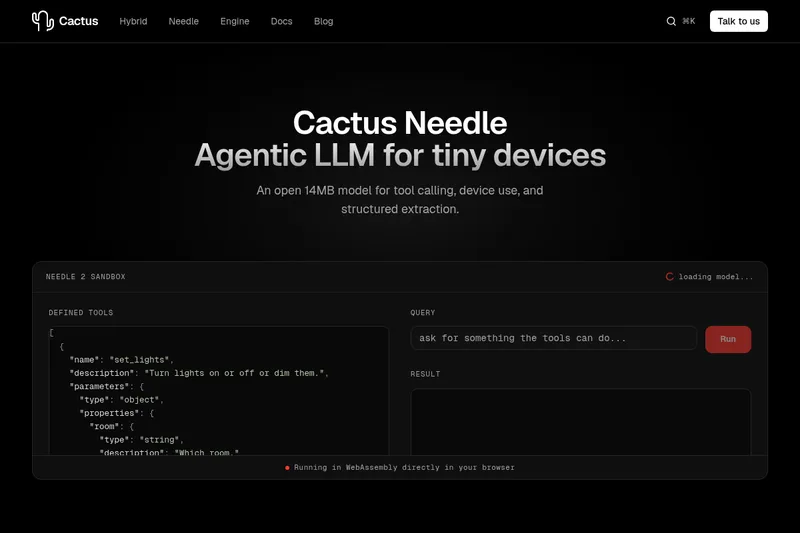
Needle 2 is an open, production-ready 45M-parameter agentic LLM from Cactus designed for tool calling, device control, and structured extraction on extremely small devices; the shipped CQ2-bit binary is ~14 MB and runs in ~28 MB of RAM across Cortex-M, microcontrollers, phones, Raspberry Pi and WebAssembly.
The cheapest GPU cloud
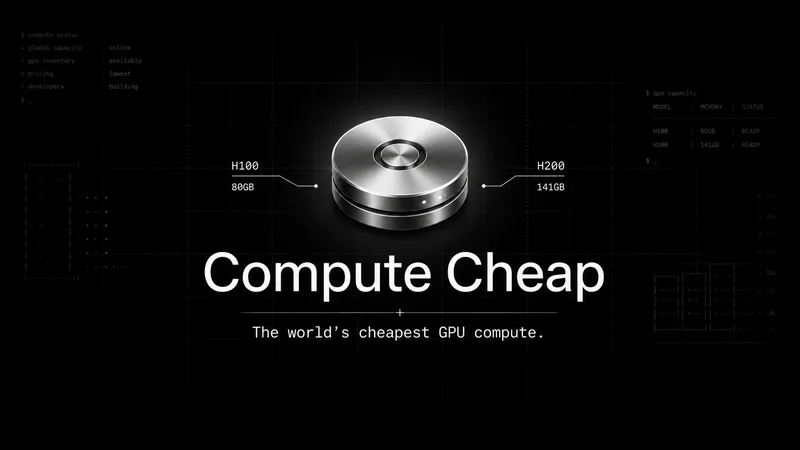
Compute Cheap provides low-cost GPU compute for training and inference, offering H100 and H200 SXM GPUs as interruptible or reserved capacity with published per-GPU-hour pricing and a simple request/reserve/run workflow.
Oodle.ai
Oodle Agent Observability provides agent/LLM observability at scale with S3-backed columnar storage, fast search (<1s P99), out-of-the-box AI-powered insights, and flat ingestion-based pricing designed to retain 100% of traces affordably for debugging and optimizing production agents.


Premium Alternatives
Abliterated LLM provider for cyber tasks
Refuseless hosts GLM 5.3 Abliterated models through an OpenAI-compatible API for cybersecurity and coding work. The page states that prompts are not retained and shows integrations with OpenCode and Pi.
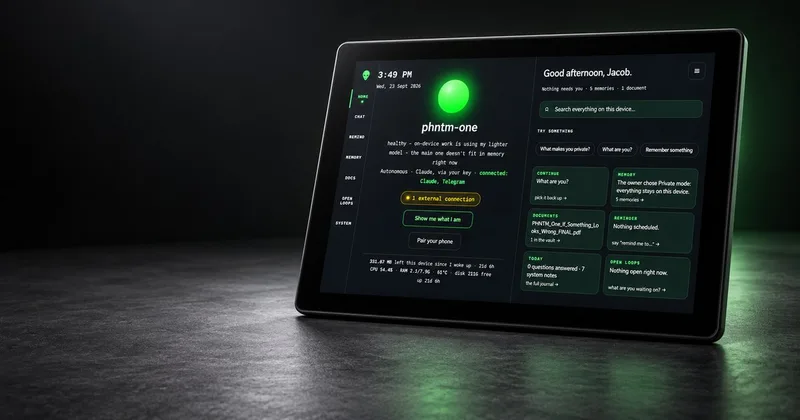
PHNTM ONE
PHNTM One is a private, local-first AI appliance: a hand-built desktop device (Raspberry Pi 5, 8 GB, 10.1″ touchscreen) that runs an on-device model (Gemma 3 4B) to provide a voice-capable assistant, memories, document reading, timers, Home Assistant integration and offline knowledge — sold as a one-time $549 purchase with no subscription and zero telemetry by default.
AletheionAGI
AletheionAGI provides a grounded-memory layer for AI systems that enforces evidence-bound delivery, namespace isolation, and policy authorization so AI readers cannot produce unsupported claims. It's targeted at production-facing use cases like customer support, commerce agents and internal copilots.
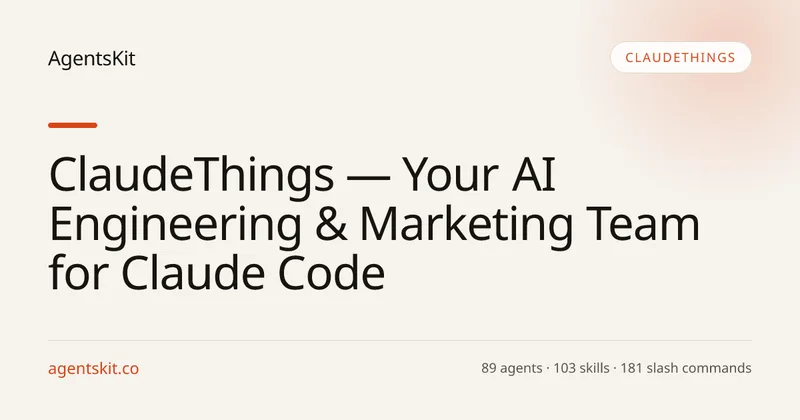
ClaudeThings
ClaudeThings provides a packaged, continuously-updating set of 89 specialized agents, 103 pre-built skills, and 181 slash commands that act as an AI engineering and marketing team for Claude Code — delivered as a private GitHub repo and installed with a single npx command. It adapts to any stack via a CLAUDE.md project manifest and is sold as a one-time purchase with lifetime updates.

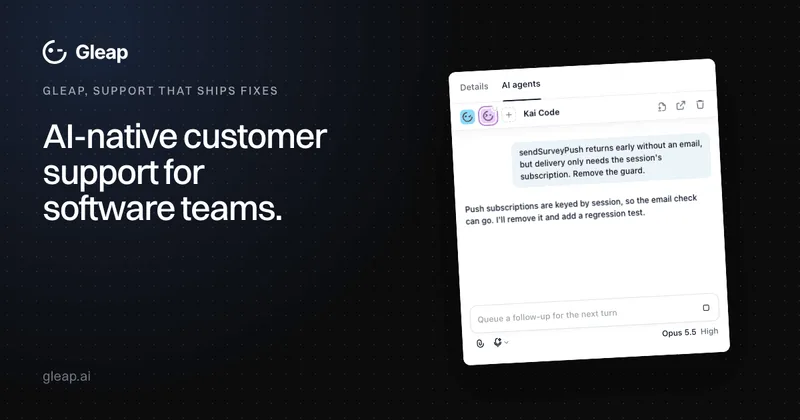
maccopilot
MacCopilot is a native macOS app that lets users select part of their screen and ask AI models about its contents. It connects to providers such as OpenAI, Anthropic, Google Gemini, Ollama, and compatible endpoints using the user’s own provider account or local server.