

AEXGrid
AEXGrid is a desktop workspace that connects multiple AI agents and human roles into a single visual environment for coordinating conversations, tasks, and agent integrations. It is a free early-build app for Windows and Linux that integrates third-party AI provider accounts.
AEXGrid is ai tools software teams evaluate for ai agents. Use this page to review pricing, integration signals, and the best alternatives before you commit.
Profile facts come from the vendor source. AiMatch labels unknown pricing or API details instead of estimating them.
Review official source →Quick Overview
Best for: AI Agents
What it does
AI Tools software for decision-makers comparing workflow fit and alternatives.
Best fit
AI Agents
Pricing snapshot
Free from Free
Next step
Compare AEXGrid with similar tools before you shortlist it.
Compare this tool before you shortlist it
Review alternatives, pricing posture, and workflow fit side by side.
AEXGrid is a connected agent workspace designed to bring multiple agents, human workers, and managers into a single visual environment. The product organizes work into workspaces and rooms, letting workspace managers hold broader context while room managers and workers coordinate and execute tasks. The site describes the product as a free early build available for Windows and Linux, intended to connect provider agents and supported applications via integrations; provider account access and available models depend on the user's provider setup.
Coordinate AI agents. From anywhere. Discussion | Link
Own this listing?
Claim this page for a one-time $29 to add pricing, features, screenshots, verified owner details, and a clearly labeled 30-day category position after the profile is live.
Claim this listing for $29Key Features
Multiple agents in one context
Bring separate agent conversations into one visual context so different agents can be coordinated together.
Workspaces & rooms
Group related work into workspaces and rooms to maintain both shared context and the bigger picture.
Role-based coordination
Define workspace managers, room managers, and workers to separate coordination from individual tasks and give each role a visible place.
Structured conversations & continuity
Keep exchanges situated in their workspace and room, preserve account context, and return to ongoing conversations with relationships in view.
Provider integrations
Connect agents from different providers and supported tools (example providers named include Codex, Kiro, Cursor, and OpenCode) and link application sessions into workspace context.
Free early build and desktop downloads
AEXGrid is distributed as a free early build with downloadable clients for Windows and Linux (version 0.1.2 listed).
Pricing
All current AEXGrid features are free in this early build. AI provider subscriptions and API usage are billed separately by the chosen providers.
Free — Early build
Free- All current AEXGrid features
- Downloads for Windows and Linux
- Ongoing updates in the app header
Use Cases
Coordinate multi-agent workflows
Use AEXGrid to organize, direct, and continue agent-driven conversations and tasks across multiple agents and rooms.
Role-based task management
Workspace and room managers can coordinate activity while workers focus on individual assignments within the same visual workspace.
Bring third-party agents into one workspace
Connect supported provider agents and application sessions (e.g., Codex, Kiro, Cursor, OpenCode) to centralize agent activity and account context.
Local desktop usage
Download and run the AEXGrid desktop app on Windows or Linux to run the connected workspace locally.
Integrations
Codex
Listed as a provider that can be connected to AEXGrid via supported integrations.
Kiro
Listed as a provider that can be connected to AEXGrid via supported integrations.
Cursor
Listed as a provider that can be connected to AEXGrid via supported integrations.
OpenCode
Listed as a provider that can be connected to AEXGrid via supported integrations.
Application sessions
Supported tools and application sessions can be connected to workspace context; compatibility depends on each integration.
Benefits
Limitations
Frequently Asked Questions
No verified FAQs are available.
Getting Started
- 1 Step 1: Download the AEXGrid desktop client for Windows or Linux (version 0.1.2 listed).
- 2 Step 2: Install and open the app; explore the provided demo interface (the site notes scripted demo agents and sample data are used in demos).
- 3 Step 3: Connect your own AI provider accounts and application sessions to bring real agents into the workspace (provider subscriptions and API usage billed separately).
Support
docs
Documentation link is available from the site (Documentation ↗).
contact
Contact link is available from the site (Contact ↗).
downloads & release notes
Downloads for Windows and Linux and release notes are provided on the site for each release (Download for Windows ↗ Release notes ↗).
API
Compare AEXGrid with similar tools
See how it stacks up against alternatives
Related Tools
View all 617 →
Needle2
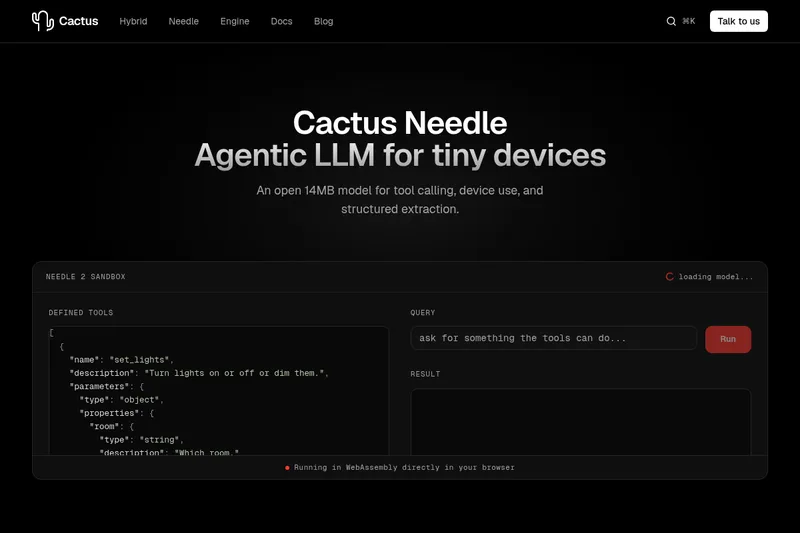
Needle 2 is an open, production-ready 45M-parameter agentic LLM from Cactus designed for tool calling, device control, and structured extraction on extremely small devices; the shipped CQ2-bit binary is ~14 MB and runs in ~28 MB of RAM across Cortex-M, microcontrollers, phones, Raspberry Pi and WebAssembly.
The cheapest GPU cloud
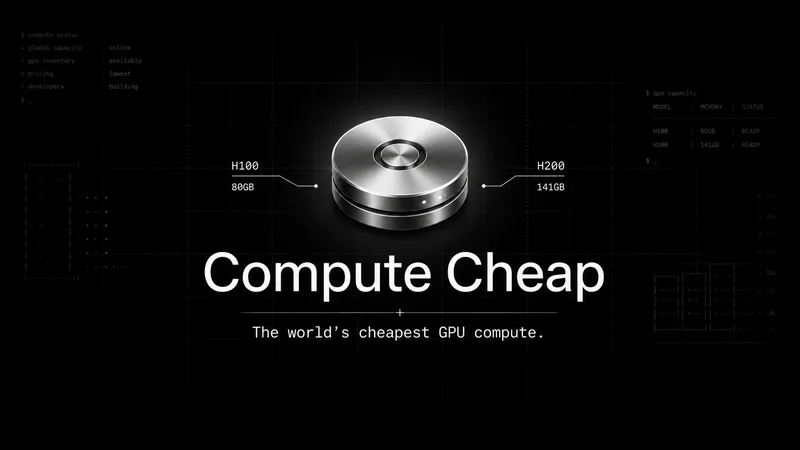
Compute Cheap provides low-cost GPU compute for training and inference, offering H100 and H200 SXM GPUs as interruptible or reserved capacity with published per-GPU-hour pricing and a simple request/reserve/run workflow.
Oodle.ai
Oodle Agent Observability provides agent/LLM observability at scale with S3-backed columnar storage, fast search (<1s P99), out-of-the-box AI-powered insights, and flat ingestion-based pricing designed to retain 100% of traces affordably for debugging and optimizing production agents.


Premium Alternatives
Abliterated LLM provider for cyber tasks
Refuseless hosts GLM 5.3 Abliterated models through an OpenAI-compatible API for cybersecurity and coding work. The page states that prompts are not retained and shows integrations with OpenCode and Pi.
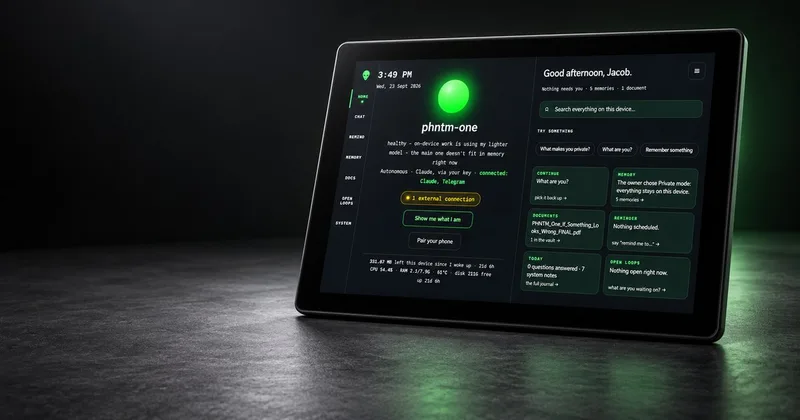
PHNTM ONE
PHNTM One is a private, local-first AI appliance: a hand-built desktop device (Raspberry Pi 5, 8 GB, 10.1″ touchscreen) that runs an on-device model (Gemma 3 4B) to provide a voice-capable assistant, memories, document reading, timers, Home Assistant integration and offline knowledge — sold as a one-time $549 purchase with no subscription and zero telemetry by default.
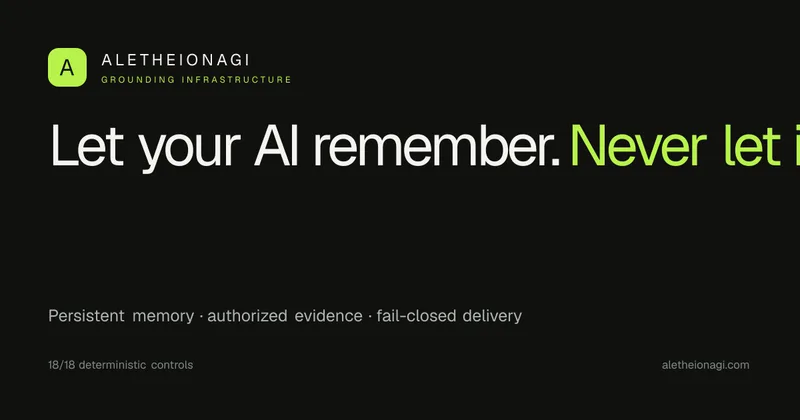
AletheionAGI
AletheionAGI provides a grounded-memory layer for AI systems that enforces evidence-bound delivery, namespace isolation, and policy authorization so AI readers cannot produce unsupported claims. It's targeted at production-facing use cases like customer support, commerce agents and internal copilots.
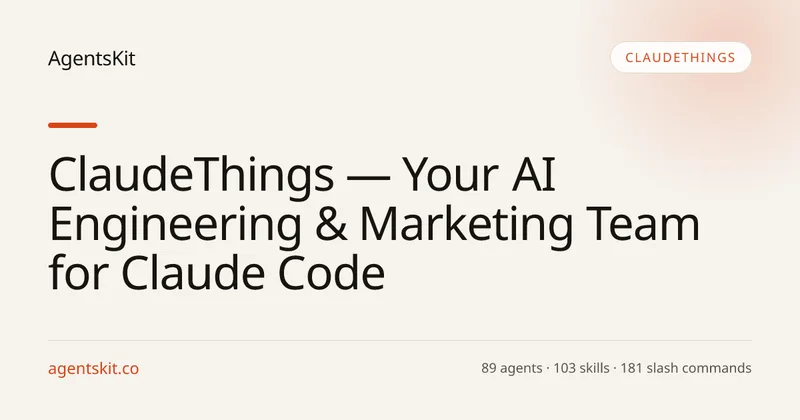
ClaudeThings
ClaudeThings provides a packaged, continuously-updating set of 89 specialized agents, 103 pre-built skills, and 181 slash commands that act as an AI engineering and marketing team for Claude Code — delivered as a private GitHub repo and installed with a single npx command. It adapts to any stack via a CLAUDE.md project manifest and is sold as a one-time purchase with lifetime updates.

Keybe AI (Keybe INC)
Keybe AI (Keybe INC) is an AI-powered sales suite that provides deployable 'AI salesperson' assistants and a Smart Chat sales platform (CDP, funnels, outbound, catalogs, metrics and flows) for businesses to automate customer service and increase conversions.
Customerly Aura
Customerly Aura is an AI customer-support agent that uses company knowledge and customer data to resolve tickets, take actions such as processing refunds, and escalate issues to human agents when needed. It works across live chat, email, WhatsApp, Facebook Messenger, and mobile apps.