
Contextberg
Contextberg is a privacy-first local memory app for AI agents that records screen activity, inputs, browser history and agent conversations to provide contextual memory to agents (e.g., coding agents) and to summarize recent work for quick resumption.
Contextberg is ai tools software teams evaluate for software & gaming. Use this page to review pricing, integration signals, and the best alternatives before you commit.
Profile facts come from the vendor source. AiMatch labels unknown pricing or API details instead of estimating them.
Review official source →Quick Overview
Best for: Software & Gaming
What it does
AI Tools software for decision-makers comparing workflow fit and alternatives.
Best fit
Software & Gaming
Pricing snapshot
Pricing available on request
Next step
Compare Contextberg with similar tools before you shortlist it.
Compare this tool before you shortlist it
Review alternatives, pricing posture, and workflow fit side by side.
Contextberg is a desktop application (macOS & Windows) that observes your work in the background—screenshots, inputs, browsing and agent conversations—and converts that activity into structured context that AI agents can consume. It is designed to act as long-term and short-term memory for agents (including coding agents) by distilling daily activity into activity memories, daily summaries, and long-term memory of frequently used tools and patterns. The product emphasizes privacy by storing work history locally and allowing users to choose inference destinations (local models, LM Studio, Codex, OpenRouter, Contextberg Cloud, etc.). It also includes an MCP server to connect compatible agents directly without additional configuration.
Turn your work into private memory for AI agents Discussion | Link
Own this listing?
Claim this page for a one-time $29 to add pricing, features, screenshots, verified owner details, and a clearly labeled 30-day category position after the profile is live.
Claim this listing for $29Key Features
Automatic context capture
Continuously records screen contents, user inputs, browser history and agent conversations in the background and makes them available to connected agents.
Three memory types
Generates activity memories (detailed logs of actions), daily memories (date-aggregated progress), and long-term memories (frequently used tools and patterns) for agent inference.
Privacy-first storage and model routing
Work history is stored locally by default; users can choose where to send inference requests (local model/LM Studio, Codex sign-in, Gemini/OpenRouter API key, Contextberg Cloud).
MCP server & agent integrations
Includes a built-in MCP server to connect supported agents (e.g., Claude Code, Cursor, OpenClaw, GitHub Copilot) without extra configuration.
Resume & summarization
When returning to work, Contextberg auto-summarizes recent activity (activity, browser, and agent history) so agents can immediately continue from where you left off; points of interest can be explored via chat.
Easy installation and no account required
Two-click install with no account or cloud lock-in required for local-only operation.
Pricing
Current pricing details are not available from the vendor source.
Use Cases
Coding with context-aware agents
Provide coding agents with full contextual history (screenshots, terminal logs, prior agent interactions) so they can operate without repeatedly asking for state or filenames.
Resume interrupted work quickly
Automatically generate summaries of recent activity so users and agents can pick up work immediately after returning from a break.
Long-term agent memory for workflows
Maintain long-term memory of frequently used tools and behavioral patterns to improve agent relevance over time.
Privacy-first experimentation
Run local models or select specific inference routes when working with sensitive or private data while keeping raw work history on-device.
Integrations
Claude Code
Supported coding agent that can consume Contextberg-provided context.
Cursor
Supported agent whose history Contextberg can record and feed.
OpenClaw
Agent integration listed as supported for context feeding.
GitHub Copilot / Codex
Support for recording and routing context to Codex/GitHub Copilot (Codex sign-in mentioned).
LM Studio / Local models
Option to use fully local models (LM Studio) so inference stays on-device.
OpenRouter / Gemini (API keys)
Can route inference to OpenRouter or Gemini via user-provided API keys.
Contextberg Cloud
Cloud inference route option (optional; not required).
Benefits
Limitations
Frequently Asked Questions
No verified FAQs are available.
Getting Started
- 1 Download and install the Contextberg desktop app (macOS or Windows).
- 2 Launch the app and connect a supported agent via the built-in MCP server or choose a model route (local model, LM Studio, Codex sign-in, Gemini/OpenRouter, Contextberg Cloud).
- 3 Work as usual: Contextberg will record activity in the background and begin generating activity, daily, and long-term memories; use the summary/chat features to resume or explore context.
Support
docs
Help center and documentation pages referenced on the site (サポート / ヘルプセンター).
blog
Product updates and launch posts available on the blog linked from the site.
social
Follow Contextberg on X (Twitter) as listed in the site footer.
API
Compare Contextberg with similar tools
See how it stacks up against alternatives
Related Tools
View all 651 →
Needle2
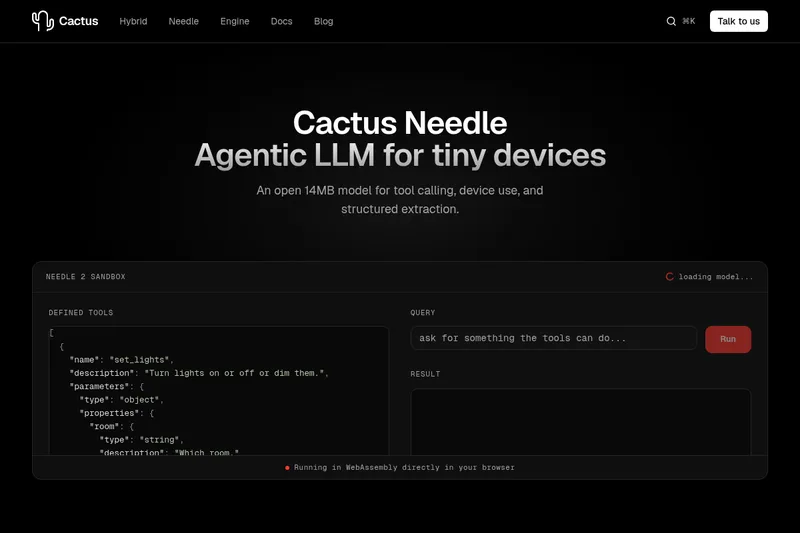
Needle 2 is an open, production-ready 45M-parameter agentic LLM from Cactus designed for tool calling, device control, and structured extraction on extremely small devices; the shipped CQ2-bit binary is ~14 MB and runs in ~28 MB of RAM across Cortex-M, microcontrollers, phones, Raspberry Pi and WebAssembly.
The cheapest GPU cloud
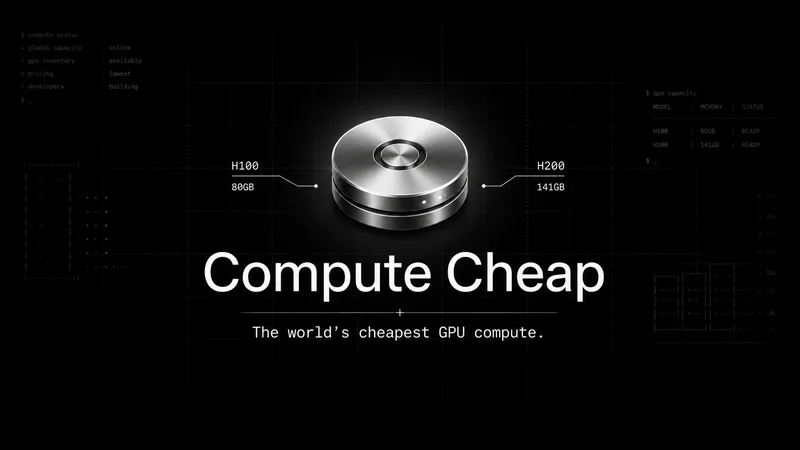
Compute Cheap provides low-cost GPU compute for training and inference, offering H100 and H200 SXM GPUs as interruptible or reserved capacity with published per-GPU-hour pricing and a simple request/reserve/run workflow.
Oodle.ai
Oodle Agent Observability provides agent/LLM observability at scale with S3-backed columnar storage, fast search (<1s P99), out-of-the-box AI-powered insights, and flat ingestion-based pricing designed to retain 100% of traces affordably for debugging and optimizing production agents.


Premium Alternatives
Abliterated LLM provider for cyber tasks
Refuseless hosts GLM 5.3 Abliterated models through an OpenAI-compatible API for cybersecurity and coding work. The page states that prompts are not retained and shows integrations with OpenCode and Pi.
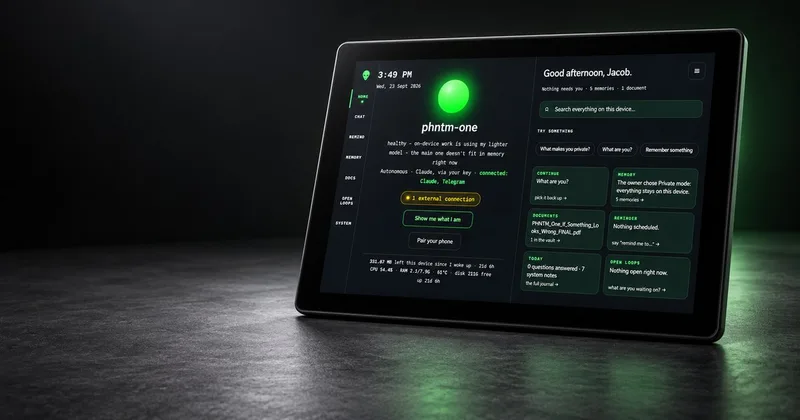
PHNTM ONE
PHNTM One is a private, local-first AI appliance: a hand-built desktop device (Raspberry Pi 5, 8 GB, 10.1″ touchscreen) that runs an on-device model (Gemma 3 4B) to provide a voice-capable assistant, memories, document reading, timers, Home Assistant integration and offline knowledge — sold as a one-time $549 purchase with no subscription and zero telemetry by default.
AletheionAGI
AletheionAGI provides a grounded-memory layer for AI systems that enforces evidence-bound delivery, namespace isolation, and policy authorization so AI readers cannot produce unsupported claims. It's targeted at production-facing use cases like customer support, commerce agents and internal copilots.
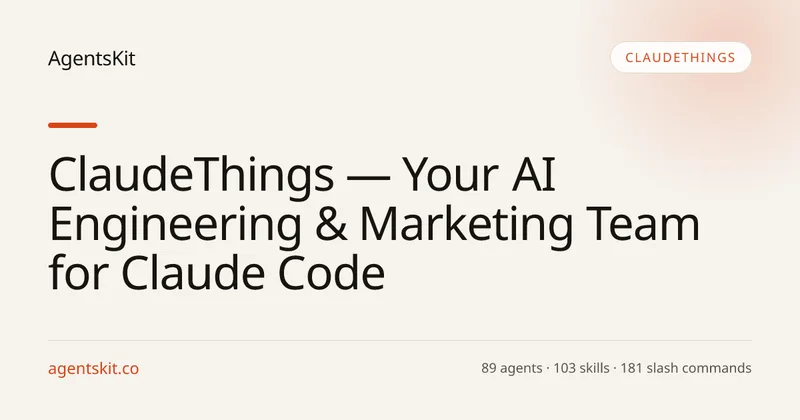
ClaudeThings
ClaudeThings provides a packaged, continuously-updating set of 89 specialized agents, 103 pre-built skills, and 181 slash commands that act as an AI engineering and marketing team for Claude Code — delivered as a private GitHub repo and installed with a single npx command. It adapts to any stack via a CLAUDE.md project manifest and is sold as a one-time purchase with lifetime updates.


Jurny
Jurny is an AI-powered property management platform for short-term rental operators, boutique hotels, and multi-property portfolios. Its jOS platform combines guest communications, reservations, channel management, pricing, and property operations, with NIA agents automating routine tasks.