

dmx
dmx is an open-source, AI-native engineering harness that runs as an MCP server and wraps AI-driven development workflows in structured, versioned loops with human gates, validators, and persistent job state to make AI-assisted engineering reproducible and governed.
dmx is developer tools software teams evaluate for software & gaming. Use this page to review pricing, integration signals, and the best alternatives before you commit.
Profile facts come from the vendor source. AiMatch labels unknown pricing or API details instead of estimating them.
Review official source →Used in These Packs
Quick Overview
Best for: Software & Gaming
What it does
Developer Tools software for decision-makers comparing workflow fit and alternatives.
Best fit
Software & Gaming
Pricing snapshot
Contact for pricing
Next step
Compare dmx with similar tools before you shortlist it.
Compare this tool before you shortlist it
Review alternatives, pricing posture, and workflow fit side by side.
dmx is an open-source engineering harness designed to add structure, governance, and reproducibility to AI-driven development workflows. It runs as an MCP server inside AI-enabled IDEs (like Cursor, Claude Code, or Copilot) and implements an "AI SDLC" framework of named, versioned phases (Plan, Build, Validate, Release) that include explicit human approval gates. dmx is aimed at engineering teams and developers who use AI to write code and want reliable, auditable workflows: loop configurations and a .dmx/ directory are committed to the repo, validators run at phase boundaries, and job state persists across sessions so teams can pick up work where they left off.
dmx is an open source AI-native engineering harness. It runs as an MCP server inside Cursor, Claude Code, Copilot, or any IDE that speaks the Model Context Protocol, and wraps your AI workflows in structured, verifiable loops.
Own this listing?
Claim this page for a one-time $29 to add pricing, features, screenshots, verified owner details, and a clearly labeled 30-day category position after the profile is live.
Claim this listing for $29Key Features
Named, versioned loops
Each phase of the AI SDLC is a named, versioned loop: an ordered sequence of skills that run, trigger validators, and wait for approval before advancing. Loop configs live in the repository and are versioned alongside code.
Human gates
The loop pauses at every phase boundary and waits for explicit human approval before the next phase runs; the model does not merge or advance the workflow on its own.
Validators with policy
At loop boundaries dmx runs validators against an explicit, version-controlled policy. Required checks block progress while optional checks warn.
Persistent project memory (.dmx/)
A committed .dmx/ directory stores project context — spec, plan, decisions, and job history — so sessions start with full context and teams stop re-explaining the project to the AI.
Persistent job state
Every loop run is a tracked job with a task ID and state that persists across sessions, allowing users to close the IDE and resume later exactly where they left off.
MCP server integration
dmx runs as an MCP server that you point your IDE at; it governs AI execution engines (Cursor, Claude Code, Copilot) rather than replacing them.
Progressive trust
Teams can deliberately relax human gates for loops whose history shows consistent validator success for a given task type; this is an explicit decision made by users.
Pricing
Current pricing details are not available from the vendor source.
Use Cases
Structured AI-assisted development
Enforce an AI SDLC (spec → plan → build → validate → release) so AI-generated code follows a repeatable, reviewable process with human approval at each gate.
Team governance and auditability
Commit loop configs and .dmx/ state to the repo, record validator results and gate approvals, and make AI-driven work auditable and reviewable by the team.
Resume interrupted work
Use persistent job state to close the IDE and later pick up a loop run exactly where it left off, preserving decisions and context.
Add governance to existing AI IDEs
Point an existing AI-enabled IDE at dmx as an MCP server to add sequencing, validators, and human gates on top of execution engines like Claude Code or Cursor.
Integrations
Claude Code
Execution engine integration — dmx governs and sequences work executed by Claude Code.
Cursor
Execution engine integration — dmx provides workflow structure and validators on top of Cursor.
Copilot
Execution engine integration — compatible as an AI execution engine when used with an MCP-capable IDE.
Model Context Protocol (MCP)
dmx runs as an MCP server; IDEs that speak the Model Context Protocol can point to dmx to obtain structured workflows.
uvx
Runtime used in the example MCP config to fetch and serve dmx on demand.
Benefits
Limitations
Frequently Asked Questions
What problem does dmx solve?
Why use dmx if I already use Claude Code or Cursor?
Getting Started
- 1 Add dmx to your IDE's MCP config (no separate install step).
- 2 Example: configure an MCP server entry that runs uvx to fetch and serve dmx (example MCP JSON shown on the page).
- 3 See MCP Server Setup and follow the Quick Start to run your first loop in your IDE.
Support
docs
Documentation and Quick Start guides available on the dmx site (Quick Start, Core Concepts, MCP Server Setup).
project repository
Links in the site header indicate GitHub and PyPI references for code and packages (visible in site navigation).
API
Compare dmx with similar tools
See how it stacks up against alternatives
Related Tools
View all 147 →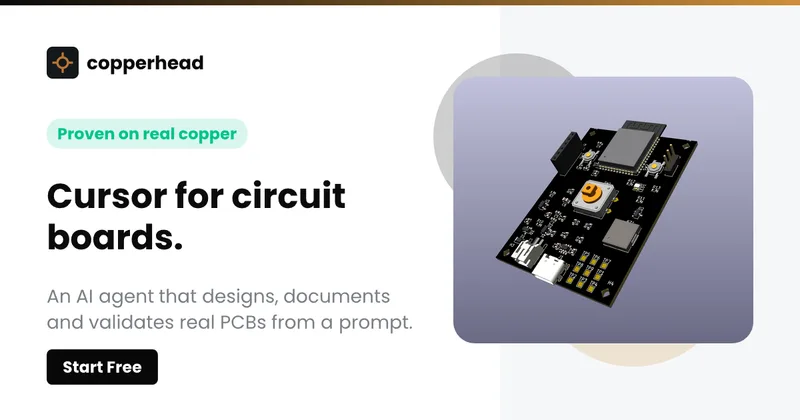
Copperhead
Copperhead is an open-source AI engineering platform and CLI that helps hardware teams design, verify, and ship printed circuit boards by editing KiCad files, running KiCad checks (ERC/DRC), and producing gerbers, firmware, and documentation in a gated, auditable pipeline.



Docs.dev Your Own Hosted Docs Platform in Minutes
Docs.dev is a deployable documentation template that runs as a Cloudflare Worker in your account, using your GitHub repo as the source of truth and agent-powered drafting (e.g., Claude Code or Codex) to generate reviewable docs branches that your team publishes via commit.
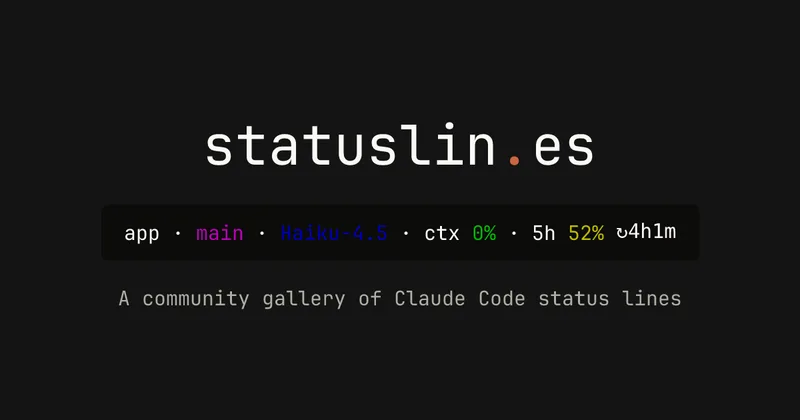
statuslin.es
statuslin.es is a community gallery of Claude Code status lines—copyable, previewed scripts and themes for terminal/status-bar displays that show Claude model stats (tokens, cost, limits), git info, and other runtime metrics.

Bullet · Fast, by design.
Bullet is a fast coding agent and developer tool that routes, searches, and executes code-focused tasks with a tight loop to minimize latency — offered as a macOS download and currently available in private beta.

Premium Alternatives
%22%2F%3E%20%3Ctext%20x%3D%2250%25%22%20y%3D%2250%25%22%20dominant-baseline%3D%22central%22%20text-anchor%3D%22middle%22%20font-family%3D%22system-ui%2C-apple-system%2Csans-serif%22%20font-weight%3D%22700%22%20font-size%3D%2250%22%20fill%3D%22white%22%3EO%3C%2Ftext%3E%20%3C%2Fsvg%3E)
OTP Inspired actor supervisor based full stack templates
ShipStacks provides production-grade, OTP-inspired full-stack SaaS templates that include supervisors/actor patterns, auth, payments, uploads, AI chat and agent playbooks, and Docker-ready deployment in multiple languages and frameworks.
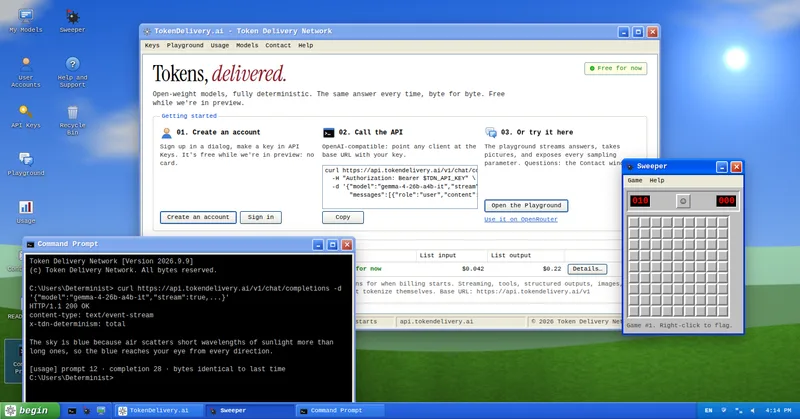
TokenDelivery.ai
TokenDelivery.ai (Token Delivery Network) is an OpenAI-compatible model API and playground that offers reproducible, deterministic model outputs, streaming responses, multimodal inputs (images and short videos), and exposed sampling parameters. It is free during preview and provides API keys, a playground, and a documented base URL for developers.

Servers for AI, not another AWS
RAW offers dedicated GPU and CPU servers specifically built for AI workloads — provision real metal with root access and CUDA via a single API. It emphasizes low cost (claims up to 100× cheaper than AWS), $0 egress, fast provisioning, and enterprise features for inference, training, agents, and vector databases.

Finetunefast
FinetuneFast provides finetuning boilerplates, inference templates, and deployment tooling to accelerate building and shipping ML models (text-to-image, LLMs, RAG, TTS) — aimed at developers, indie makers and businesses who want production-ready examples and fast time-to-deploy.


builderkit
BuilderKit is a modular Next.js AI boilerplate and starter kit that provides deployable TypeScript code, pre-built AI apps, UI components, auth, payments, and integrations to accelerate building and shipping AI SaaS products.