

Hugging Face
Hugging Face is a machine‑learning community platform for hosting, sharing and deploying models, datasets and applications, plus developer tooling and enterprise compute and support.
Hugging Face is llms software teams evaluate for education & research. Use this page to review pricing, integration signals, and the best alternatives before you commit.
Profile facts come from the vendor source. AiMatch labels unknown pricing or API details instead of estimating them.
Review official source →Quick Overview
Best for: Education & Research
What it does
LLMs software for decision-makers comparing workflow fit and alternatives.
Best fit
Education & Research
Pricing snapshot
Free from Starting at $20/user/month
Next step
Compare Hugging Face with similar tools before you shortlist it.
Compare this tool before you shortlist it
Review alternatives, pricing posture, and workflow fit side by side.
Hugging Face is a collaboration platform for machine learning that hosts and shares models, datasets and applications (Spaces). The site positions itself as 'The AI community building the future' and highlights a large catalog of community-contributed artifacts (models, datasets, applications) and an open-source stack of ML libraries (Transformers, Diffusers, Tokenizers, etc.). It also offers paid compute and Team & Enterprise plans with features like single sign-on, audit logs, private datasets and priority support to enable production and organizational use.
An open-source AI community and platform advancing and democratizing artificial intelligence through open source and open science, offering a vast repository of pre-trained models and datasets.
Own this listing?
Claim this page for a one-time $29 to add pricing, features, screenshots, verified owner details, and a clearly labeled 30-day category position after the profile is live.
Claim this listing for $29Key Features
Model Hub
Host, browse and run community and provider models — the site lists 'Browse 2M+ models' and shows trending and recent model entries.
Datasets
Browse and share datasets with the community; the site lists 'Browse 500k+ datasets' and specific dataset examples.
Spaces
Host and run ML applications (Spaces) in-browser or on provided infrastructure; examples of running Spaces and GPU upgrades are shown.
Inference Endpoints & Compute
Deploy models on optimized Inference Endpoints or provision GPU compute; page lists pricing starting at $0.60/hour for GPU.
Open-source libraries & tooling
Maintains and links to foundational libraries such as Transformers, Diffusers, Tokenizers, Hub Python Library and others used for research and production.
Team & Enterprise capabilities
Enterprise features include single sign-on, regions, priority support, audit logs, resource groups and private datasets; pricing starting at $20/user/month is mentioned.
Inference Providers & Unified API
Access models from multiple providers through a single unified API and marketplace of inference providers (45,000+ models via unified API listed).
Pricing
Free public hosting and collaboration for unlimited public models, datasets and applications (signup available).
Team & Enterprise
Starting at $20/user/month- Single Sign-On
- Priority Support
- Audit Logs
- Private Datasets
Compute (GPU)
Starting at $0.60/hour for GPU- GPU-backed Spaces or Inference Endpoints
- Managed inference infrastructure
Use Cases
Research & Model Sharing
Researchers and developers publish and discover models and datasets, collaborate and build portfolios on the public Hub.
Deploying Models to Production
Teams deploy via Inference Endpoints or hosted compute to serve models and scale inference, with enterprise controls available.
Building ML Applications
Developers use Spaces to run interactive ML apps and demos, and can upgrade Spaces to GPU-backed execution.
Enterprise & Team Workflows
Organizations use Team & Enterprise features (SSO, audit logs, private datasets, priority support) to manage access and compliance.
Integrations
Hub Python Library
Python client to interact with the Hugging Face Hub and programmatically access models and datasets.
Inference Providers / Unified API
Access models from multiple providers via a single API endpoint and provider marketplace.
Open-source libraries (Transformers, Diffusers, Tokenizers)
First-party libraries and runtimes that integrate with the Hub for training, inference and deployment.
Benefits
Limitations
Frequently Asked Questions
No verified FAQs are available.
Getting Started
- 1 Sign up for an account (Sign Up link shown on site)
- 2 Browse or search the Model Hub, Datasets and Spaces to find assets to use or remix
- 3 Run models in a Space or deploy using Inference Endpoints / provision GPU compute; follow Docs links on the site for SDKs and deployment guidance
Support
Docs
Documentation and guides are provided (Docs link available in site navigation).
Enterprise Support
Team & Enterprise customers receive priority and dedicated support (Enterprise Support mentioned).
Community & Forum
Community support channels include Forum and Discord listed on the site navigation.
Developer & Code
Source code, examples and issue tracking available via GitHub link in site navigation.
API
Compare Hugging Face with similar tools
See how it stacks up against alternatives
Related Tools
View all 143 →
ThoughtDAG
ThoughtDAG is an open-source, desktop-first application that makes LLM context visible, editable, and reproducible by representing context as an editable directed acyclic graph (wires = context) and letting users preview and control exactly what the model receives.

LLM Attention Visualization
A browser-based interactive visualization that shows how transformer LLMs allocate attention to past tokens during generation by aggregating attention weights and value magnitudes across heads and layers.

PilotCite
PilotCite is a SaaS platform that helps brands monitor and improve their visibility in AI-generated answers (ChatGPT, Perplexity, Google AI, Gemini, Claude, Copilot, Grok) by tracking citations, auditing site citability, benchmarking competitors, and generating source-backed content.

Knowledge graph skill for Claude/Kimi Code
SysEdge is an ontological knowledge graph and CLI for multi-agent Claude Code and Kimi Code teams that models requirements, tests, and architecture standards to surface specification, test, and standards gaps before code ships and to reduce agent orientation tokens.
Redactle LLM Leaderboard
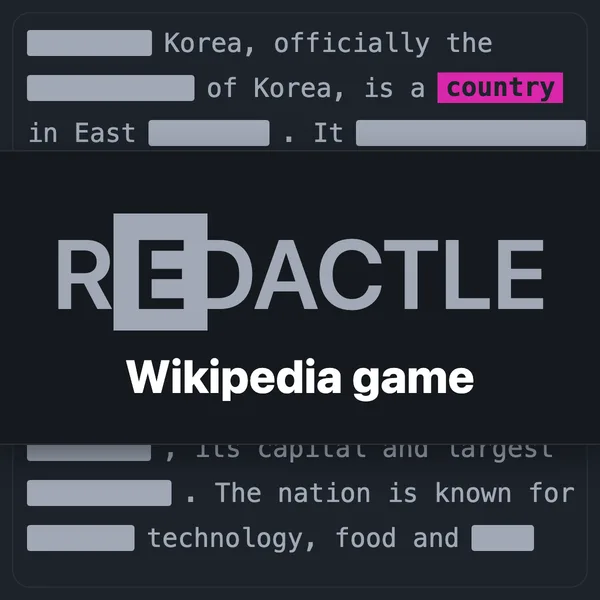
A public benchmark dashboard that evaluates how well large language models (LLMs) solve Redactle puzzles by running standardized evaluations and publishing ranked results, costs, and performance metrics.

HieraticBench
HieraticBench is an open benchmark for testing whether AI models can identify and read hieratic, the cursive handwriting of ancient Egypt. It includes a public leaderboard, evaluation harness, and dataset of documents and individual signs.
Premium Alternatives

CiteRank
CiteRank is a weekly SaaS monitoring tool that re-asks buyer questions of major AI answer engines (ChatGPT, Perplexity, Google AI Overviews, Gemini and Claude) to record whether they cite your site, name your brand, or leave you absent, and delivers board-style reports and competitor/source lists.


AI ChatDocs
AI ChatDocs is a GPT-4 powered document chat and summarization tool that lets users upload PDFs, Word/PPT/Docx/TXT files, websites, sitemaps and YouTube videos to generate summaries, extract references, and interactively chat with document content.



grantboost
Grantboost is an AI grant discovery and proposal-writing platform for nonprofits, agencies, universities, and other mission-driven organizations. It matches funding opportunities to an organization’s programs and helps draft proposals using its past content and brand voice.