

Kern Sandbox
Kern Sandbox is an open-source runtime that runs model-generated code in isolated, checksum-verified containers from Python or Node, preventing the code from touching your host, with configurable network, mounts, time and memory limits and integrations for agent/tool workflows.
Kern Sandbox is developer tools software teams evaluate for developer tools. Use this page to review pricing, integration signals, and the best alternatives before you commit.
Profile facts come from the vendor source. AiMatch labels unknown pricing or API details instead of estimating them.
Review official source →Used in These Packs
Quick Overview
Best for: Developer Tools
What it does
Developer Tools software for decision-makers comparing workflow fit and alternatives.
Best fit
Developer Tools
Pricing snapshot
Pricing available on request
Next step
Compare Kern Sandbox with similar tools before you shortlist it.
Compare this tool before you shortlist it
Review alternatives, pricing posture, and workflow fit side by side.
Kern Sandbox runs code (for example code generated by LLMs or agents) inside short-lived, checksum-verified container boxes so the executed code cannot access your host. It is provided as two parts: a single static kern binary that performs isolation and a language-specific package (Python/Node) that exposes a simple API (kern.run_code, Sandbox(), kernel()). The runtime enforces a mandatory timeout, optional memory and PID caps, a read-only root filesystem, and network/mount controls so the sandboxed run is cheap enough to create a fresh container per call and leaves nothing behind.
The project is aimed at developers and teams who need to execute untrusted or model-generated code safely in workflows such as agents, CI steps, notebooks, or programmatic tool calls. It also ships an MCP stdio server and integrations for LangChain and other model client environments to let models call it as a tool.
Your model writes the code. This runs it where it can't touch your machine.
Own this listing?
Claim this page for a one-time $29 to add pricing, features, screenshots, verified owner details, and a clearly labeled 30-day category position after the profile is live.
Claim this listing for $29Key Features
Per-call isolated containers
Each kern.run_code invocation runs in a fresh OCI-based container with no network by default, memory and PID caps, and a deadline; the container is discarded after execution so nothing is left behind.
Python/Node SDK and single static kern binary
Two-part architecture: a checksum-verified kern binary provides isolation, and language packages (pip/npm) provide the API (kern.run_code, Sandbox(), kernel()).
Sandbox and kernel modes
Sandbox() provides a persistent /workspace for file sharing; kernel() provides a warm interpreter where variables persist like a notebook.
Controlled network and egress
No network by default; egress_allow permits named hosts and network=True opens all including loopback. setup runs once with network for package installation.
Precompiled imports and pyc cache control
Images can precompile the standard library to speed imports; pyc_cache=False disables caching.
Rich run results and labeled faults
Runs return structured results including stdout, results (e.g. PNGs for plots), and a fault field describing timeout, OOM, exec_failed, startup_failed, or network errors so a loop can branch on failure reasons.
Integrations for agent/tool workflows
Ships kern-mcp (a stdio MCP server), LangChain tool helpers (kern_code_tool), and pi/cli integrations to let model clients use the sandbox as a tool.
Security defaults and mount protections
Default image is python:3.12-slim with seccomp and dropped capabilities; mounts over sensitive host directories are refused and the timeout is mandatory.
Cross-platform installer notes
Installable on Linux (with unprivileged user namespaces and cgroup v2) and usable on Windows via WSL2 or on macOS inside a Linux VM; pip install provides the package but the kern binary must be present on PATH or $KERN_BIN.
Pricing
Current pricing details are not available from the vendor source.
Use Cases
Run model-generated scripts safely
Run scripts produced by LLMs (agents or completions) in an isolated environment so accidental or malicious host access is prevented.
Agent tool-call execution
Expose the sandbox as a tool to model clients (MCP, LangChain, Claude Code, Cursor, LM Studio) so agents can execute code, get results (including images), and handle labeled faults.
CI steps and ephemeral job runs
Execute individual CI steps or notebook cells in disposable containers with resource caps and timeouts so failing or hanging steps are reported and cleaned up.
Interactive notebooks and warmed interpreters
Use kernel() to keep a warm interpreter where variables persist across runs, similar to a notebook experience.
Programmatic file-based workflows
Use Sandbox() to share a /workspace between host and sandboxed code for file input/output workflows while keeping the rest of the host isolated.
Integrations
Claude Code / Cursor / Claude Desktop / LM Studio / Zed
MCP client compatibility lets these model clients spawn the kern-mcp server so models can call the sandbox as a tool.
LangChain
Provides kern_code_tool() as a StructuredTool and a shell policy so LangChain agents can run code and receive labeled faults.
pi (kern-pi)
Routes file and shell tools into a box with the working directory mounted at /workspace for pi-style integrations.
Node and Python
Same API surface available in both runtimes: pip install kern-sandbox and npm i kern-sandbox to use from Python or Node.
MCP (kern-mcp)
Ships a stdio MCP server to back model client connections; one session can back the connection and carry files between tool calls.
Benefits
Limitations
Frequently Asked Questions
No verified FAQs are available.
Getting Started
- 1 Install or update the kern binary (example: curl -fsSL https://raw.githubusercontent.com/getkern/kern/main/install.sh | sh).
- 2 Install the language package (Python: pip install kern-sandbox; Node: npm i kern-sandbox) and ensure the kern binary is on PATH or set $KERN_BIN.
- 3 Use the SDK (import kern_sandbox as kern) and call kern.run_code(...) or create a Sandbox() to run code, share files in /workspace, or use kernel() for a warm interpreter.
Support
docs
Project documentation and markdown files referenced on the site (docs/MCP.md, BENCHMARKS.md, SANDBOX-NOTES.md) and guide pages on getkern.dev.
source / issue tracker
Project source and issue tracker available on the project's GitHub repository (links available from the site).
API
https://getkern.dev/guide/sandbox.html
Compare Kern Sandbox with similar tools
See how it stacks up against alternatives
Related Tools
View all 136 →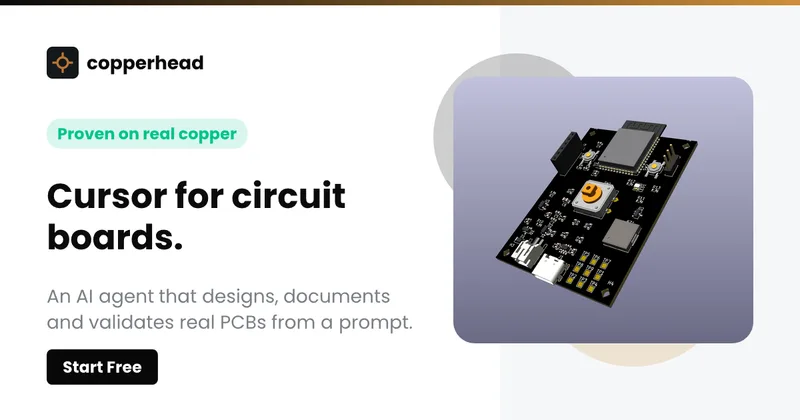
Copperhead
Copperhead is an open-source AI engineering platform and CLI that helps hardware teams design, verify, and ship printed circuit boards by editing KiCad files, running KiCad checks (ERC/DRC), and producing gerbers, firmware, and documentation in a gated, auditable pipeline.

Docs.dev Your Own Hosted Docs Platform in Minutes
Docs.dev is a deployable documentation template that runs as a Cloudflare Worker in your account, using your GitHub repo as the source of truth and agent-powered drafting (e.g., Claude Code or Codex) to generate reviewable docs branches that your team publishes via commit.


Bullet · Fast, by design.
Bullet is a fast coding agent and developer tool that routes, searches, and executes code-focused tasks with a tight loop to minimize latency — offered as a macOS download and currently available in private beta.
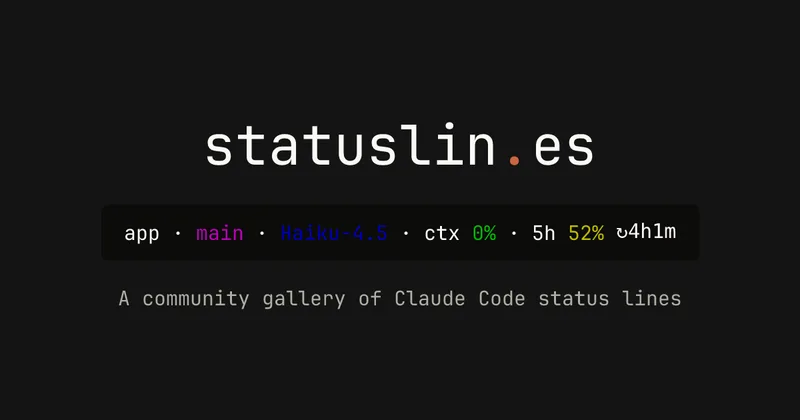
statuslin.es
statuslin.es is a community gallery of Claude Code status lines—copyable, previewed scripts and themes for terminal/status-bar displays that show Claude model stats (tokens, cost, limits), git info, and other runtime metrics.


Premium Alternatives
%22%2F%3E%20%3Ctext%20x%3D%2250%25%22%20y%3D%2250%25%22%20dominant-baseline%3D%22central%22%20text-anchor%3D%22middle%22%20font-family%3D%22system-ui%2C-apple-system%2Csans-serif%22%20font-weight%3D%22700%22%20font-size%3D%2250%22%20fill%3D%22white%22%3EO%3C%2Ftext%3E%20%3C%2Fsvg%3E)
OTP Inspired actor supervisor based full stack templates
ShipStacks provides production-grade, OTP-inspired full-stack SaaS templates that include supervisors/actor patterns, auth, payments, uploads, AI chat and agent playbooks, and Docker-ready deployment in multiple languages and frameworks.
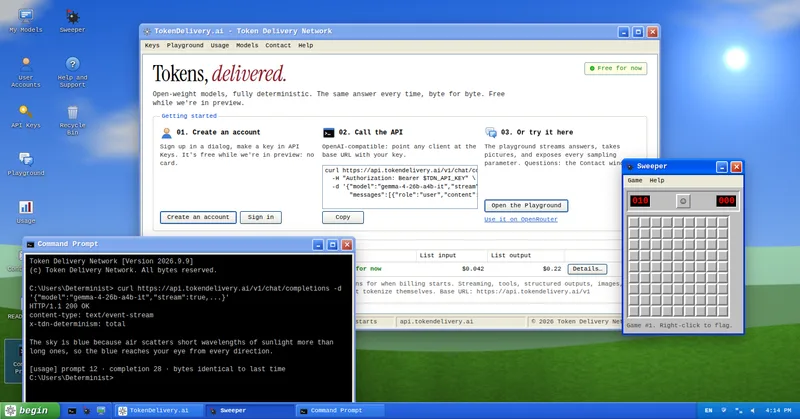
TokenDelivery.ai
TokenDelivery.ai (Token Delivery Network) is an OpenAI-compatible model API and playground that offers reproducible, deterministic model outputs, streaming responses, multimodal inputs (images and short videos), and exposed sampling parameters. It is free during preview and provides API keys, a playground, and a documented base URL for developers.

Servers for AI, not another AWS
RAW offers dedicated GPU and CPU servers specifically built for AI workloads — provision real metal with root access and CUDA via a single API. It emphasizes low cost (claims up to 100× cheaper than AWS), $0 egress, fast provisioning, and enterprise features for inference, training, agents, and vector databases.

runpod
Runpod is an AI Developer Cloud that provides on-demand GPU infrastructure—Pods, Serverless endpoints, and multi-node Clusters—enabling teams to experiment, train, fine-tune, deploy, and scale AI workloads across 31 global regions with support for 30+ GPU SKUs.

Finetunefast
FinetuneFast provides finetuning boilerplates, inference templates, and deployment tooling to accelerate building and shipping ML models (text-to-image, LLMs, RAG, TTS) — aimed at developers, indie makers and businesses who want production-ready examples and fast time-to-deploy.

ratio1
Ratio1 is a blockchain-powered, decentralized AI operating system and edge/cloud computing platform that enables rapid development and deployment of AI apps, a tokenized GPU compute marketplace, and node-based infrastructure via Node Deeds and the $R1 utility token.