MCP Tool Definition Quality Score (TDQS) Spec
TDQS (Tool Definition Quality Score) is an open framework and reference implementation for scoring how well MCP tool definitions communicate to AI agents, producing per-tool scores, written justifications, and a tiered grade usable in CI, registries, and developer workflows.
MCP Tool Definition Quality Score (TDQS) Spec is developer tools software teams evaluate for developer tools. Use this page to review pricing, integration signals, and the best alternatives before you commit.
Profile facts come from the vendor source. AiMatch labels unknown pricing or API details instead of estimating them.
Review official source →Used in These Packs
Quick Overview
Best for: Developer Tools
What it does
Developer Tools software for decision-makers comparing workflow fit and alternatives.
Best fit
Developer Tools
Pricing snapshot
Contact for pricing
Next step
Compare MCP Tool Definition Quality Score (TDQS) Spec with similar tools before you shortlist it.
Compare this tool before you shortlist it
Review alternatives, pricing posture, and workflow fit side by side.
MCP Tool Definition Quality Score (TDQS) Spec
TDQS (Tool Definition Quality Score) is an open specification and reference implementation that measures how well MCP tool definitions communicate intent and usage to AI agents. It grades each tool description across six weighted dimensions, generates written justifications for every point, and aggregates results into a numeric score and tier (A–F) that teams can use in CI, registries, and release gating. The project provides multiple ways to run the scorer — a browser playground, a CLI for local/CI usage, and a hosted HTTP API — and produces shareable reports and SVG badges for README and review workflows.
An open framework for scoring how well an MCP tool definition communicates to an AI agent. Specification, reference implementation, CLI and hosted API.
Own this listing?
Claim this page for a one-time $29 to add pricing, features, screenshots, verified owner details, and a clearly labeled 30-day category position after the profile is live.
Claim this listing for $29Key Features
Six-dimension rubric with written justifications
A model grades six weighted dimensions (Purpose Clarity, Usage Guidelines, Behavioral Transparency, Parameter Semantics, Conciseness & Structure, Contextual Completeness) from 1 to 5 and writes a justification for every point.
Deterministic preprocessing and hard gates
Deterministic code reads schema and annotations, applies hard gates for degenerate definitions (e.g., no description), and computes deterministic signals like parameter coverage and invocation cost before model grading.
Multiple runtimes: Playground, CLI, Hosted API
Reference implementation runs in a browser playground, via an npx CLI (npm/PyPI), or over the hosted HTTP API, producing consistent scores across all clients.
Per-tool scores, tiers, and shareable reports/badges
Each run produces a numeric score, a tier (A–F), written reasons, a permanent report page, and an SVG badge that can be added to READMEs and dashboards.
Server-level metrics and additional dimensions
In addition to per-tool dimensions, TDQS measures server-level qualities (Disambiguation, Naming Consistency, Tool Count Appropriateness, Completeness) and reports coherence and overall results.
Reference implementation & distribution
The scorer is published as packages on npm and PyPI and is used by the playground, CLI, and hosted API to ensure consistent behavior.
Pricing
Current pricing details are not available from the vendor source.
Use Cases
Release gating and CI
Use TDQS scores and the fail-under flag in CI pipelines to block releases when tool description quality falls below an acceptable tier.
Registry quality monitoring
Score and monitor tool definitions across a registry to identify descriptions needing improvement and to surface server-level coherence metrics.
Developer tooling and linting
Run the CLI locally or in pre-commit/CI to lint tool definitions, get actionable justifications, and enforce naming and completeness standards.
Research and calibration
Use the calibration corpus and the deterministic specification to study description defects and improve agent-tool selection in controlled experiments.
Integrations
GitHub (Sign in / Registry workflows)
Playground and registry workflows mention signing in with GitHub and integrating with registry/CI workflows.
CLI / CI
npx mcp-tdqs can be run locally or in CI to gate releases and lint definitions.
npm / PyPI
Reference implementation is published on npm and PyPI for easy installation and integration.
Hosted HTTP API
A hosted scorer API accepts submissions and returns reports (example endpoint shown: https://tdqs.dev/api/v1/reports).
Benefits
Limitations
Frequently Asked Questions
No verified FAQs are available.
Getting Started
- 1 Try the browser playground: sign in with GitHub and paste a tools/list result to score it through the hosted API.
- 2 Use the CLI: run npx mcp-tdqs score with --command or --url flags to lint and score definitions locally or in CI (example: npx mcp-tdqs score --command "node ./dist/server.js" --fail-under B).
- 3 Use the Hosted API: submit definitions to the API endpoint (curl https://tdqs.dev/api/v1/reports -H 'Authorization: Bearer tdqs_…' -d @tools.json) and poll the generated report.
Support
Playground
Browser playground accessible from the site; sign in with GitHub to run scoring through the hosted API.
Docs
Links on the site reference CLI docs and API docs (the page includes 'Read the CLI docs' and 'Read the API docs').
CLI
The npx mcp-tdqs CLI runs locally and in CI; examples and flags are shown on the site.
API
https://tdqs.dev/api/v1/reports
Thirty calls a day per account.
Compare MCP Tool Definition Quality Score (TDQS) Spec with similar tools
See how it stacks up against alternatives
Related Tools
View all 129 →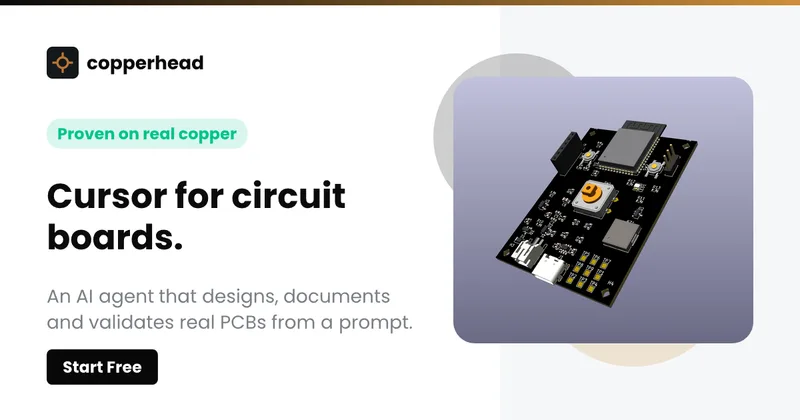
Copperhead
Copperhead is an open-source AI engineering platform and CLI that helps hardware teams design, verify, and ship printed circuit boards by editing KiCad files, running KiCad checks (ERC/DRC), and producing gerbers, firmware, and documentation in a gated, auditable pipeline.


Docs.dev Your Own Hosted Docs Platform in Minutes
Docs.dev is a deployable documentation template that runs as a Cloudflare Worker in your account, using your GitHub repo as the source of truth and agent-powered drafting (e.g., Claude Code or Codex) to generate reviewable docs branches that your team publishes via commit.
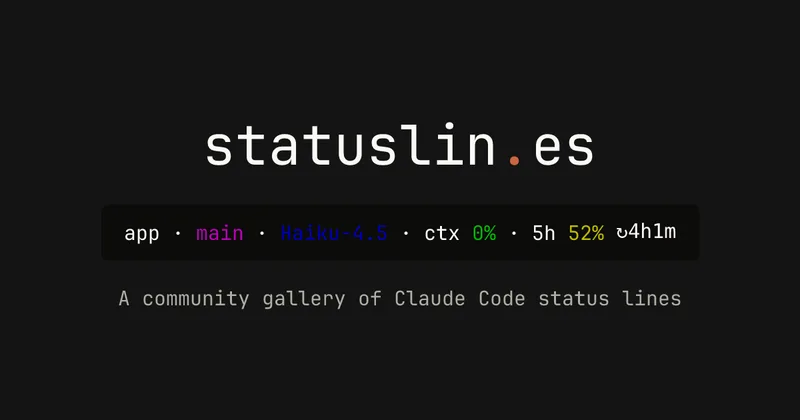
statuslin.es
statuslin.es is a community gallery of Claude Code status lines—copyable, previewed scripts and themes for terminal/status-bar displays that show Claude model stats (tokens, cost, limits), git info, and other runtime metrics.

Bullet · Fast, by design.
Bullet is a fast coding agent and developer tool that routes, searches, and executes code-focused tasks with a tight loop to minimize latency — offered as a macOS download and currently available in private beta.

Premium Alternatives
%22%2F%3E%20%3Ctext%20x%3D%2250%25%22%20y%3D%2250%25%22%20dominant-baseline%3D%22central%22%20text-anchor%3D%22middle%22%20font-family%3D%22system-ui%2C-apple-system%2Csans-serif%22%20font-weight%3D%22700%22%20font-size%3D%2250%22%20fill%3D%22white%22%3EO%3C%2Ftext%3E%20%3C%2Fsvg%3E)
OTP Inspired actor supervisor based full stack templates
ShipStacks provides production-grade, OTP-inspired full-stack SaaS templates that include supervisors/actor patterns, auth, payments, uploads, AI chat and agent playbooks, and Docker-ready deployment in multiple languages and frameworks.
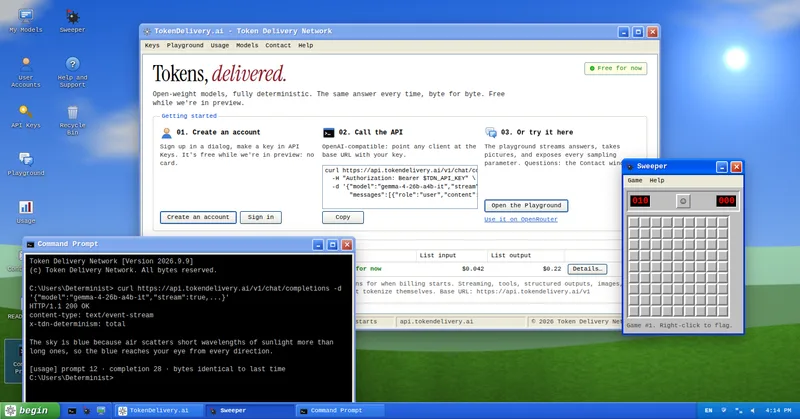
TokenDelivery.ai
TokenDelivery.ai (Token Delivery Network) is an OpenAI-compatible model API and playground that offers reproducible, deterministic model outputs, streaming responses, multimodal inputs (images and short videos), and exposed sampling parameters. It is free during preview and provides API keys, a playground, and a documented base URL for developers.
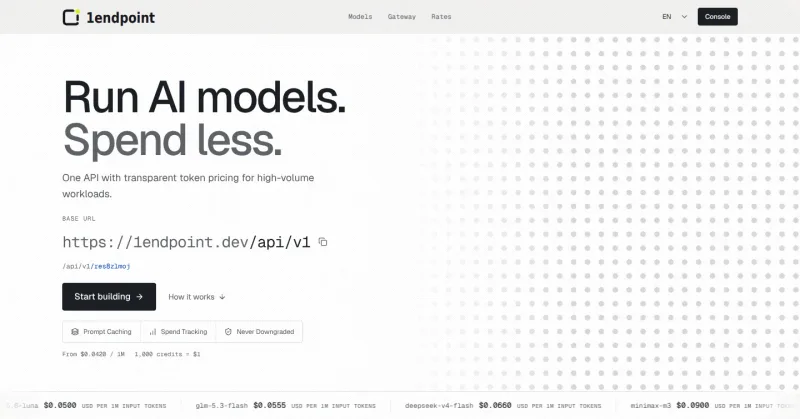

Servers for AI, not another AWS
RAW offers dedicated GPU and CPU servers specifically built for AI workloads — provision real metal with root access and CUDA via a single API. It emphasizes low cost (claims up to 100× cheaper than AWS), $0 egress, fast provisioning, and enterprise features for inference, training, agents, and vector databases.
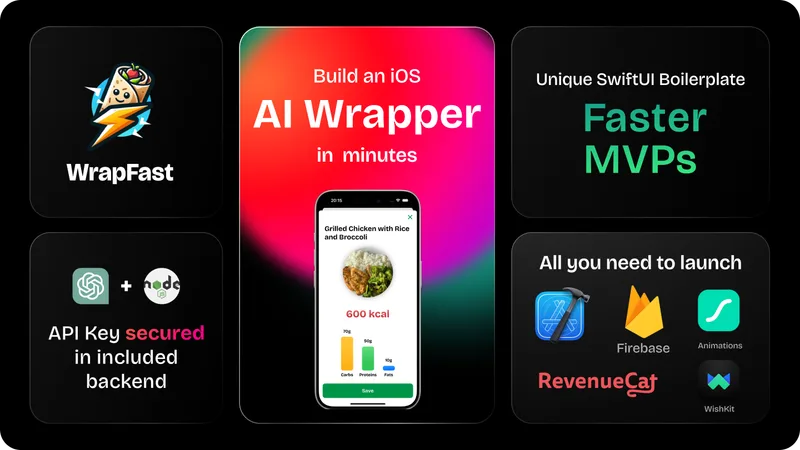
wrapfast
WrapFast is a SwiftUI boilerplate and starter kit for building iOS apps and AI wrappers quickly. It includes an Xcode SwiftUI project, a Node.js Express backend to secure AI API keys, AI integrations (OpenAI & Anthropic), monetization flows, cloud database support, documentation, and a Discord community aimed at indie makers and solo founders.

runpod
Runpod is an AI Developer Cloud that provides on-demand GPU infrastructure—Pods, Serverless endpoints, and multi-node Clusters—enabling teams to experiment, train, fine-tune, deploy, and scale AI workloads across 31 global regions with support for 30+ GPU SKUs.