
Portus
Portus is a Rust-based Kubernetes gateway that handles HTTP, LLM, and MCP traffic through one data plane. It also offers a standalone reverse-proxy mode with routing, policies, TLS, and built-in ACME certificate management.
Portus is developer tools software teams evaluate for software & gaming. Use this page to review pricing, integration signals, and the best alternatives before you commit.
Profile facts come from the vendor source. AiMatch labels unknown pricing or API details instead of estimating them.
Review official source →Used in These Packs
Quick Overview
Best for: Software & Gaming
What it does
Developer Tools software for decision-makers comparing workflow fit and alternatives.
Best fit
Software & Gaming
Pricing snapshot
Pricing available on request
Next step
Compare Portus with similar tools before you shortlist it.
Compare this tool before you shortlist it
Review alternatives, pricing posture, and workflow fit side by side.
Portus is a Rust-based gateway for Kubernetes that puts HTTP, gRPC, TLS, LLM, and MCP traffic behind a shared gateway architecture. It supports Kubernetes Gateway API routes and Portus policy resources, with a separate data plane deployment for each Gateway.
For LLM traffic, Portus can route requests to providers, issue its own API keys, enforce token budgets, and meter usage. Its MCP gateway can route by JSON-RPC method and tool, combine multiple servers through federation, and verify bearer tokens from an OAuth issuer. Portus can also run outside Kubernetes as a standalone reverse proxy, using YAML configuration and built-in ACME certificate management.
A fully conformant Kubernetes gateway, built in Rust for speed. It carries your HTTP, LLM and MCP traffic on one data plane.
Own this listing?
Claim this page for a one-time $29 to add pricing, features, screenshots, verified owner details, and a clearly labeled 30-day category position after the profile is live.
Claim this listing for $29Key Features
Kubernetes Gateway API support
Implements Gateway API route types including HTTPRoute, GRPCRoute, TLSRoute, TCPRoute, and UDPRoute, as well as ListenerSet and BackendTLSPolicy. The page reports 130/130 Gateway API v1.6.2 conformance tests passed.
Per-Gateway data planes
The controller provisions a separate Deployment, Service, and PodDisruptionBudget for each Gateway and reports its address in Gateway status.
Gateway policies
The page lists policy CRDs for timeouts, retries, rate limits, circuit breakers, health checks, CORS, IP allow lists, body limits, Basic authentication, and API-key authentication.
LLM routing and metering
Routes LLM requests based on request-body model and stream fields, supports Anthropic and OpenAI dialects, and meters tokens from JSON and streamed responses.
API keys and token budgets
The optional ledger issues `portus_sk_…` keys and supports token budgets per key, user, tenant, or route. Keys are stored as hashes, and responses include an `x-portus-tokens-remaining` header.
MCP gateway and federation
Routes MCP requests by JSON-RPC method and tool name, and can present tools from multiple servers together using `<server>.<tool>` names.
OAuth-based MCP authentication
Verifies bearer tokens from Dex or another OIDC issuer locally; groups can map to tenants and scopes can gate tools.
Standalone reverse-proxy mode
Runs as a plain reverse proxy from a YAML file with routing, policies, TLS, and ACME certificate support, without requiring a Kubernetes cluster.
Hot configuration reloads
Applies configuration changes and certificate renewals without restarting or dropping connections. Data-plane configuration is delivered over mTLS gRPC and swapped atomically.
Pricing
Current pricing details are not available from the vendor source.
Use Cases
Kubernetes application ingress
Use Gateway API resources and Portus policies to route HTTP, gRPC, TLS, TCP, or UDP traffic to services in a Kubernetes environment.
Governed LLM access
Place LLM calls behind Portus-issued keys and token budgets, route requests to configured providers, and meter token usage.
MCP tool routing
Expose MCP servers through one endpoint and route calls to different servers by JSON-RPC method and tool name.
Standalone reverse proxy
Run Portus from a YAML file for services outside Kubernetes, including Docker Compose services or VM hostnames, with ACME certificate renewal.
Integrations
Kubernetes Gateway API
Portus watches Gateway API resources, including Gateway and HTTPRoute, and supports additional route kinds and policies.
Anthropic and OpenAI
The AI gateway supports Anthropic and OpenAI dialects for LLM requests.
Claude Code
The page provides instructions for using Claude Code with Portus as the Anthropic base URL and for adding an MCP endpoint.
Dex and OIDC issuers
The MCP gateway can verify bearer tokens from Dex or another OIDC issuer.
Docker Compose services
In standalone mode, backend services can be addressed by name and are re-resolved every 30 seconds.
Benefits
Limitations
Frequently Asked Questions
No verified FAQs are available.
Getting Started
- 1 For Kubernetes, ensure the cluster is Kubernetes 1.32 or later and that Helm 3.8 or later is installed; the stated architectures are amd64 and arm64.
- 2 Install the Gateway API v1.6.2 experimental CRDs using the provided `kubectl apply --server-side --force-conflicts` command.
- 3 Install Portus with Helm in the `portus` namespace using the chart and version shown on the page.
- 4 For standalone operation, configure `PORTUS_CONFIG_FILE=portus.yaml` and run `portus-dataplane` with a YAML configuration file.
Support
Documentation
The page links to Portus documentation and an AI gateway guide.
GitHub
The page links to the Portus GitHub project.
Changelog
A changelog is linked from the Portus page.
Security
The page links to security information.
Contributing
The page links to contribution information.
API
Compare Portus with similar tools
See how it stacks up against alternatives
Related Tools
View all 136 →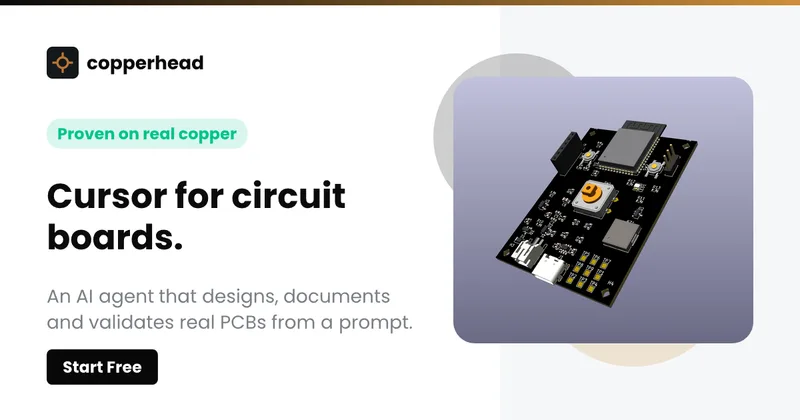
Copperhead
Copperhead is an open-source AI engineering platform and CLI that helps hardware teams design, verify, and ship printed circuit boards by editing KiCad files, running KiCad checks (ERC/DRC), and producing gerbers, firmware, and documentation in a gated, auditable pipeline.


Docs.dev Your Own Hosted Docs Platform in Minutes
Docs.dev is a deployable documentation template that runs as a Cloudflare Worker in your account, using your GitHub repo as the source of truth and agent-powered drafting (e.g., Claude Code or Codex) to generate reviewable docs branches that your team publishes via commit.
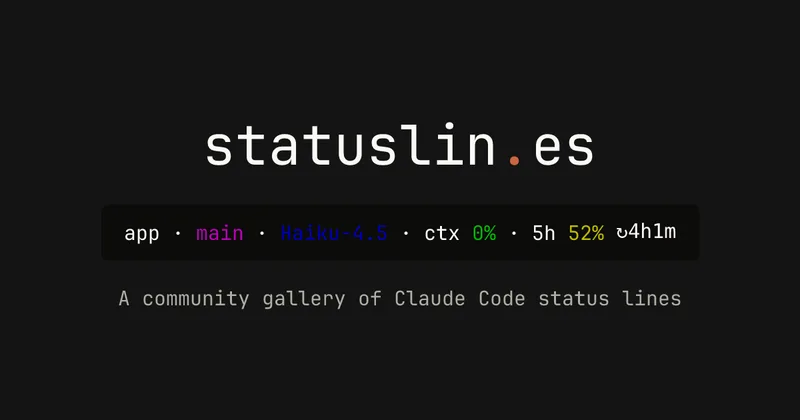
statuslin.es
statuslin.es is a community gallery of Claude Code status lines—copyable, previewed scripts and themes for terminal/status-bar displays that show Claude model stats (tokens, cost, limits), git info, and other runtime metrics.

Bullet · Fast, by design.
Bullet is a fast coding agent and developer tool that routes, searches, and executes code-focused tasks with a tight loop to minimize latency — offered as a macOS download and currently available in private beta.


Premium Alternatives
%22%2F%3E%20%3Ctext%20x%3D%2250%25%22%20y%3D%2250%25%22%20dominant-baseline%3D%22central%22%20text-anchor%3D%22middle%22%20font-family%3D%22system-ui%2C-apple-system%2Csans-serif%22%20font-weight%3D%22700%22%20font-size%3D%2250%22%20fill%3D%22white%22%3EO%3C%2Ftext%3E%20%3C%2Fsvg%3E)
OTP Inspired actor supervisor based full stack templates
ShipStacks provides production-grade, OTP-inspired full-stack SaaS templates that include supervisors/actor patterns, auth, payments, uploads, AI chat and agent playbooks, and Docker-ready deployment in multiple languages and frameworks.
TokenDelivery.ai
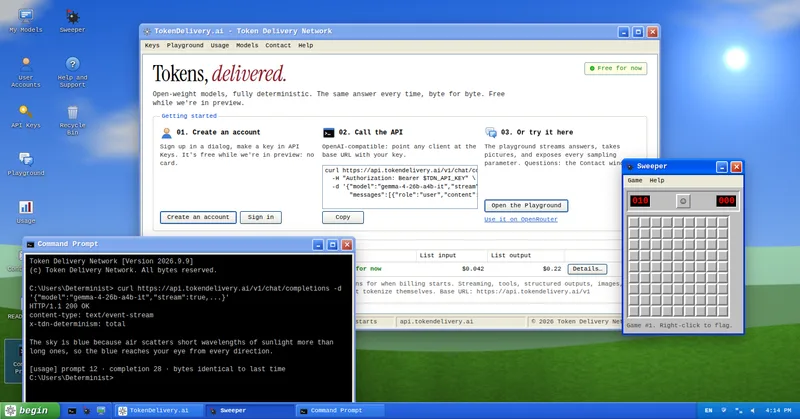
TokenDelivery.ai (Token Delivery Network) is an OpenAI-compatible model API and playground that offers reproducible, deterministic model outputs, streaming responses, multimodal inputs (images and short videos), and exposed sampling parameters. It is free during preview and provides API keys, a playground, and a documented base URL for developers.

Servers for AI, not another AWS
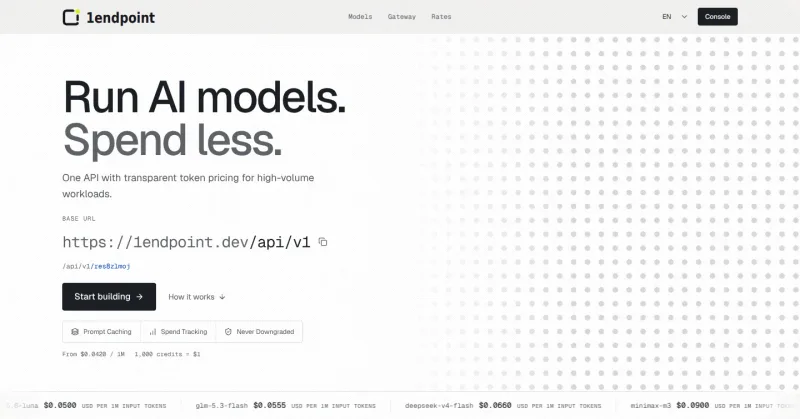
RAW offers dedicated GPU and CPU servers specifically built for AI workloads — provision real metal with root access and CUDA via a single API. It emphasizes low cost (claims up to 100× cheaper than AWS), $0 egress, fast provisioning, and enterprise features for inference, training, agents, and vector databases.

wrapfast
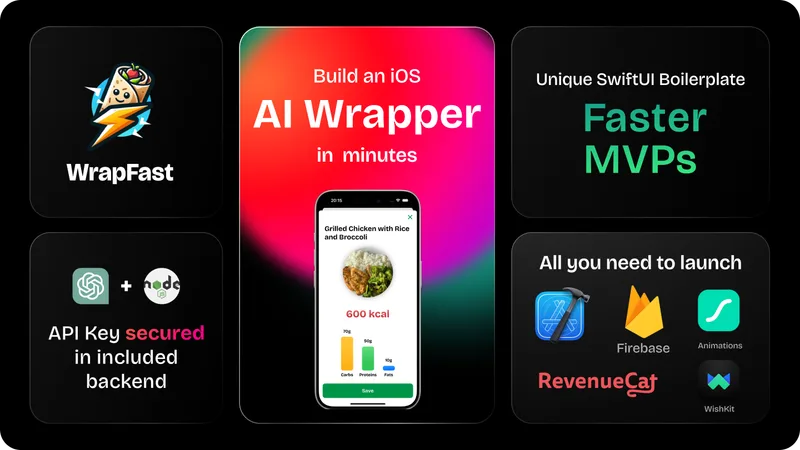
WrapFast is a SwiftUI boilerplate and starter kit for building iOS apps and AI wrappers quickly. It includes an Xcode SwiftUI project, a Node.js Express backend to secure AI API keys, AI integrations (OpenAI & Anthropic), monetization flows, cloud database support, documentation, and a Discord community aimed at indie makers and solo founders.

Finetunefast
FinetuneFast provides finetuning boilerplates, inference templates, and deployment tooling to accelerate building and shipping ML models (text-to-image, LLMs, RAG, TTS) — aimed at developers, indie makers and businesses who want production-ready examples and fast time-to-deploy.