
Termic
Termic is a free, open-source (AGPL-3.0) desktop app that runs vendor AI CLIs (claude, codex, gemini, grok, antigravity, etc.) in real PTYs, organized into tasks and git worktrees for developer workflows, with sandboxing, project-aware tools, and built-in editor/diff views.
Termic is developer tools software teams evaluate for developer tools. Use this page to review pricing, integration signals, and the best alternatives before you commit.
Profile facts come from the vendor source. AiMatch labels unknown pricing or API details instead of estimating them.
Review official source →Used in These Packs
Quick Overview
Best for: Developer Tools
What it does
Developer Tools software for decision-makers comparing workflow fit and alternatives.
Best fit
Developer Tools
Pricing snapshot
Free from Free (AGPL-3.0)
Next step
Compare Termic with similar tools before you shortlist it.
Compare this tool before you shortlist it
Review alternatives, pricing posture, and workflow fit side by side.
Termic is a native desktop app (macOS and Linux builds) that spawns vendor AI CLIs in real PTYs and organizes interactions into tasks backed by git worktrees. It intentionally runs the same CLI binaries you already have (claude, codex, gemini, grok, antigravity, etc.), inheriting their auth and using the vendor's interactive CLI path rather than SDK wrappers or a proxy. Termic is free and open source under AGPL-3.0 and focuses on developer workflows: tabbed agents, built-in editor and diff views against HEAD, Run/Setup streaming of dev servers, project-aware search and a committed .termic.yaml to reproduce task setup across teammates.
Beyond workflow features, Termic offers optional sandboxing (macOS Seatbelt filesystem restrictions and an in-process CONNECT proxy with a hostname allowlist) to limit agent access to the network and filesystem, plus tools for comparing multiple agents in parallel, queuing follow-ups, and reviewing agent changes like code review. The app is implemented with a Tauri + Rust backend and a WKWebView frontend and ships installers (dmg, AppImage) and a brew cask for easy install.
Open-source Conductor.build alternative. Run claude, codex, antigravity and more in parallel git worktrees, on the Claude Pro / Max plan you already pay for.
Own this listing?
Claim this page for a one-time $29 to add pricing, features, screenshots, verified owner details, and a clearly labeled 30-day category position after the profile is live.
Claim this listing for $29Key Features
Run real vendor CLIs in PTYs
Termic spawns the actual CLI binaries (claude, codex, gemini, grok, antigravity, copilot, opencode, etc.) in PTYs so you get vendor features the day they ship and inherit your existing auth and subscription behavior.
Built-in and custom PTY agents
Several agents ship built-in and you can add your own PTY-based agents (examples: aider, ollama run) in about 30 seconds.
Tasks & git worktrees
Create tasks backed by either the main checkout or a separate git worktree. Worktrees create branched copies on disk for feature work while the main checkout mode attaches agents to the real checkout for quick edits.
Tabbed agents, editor and diff view
Tabbed agents with a built-in editor and a diff view against HEAD. Agents can produce diffs and accept precise inline feedback, enabling a code-review-like workflow.
Search and project-aware tooling
Fuzzy Cmd+P file search backed by git ls-files, project-wide git grep (Cmd+Shift+F), and .termic.yaml committed to the repo to reproduce task setup for teammates.
Broadcast and multi-agent comparison
Send one message to multiple agents in a task to compare responses across vendors (e.g., claude, gemini, codex) before committing to an approach.
Sandboxing and network allowlist
Optional per-task macOS Seatbelt filesystem restrictions and an in-process Rust CONNECT proxy with a hostname allowlist (anthropic, google, openai, GitHub, npm, PyPI, crates.io and more can be allowed).
Queue follow-ups & reusable prompts
Queue multiple follow-up messages to send automatically when an agent finishes, and save a library of reusable prompts that can be run against agents or stored in the repo.
Spotlight mirroring
Mirror a task into your main checkout so your real dev server, watchers and tests run against the agent's changes without moving your branch ref (uses detached HEAD to avoid writing commits to the branch).
Native desktop stack & small bundle
Built with Tauri 2 (Rust backend) and WKWebView frontend, React 19 + Vite 8 UI, CodeMirror 6 editor and xterm.js + WebGL terminal for a compact ~10MB bundle on macOS.
Pricing
Termic is free and open source under the AGPL-3.0 license. Vendor CLIs run on your existing plan and any charges for model usage remain with the vendor.
Free / Open Source
Free (AGPL-3.0)- Full Termic app and source under AGPL-3.0
- MacOS and Linux builds available
Use Cases
Local AI-assisted code edits and reviews
Attach an agent to your current checkout or worktree, have it propose diffs, review its changes inline like a pull request, and send batched comments back into the agent for iterative fixes.
Compare answers across multiple vendor agents
Broadcast the same prompt to claude, gemini, codex, etc., and compare outputs side-by-side before choosing an implementation path.
Safe experimentation with agents
Use per-task sandboxing to prevent agents from accessing secrets or arbitrary network endpoints while letting them run CLI toolchains and dev servers in a controlled environment.
Multi-repo or end-to-end development
Create multi-repo tasks that span api/, web/ and infra/ directories so a single agent can operate across multiple repositories using a shared CLAUDE.md describing layout and structure.
Daily driver for CLI-centric development
Use Termic as a daily shell for your existing CLIs with terminals, launch commands, project search, queued messaging and an integrated run panel that streams your dev server.
Integrations
Anthropic (claude)
Runs the interactive claude CLI binary in a PTY and inherits local auth and subscription behavior.
OpenAI / Codex
Supports running codex via the real CLI binary in a PTY.
Google (gemini)
Supports running gemini via vendor CLI binaries in PTYs.
Grok, Antigravity, Copilot, Opencode and others
Several vendor CLIs ship built-in; you can add any tool that runs in a PTY as a custom agent.
Package registries & GitHub (sandbox allowlist)
The default network allowlist includes vendor APIs plus GitHub, npm, PyPI and crates.io for repository and package registry access when allowed.
Benefits
Limitations
Frequently Asked Questions
Does this work with my Claude Pro / Max subscription?
How is this different from Conductor.build?
Does Termic see my prompts or read my code?
Can agents touch my secrets or hit random APIs?
Is it actually open source?
Are Linux and Windows supported?
Getting Started
- 1 Install Termic: use the brew cask (brew install --cask simion/termic/termic) or download the macOS .dmg or Linux AppImage from Releases.
- 2 Ensure you have the vendor CLI binaries you want to use (claude, codex, gemini, etc.) installed and authenticated locally; Termic spawns your existing binaries and inherits auth.
- 3 Open Termic and create a task using either the main checkout or create a worktree for feature branches; optionally commit a .termic.yaml to the repo to capture setup.
- 4 Use tabbed agents, the built-in editor/diff, and Run/Setup panel to iterate; enable sandboxing on task creation if you need filesystem/network restrictions.
Support
Docs
Documentation available from the termic.dev Docs link.
Blog / Changelog
Project updates and changelog available from the blog and changelog links on the site.
GitHub (issues & releases)
Source, releases, issues and the project repository are on GitHub (link available on the site).
Sponsorship
Sponsorship information is provided on the site for supporting the developer.
API
Compare Termic with similar tools
See how it stacks up against alternatives
Related Tools
View all 141 →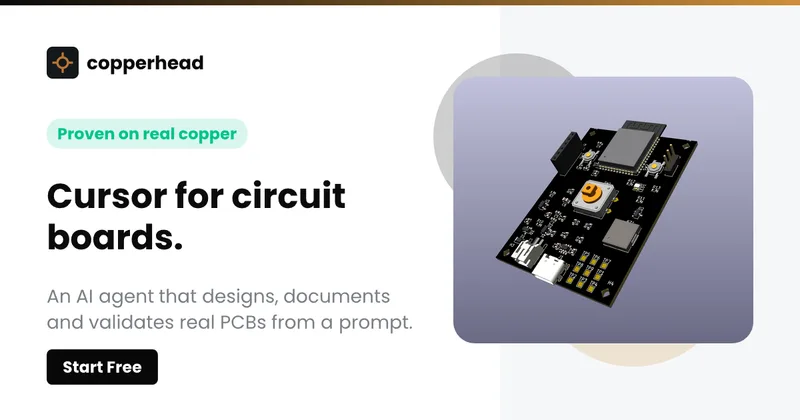
Copperhead
Copperhead is an open-source AI engineering platform and CLI that helps hardware teams design, verify, and ship printed circuit boards by editing KiCad files, running KiCad checks (ERC/DRC), and producing gerbers, firmware, and documentation in a gated, auditable pipeline.

Docs.dev Your Own Hosted Docs Platform in Minutes
Docs.dev is a deployable documentation template that runs as a Cloudflare Worker in your account, using your GitHub repo as the source of truth and agent-powered drafting (e.g., Claude Code or Codex) to generate reviewable docs branches that your team publishes via commit.

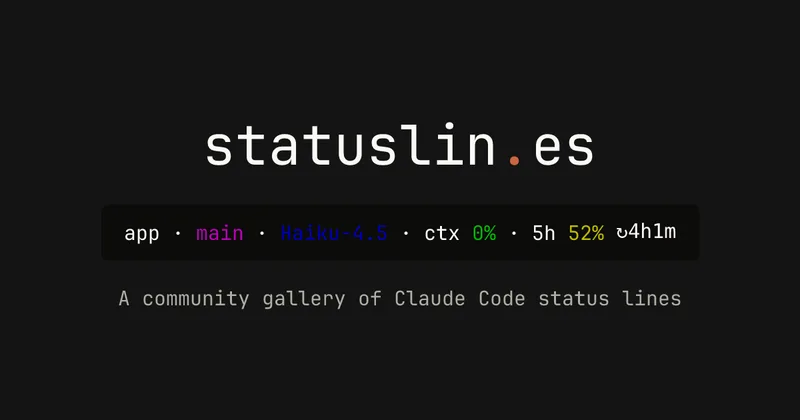
statuslin.es
statuslin.es is a community gallery of Claude Code status lines—copyable, previewed scripts and themes for terminal/status-bar displays that show Claude model stats (tokens, cost, limits), git info, and other runtime metrics.

Bullet · Fast, by design.
Bullet is a fast coding agent and developer tool that routes, searches, and executes code-focused tasks with a tight loop to minimize latency — offered as a macOS download and currently available in private beta.


Premium Alternatives
%22%2F%3E%20%3Ctext%20x%3D%2250%25%22%20y%3D%2250%25%22%20dominant-baseline%3D%22central%22%20text-anchor%3D%22middle%22%20font-family%3D%22system-ui%2C-apple-system%2Csans-serif%22%20font-weight%3D%22700%22%20font-size%3D%2250%22%20fill%3D%22white%22%3EO%3C%2Ftext%3E%20%3C%2Fsvg%3E)
OTP Inspired actor supervisor based full stack templates
ShipStacks provides production-grade, OTP-inspired full-stack SaaS templates that include supervisors/actor patterns, auth, payments, uploads, AI chat and agent playbooks, and Docker-ready deployment in multiple languages and frameworks.
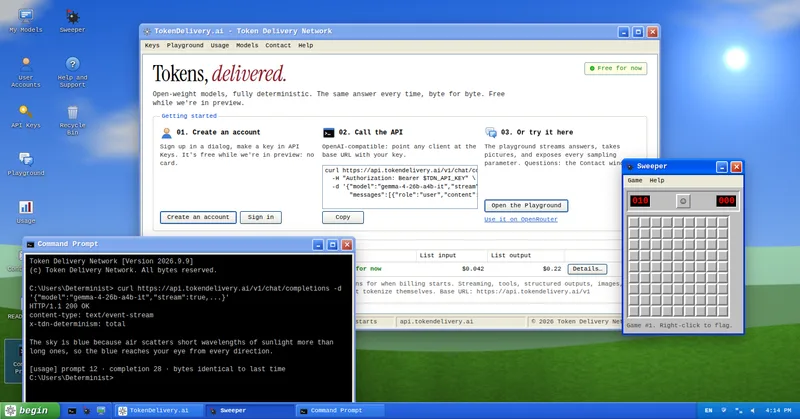
TokenDelivery.ai
TokenDelivery.ai (Token Delivery Network) is an OpenAI-compatible model API and playground that offers reproducible, deterministic model outputs, streaming responses, multimodal inputs (images and short videos), and exposed sampling parameters. It is free during preview and provides API keys, a playground, and a documented base URL for developers.

Servers for AI, not another AWS
RAW offers dedicated GPU and CPU servers specifically built for AI workloads — provision real metal with root access and CUDA via a single API. It emphasizes low cost (claims up to 100× cheaper than AWS), $0 egress, fast provisioning, and enterprise features for inference, training, agents, and vector databases.

Finetunefast
FinetuneFast provides finetuning boilerplates, inference templates, and deployment tooling to accelerate building and shipping ML models (text-to-image, LLMs, RAG, TTS) — aimed at developers, indie makers and businesses who want production-ready examples and fast time-to-deploy.

builderkit
BuilderKit is a modular Next.js AI boilerplate and starter kit that provides deployable TypeScript code, pre-built AI apps, UI components, auth, payments, and integrations to accelerate building and shipping AI SaaS products.

ratio1
Ratio1 is a blockchain-powered, decentralized AI operating system and edge/cloud computing platform that enables rapid development and deployment of AI apps, a tokenized GPU compute marketplace, and node-based infrastructure via Node Deeds and the $R1 utility token.