
One portal for all your MCP servers
onemcp is a portal that unifies multiple Model Context Protocol (MCP) servers behind a single endpoint so AI clients connect once while the portal handles routing, native OAuth, and a Code Mode meta-tool interface to dramatically reduce prompt bloat and simplify agent workflows.
One portal for all your MCP servers is ai agents software teams evaluate for software & gaming. Use this page to review pricing, integration signals, and the best alternatives before you commit.
Profile facts come from the vendor source. AiMatch labels unknown pricing or API details instead of estimating them.
Review official source →Used in These Packs
Quick Overview
Best for: Software & Gaming
What it does
AI Agents software for decision-makers comparing workflow fit and alternatives.
Best fit
Software & Gaming
Pricing snapshot
Contact for pricing
Next step
Compare One portal for all your MCP servers with similar tools before you shortlist it.
Compare this tool before you shortlist it
Review alternatives, pricing posture, and workflow fit side by side.
onemcp provides a single portal endpoint that aggregates multiple MCP servers so AI clients only need to connect once. The portal handles routing, native upstream OAuth, and exposes three Code Mode meta-tools (search, describe, execute) so models script against tools on demand rather than embedding hundreds of tool schemas in every prompt. It is aimed at teams building agents and workflows that call multiple upstream services (GitHub, Slack, Postgres, etc.) and want to reduce prompt context, centralize auth, and simplify client configuration.
onemcp unifies all your Model Context Protocol (MCP) servers behind one portal endpoint. Connect your AI client once — native OAuth and Code Mode, no credential sprawl or context bloat.
Own this listing?
Claim this page for a one-time $29 to add pricing, features, screenshots, verified owner details, and a clearly labeled 30-day category position after the profile is live.
Claim this listing for $29Key Features
Unified endpoint
Expose all MCP servers behind a single portal URL so clients only need one connection and you can add or swap upstream servers without touching client config.
Code Mode (three meta-tools)
Replace hundreds of tool definitions with three meta-tools (search, describe, execute) so the model discovers and scripts tools on demand, dramatically reducing prompt size.
Native upstream OAuth
Portals authenticate to upstream servers with a full OAuth flow so credentials stay host-side and are not scattered across clients.
Per-portal auth scoping
The same upstream server can carry different credentials in different portals — auth is scoped to portal membership rather than a global account.
Import & export portals
Move a portal between environments or share a setup as a single portable config file.
Request logs
See every client request flowing through a portal to debug what agents are actually calling.
Pricing
Current pricing details are not available from the vendor source.
Use Cases
Agent development and deployment
Let agents discover and script across many tool servers using a single endpoint and Code Mode meta-tools instead of shipping huge tool definitions in prompts.
Reduce prompt/context bloat
Shrink per-request system prompt size from thousands of tokens to a few hundred so the model's window focuses on the task rather than tool schemas.
Centralized credential management
Keep upstream OAuth credentials host-side and scope credentials per-portal to limit credential distribution across clients.
Multi-environment portability
Export and import portal configs to move or share tool mappings across environments quickly.
Integrations
GitHub
Example upstream MCP server (github.create_issue, github.search_issues shown in examples).
Slack
Example upstream MCP server for messaging (slack.post_message, slack.list_channels shown).
Postgres
Example upstream MCP server for database queries (postgres.query, postgres.list_tables shown).
Linear
Issue tracking server (linear.create_issue shown).
Notion
Content/notes server (notion.create_page shown).
Jira
Issue/ticketing server (jira.create_ticket shown).
Stripe
Payments server (stripe.create_refund shown).
Sentry
Error/issue tracking server (sentry.list_issues shown).
Benefits
Limitations
Frequently Asked Questions
No verified FAQs are available.
Getting Started
- 1 Step 1: Create your first portal on the onemcp site (Create your first portal →).
- 2 Step 2: Configure upstream MCP servers in the portal config (example: ~/.config/mcp.json with mcpServers entries for GitHub, Slack, Postgres, etc.).
- 3 Step 3: Point your AI client at the portal endpoint and use the portal meta-tools (search, describe, execute) to script against tools.
Support
docs
Project site and getting started content available at https://onemcp.dev/
API
https://onemcp.dev/
Compare One portal for all your MCP servers with similar tools
See how it stacks up against alternatives
Related Tools
View all 672 →
Needle2
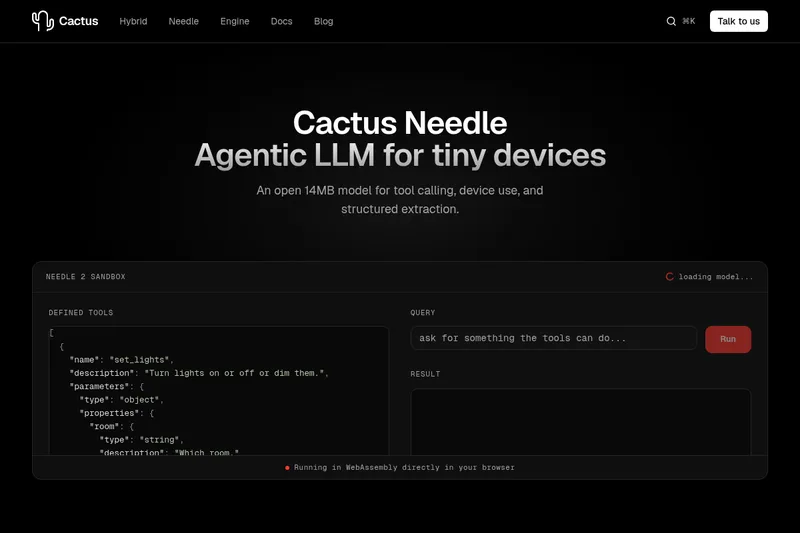
Needle 2 is an open, production-ready 45M-parameter agentic LLM from Cactus designed for tool calling, device control, and structured extraction on extremely small devices; the shipped CQ2-bit binary is ~14 MB and runs in ~28 MB of RAM across Cortex-M, microcontrollers, phones, Raspberry Pi and WebAssembly.
The cheapest GPU cloud
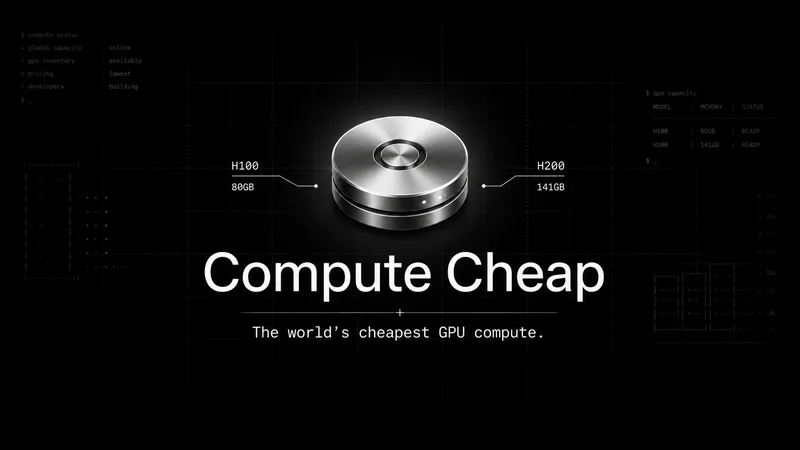
Compute Cheap provides low-cost GPU compute for training and inference, offering H100 and H200 SXM GPUs as interruptible or reserved capacity with published per-GPU-hour pricing and a simple request/reserve/run workflow.
Oodle.ai
Oodle Agent Observability provides agent/LLM observability at scale with S3-backed columnar storage, fast search (<1s P99), out-of-the-box AI-powered insights, and flat ingestion-based pricing designed to retain 100% of traces affordably for debugging and optimizing production agents.


Premium Alternatives
Abliterated LLM provider for cyber tasks
Refuseless hosts GLM 5.3 Abliterated models through an OpenAI-compatible API for cybersecurity and coding work. The page states that prompts are not retained and shows integrations with OpenCode and Pi.
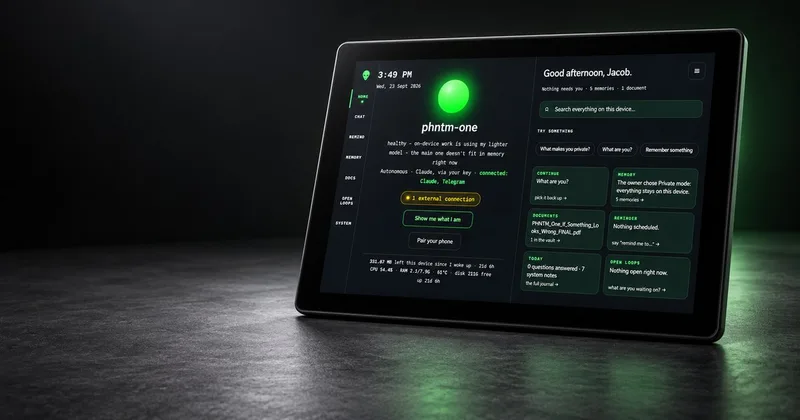
PHNTM ONE
PHNTM One is a private, local-first AI appliance: a hand-built desktop device (Raspberry Pi 5, 8 GB, 10.1″ touchscreen) that runs an on-device model (Gemma 3 4B) to provide a voice-capable assistant, memories, document reading, timers, Home Assistant integration and offline knowledge — sold as a one-time $549 purchase with no subscription and zero telemetry by default.
AletheionAGI
AletheionAGI provides a grounded-memory layer for AI systems that enforces evidence-bound delivery, namespace isolation, and policy authorization so AI readers cannot produce unsupported claims. It's targeted at production-facing use cases like customer support, commerce agents and internal copilots.

ClaudeThings
ClaudeThings provides a packaged, continuously-updating set of 89 specialized agents, 103 pre-built skills, and 181 slash commands that act as an AI engineering and marketing team for Claude Code — delivered as a private GitHub repo and installed with a single npx command. It adapts to any stack via a CLAUDE.md project manifest and is sold as a one-time purchase with lifetime updates.
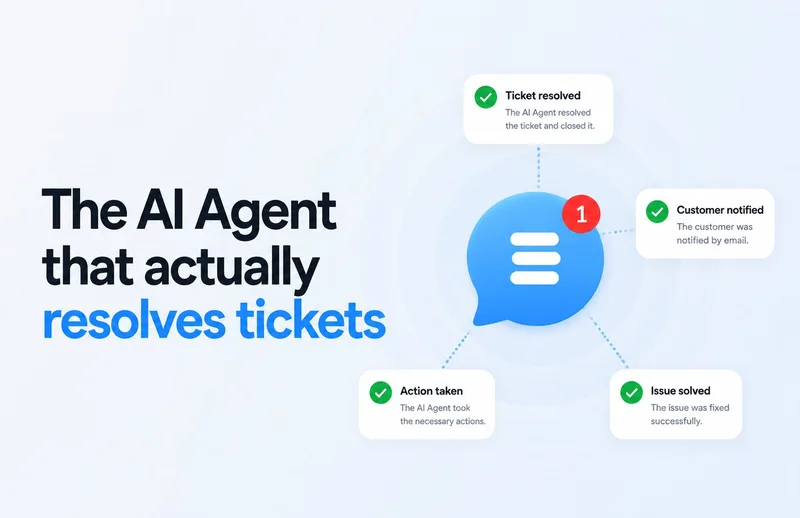
Customerly Aura
Customerly Aura is an AI customer-support agent that uses company knowledge and customer data to resolve tickets, take actions such as processing refunds, and escalate issues to human agents when needed. It works across live chat, email, WhatsApp, Facebook Messenger, and mobile apps.