Cortex
HydraDB is an object-storage-native distributed graph database built as a context layer for AI systems, purpose-built to store and serve structured, temporally versioned context for agents, memories, ontologies, and enterprise copilots.
Cortex is ai tools software teams evaluate for ai agents. Use this page to review pricing, integration signals, and the best alternatives before you commit.
Profile facts come from the vendor source. AiMatch labels unknown pricing or API details instead of estimating them.
Review official source →Used in These Packs
Quick Overview
Best for: AI Agents
What it does
AI Tools software for decision-makers comparing workflow fit and alternatives.
Best fit
AI Agents
Pricing snapshot
Freemium from Free
Next step
Compare Cortex with similar tools before you shortlist it.
Compare this tool before you shortlist it
Review alternatives, pricing posture, and workflow fit side by side.
HydraDB is an object-store-native, distributed graph database designed as the context layer for AI systems and agents. It stores structured context, temporal state, and relationships on object storage so query nodes and indexers can scale independently. The product targets developers and teams building agent memory, ontologies, company brains, and other stateful AI applications that require precision recall, temporal versioning, and explainability.
HydraDB combines graph traversal, vector/semantic search plugins, exact-match search, and temporal context to return relevant, connected evidence for agents rather than isolated similarity matches. The platform emphasizes high recall and low latency for real-time applications and supports multi-tenant namespaces, tiered storage (in-memory, NVMe SSD, object storage), and standard database interfaces (OpenCypher, Neo4j Bolt, HTTP).
Turn API specs into docs, SDKs, and MCP servers Discussion | Link
Own this listing?
Claim this page for a one-time $29 to add pricing, features, screenshots, verified owner details, and a clearly labeled 30-day category position after the profile is live.
Claim this listing for $29Key Features
Object-storage-native architecture
Uses object storage as the source of truth (S3-native) so query nodes and indexers can scale, restart, or be replaced independently without moving or replicating the graph.
Tiered storage for high throughput
Tiered context storage with hot in-memory cache, NVMe SSD for warm storage, and object storage for cold archival to achieve scalable, low-latency retrieval.
Temporal versioning & Git-style history
Git-style temporal versioning recalls what was true at any point in time, enabling temporal reasoning and snapshot-consistent queries.
Graph traversal accelerated by GraphBLAS
Indexer nodes build indexes using GraphBLAS for accelerated traversal and efficient graph queries.
Neo4j-compatible Bolt & HTTP APIs
Supports OpenCypher, Neo4j-compatible Bolt protocol, and HTTP APIs for integration with existing stacks and tools.
Connectors & plugins
Connectors and plugins include Slack, Notion, GitHub, Gmail and 100+ sources; a retrieval orchestrator and vectorstore plugin enable hybrid retrieval (semantic + BM25 + rerank).
Observability & traces dashboard
Built-in observability for agent retrievals, traces, and dashboarding to help understand context selection and agent behavior.
Multi-tenant namespaces
Namespace isolation for multi-tenant deployments with auto-scaling writer/reader/indexer nodes.
Benchmarks & high recall
Claims state-of-the-art recall on LongMemEval-S and benchmarks showing high accuracy across long context lengths.
Pricing
Ship: free plan with unlimited API calls & tenants, multi-tenancy, observability dashboard, and community Slack & email support.
Ship (Free)
Free- Unlimited API calls & tenants
- Multi-tenancy
- Observability & traces dashboard
- Community Slack & Email Support
Surge
$25/month- Everything in Free
- Up to 2GB graph storage
- Overage at $0.50/GB/mo
- Private Slack Channel
Scale
$399/month- Everything in Surge
- Up to 10GB graph storage
- Overage at $0.25/GB/mo
- Dedicated infrastructure for guaranteed throughput
Enterprise
Custom- Custom VPC / BYOC and fully self-hosted options
- Dedicated account manager
- Support & Uptime SLAs
- Book a call for enterprise pricing
Use Cases
Agent Memory
Build persistent, in-house memory systems for agents that store user preferences, past interactions, and agent traces with entity resolution and de-duplication.
Ontologies & Knowledge Graphs
Create structured ontologies and knowledge graphs that capture relationships and evolving state across documents, users, and events.
Company Brain / Enterprise Copilot
Provide a connected context layer for enterprise copilots and internal agents to answer questions about ownership, blockers, policies, and what changed since prior sessions.
GraphRAG & Retrieval-Augmented Agents
Serve as the graph database behind GraphRAG systems, combining traversal with vector retrieval to give agents connected, structured context.
Low-latency Real-time Apps
Support real-time applications requiring sub-200ms retrieval latency and high throughput using tiered storage and caching.
Support, Research, and Coding Assistants
Use for support agents, research intelligence, and AI coding assistants that need to remember history and understand relationships across sessions.
Integrations
Slack
Connector for ingesting workspace data and agent traces from Slack.
Notion
Connector for ingesting Notion documents and structured content.
GitHub
Connector for ingesting repository data, issues, and PRs.
Gmail
Connector for ingesting email content into the context graph.
Neo4j-compatible Bolt & HTTP
Protocol and HTTP APIs for integrating HydraDB into existing AI stacks and tools.
Benefits
Limitations
Frequently Asked Questions
What is HydraDB? How is it different from other graph databases?
Why use a graph database like HydraDB for AI agents?
When should I use HydraDB instead of a vector database?
Does HydraDB work with GraphRAG?
Can I use HydraDB with my existing AI stack?
Getting Started
- 1 Sign up for an account via the HydraDB website (Sign Up / Start building).
- 2 Ingest data using available connectors (Slack, Notion, GitHub, Gmail, and 100+ sources) or APIs.
- 3 Configure namespaces and storage tiers to match expected workload and retention.
- 4 Query HydraDB from your agents or applications via Neo4j-compatible Bolt or HTTP APIs and add retrieval orchestration (vectorstore + rerank) as needed.
- 5 Use observability dashboard and traces to monitor retrievals and tune recall and latency.
Support
Documentation
Documentation available via site navigation (Documentation).
Community Slack & Email
Community Slack and email support available on the free plan; private Slack channel for Surge customers.
Sales / Enterprise
Book a call for enterprise sales, dedicated account manager, and SLA support for Enterprise customers.
API
https://hydradb.com/docs
Compare Cortex with similar tools
See how it stacks up against alternatives
Related Tools
View all 617 →
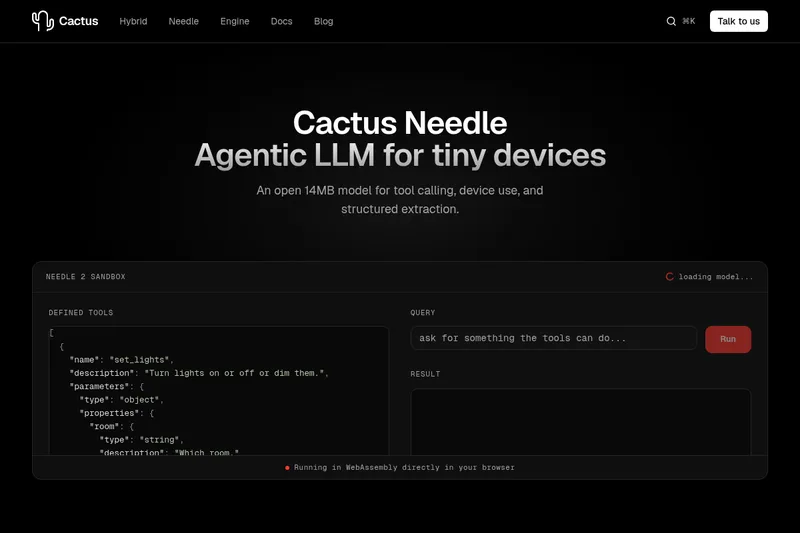
Needle2
Needle 2 is an open, production-ready 45M-parameter agentic LLM from Cactus designed for tool calling, device control, and structured extraction on extremely small devices; the shipped CQ2-bit binary is ~14 MB and runs in ~28 MB of RAM across Cortex-M, microcontrollers, phones, Raspberry Pi and WebAssembly.
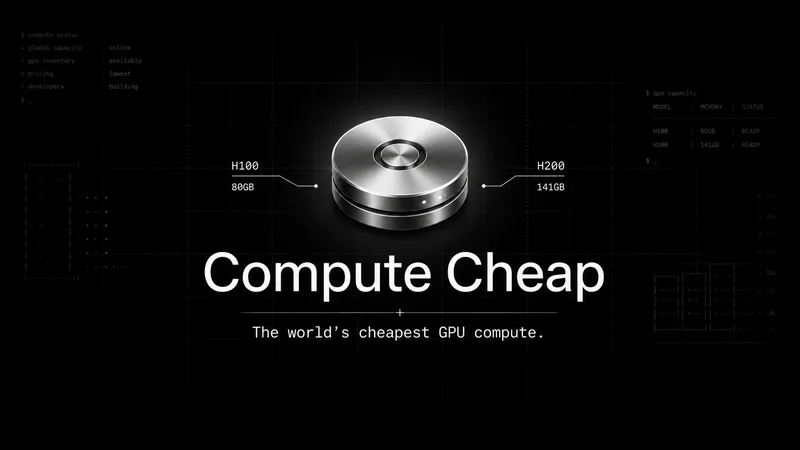
The cheapest GPU cloud
Compute Cheap provides low-cost GPU compute for training and inference, offering H100 and H200 SXM GPUs as interruptible or reserved capacity with published per-GPU-hour pricing and a simple request/reserve/run workflow.
Oodle.ai
Oodle Agent Observability provides agent/LLM observability at scale with S3-backed columnar storage, fast search (<1s P99), out-of-the-box AI-powered insights, and flat ingestion-based pricing designed to retain 100% of traces affordably for debugging and optimizing production agents.


Premium Alternatives
Abliterated LLM provider for cyber tasks
Refuseless hosts GLM 5.3 Abliterated models through an OpenAI-compatible API for cybersecurity and coding work. The page states that prompts are not retained and shows integrations with OpenCode and Pi.
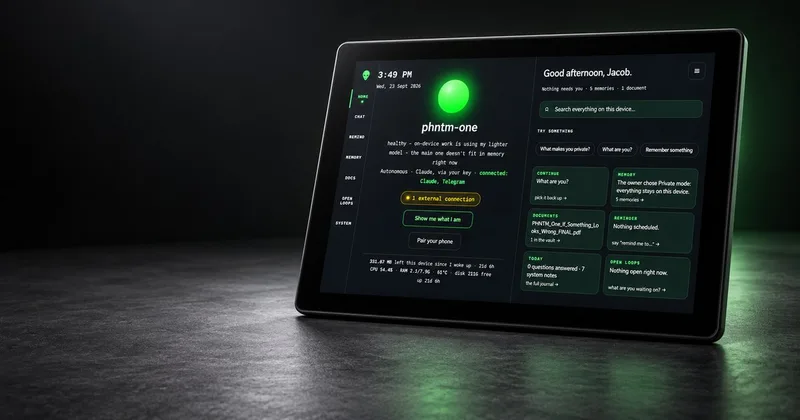
PHNTM ONE
PHNTM One is a private, local-first AI appliance: a hand-built desktop device (Raspberry Pi 5, 8 GB, 10.1″ touchscreen) that runs an on-device model (Gemma 3 4B) to provide a voice-capable assistant, memories, document reading, timers, Home Assistant integration and offline knowledge — sold as a one-time $549 purchase with no subscription and zero telemetry by default.
AletheionAGI
AletheionAGI provides a grounded-memory layer for AI systems that enforces evidence-bound delivery, namespace isolation, and policy authorization so AI readers cannot produce unsupported claims. It's targeted at production-facing use cases like customer support, commerce agents and internal copilots.

ClaudeThings
ClaudeThings provides a packaged, continuously-updating set of 89 specialized agents, 103 pre-built skills, and 181 slash commands that act as an AI engineering and marketing team for Claude Code — delivered as a private GitHub repo and installed with a single npx command. It adapts to any stack via a CLAUDE.md project manifest and is sold as a one-time purchase with lifetime updates.